You can read the original Dutch version of this article on Adformatie.
Cup-a-Soup has shaken up its classic office world: Sjors is out, Davy (played by Bram Krikke) is in, and the afternoon dip now gets treated with “Scoop-a-Soup,” a parody of supplement culture aimed at a younger, more flexible workplace.
The move has already stirred up a storm in the industry, with critics arguing that the new humour irritates more than it entertains.
So we wanted to know: what do regular people think? We tested the new Cup-a-Soup video with 406 category buyers using Behavio’s ad testing platform to measure its effectiveness across branding, need, and emotion.
The verdict: this ad is brave, noisy and very hard to follow – and that’s hurting its effectiveness.
Breaking down the “Scoop-a-Soup” ad results
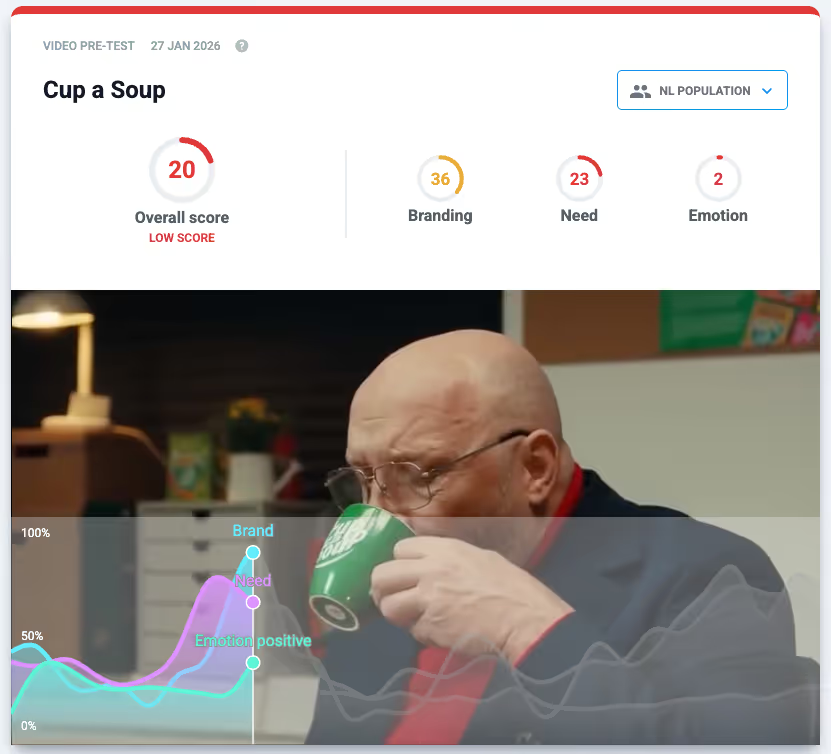
The spot scored an overall result of 20 (low), meaning it performs better than only 20% of Dutch ads. That’s driven by:
- Branding: 36 / 100 – around average
- Need: 23 / 100 – below benchmark
- Emotion: 2 / 100 – bottom of the pack
In plain language: people more or less get that this is Cup-a-Soup, but many struggle to understand what’s going on, what the product is supposed to do, and how they’re meant to feel about it.
Branding: recognisable, but not maximised
On paper, branding isn’t the main problem, but it’s not a slam dunk either.
- 40% of the target population named Cup-a-Soup as the advertiser, versus a 48% benchmark. So, slightly below average, but not disastrous.
- 41% recognised the brand in the first 5 seconds, roughly in line with the norm of 47%. Early visibility is there, which is good for brand salience.
The branding curve over time shows ups and downs across the story: in some scenes, the brand is clear; in others, viewers are watching office chaos and new-manager drama without strong Cup-a-Soup cues.
On the plus side, when people do feel positive, brand recall tends to be higher; the “brand vs positive emotion” curve is decent, suggesting that tying good moments more tightly to distinctive assets (pack, logo, Sjors, the cup) could pay off.
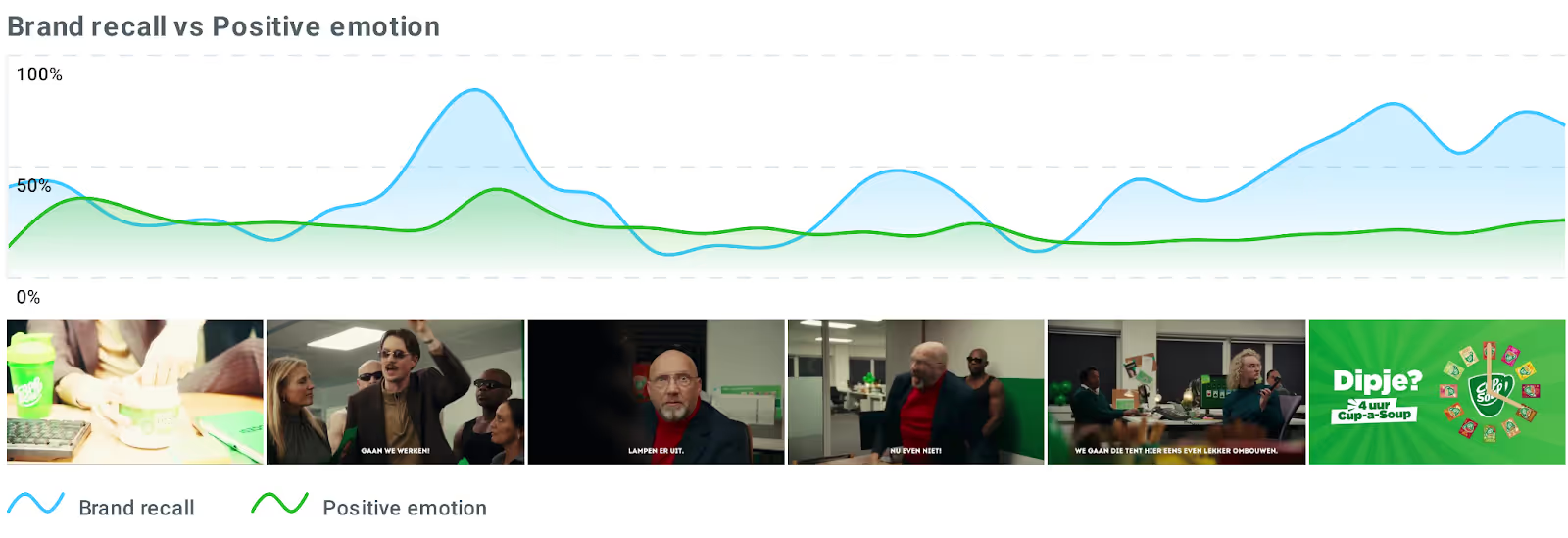
Takeaway: branding is serviceable, but the ad wastes a lot of emotional and narrative moments where Cup-a-Soup could have been more present.
Need: instant soup & energy boost don’t fully land
The whole point of “Scoop-a-Soup” is to plug a new, protein-rich variant as an answer to the afternoon slump. The strategy leans on two key ideas: instant soup and an energy boost.
The test shows that this potential isn’t fully realised:
- Only 47% of viewers recognise the instant soup category in the ad (vs a 57% benchmark).
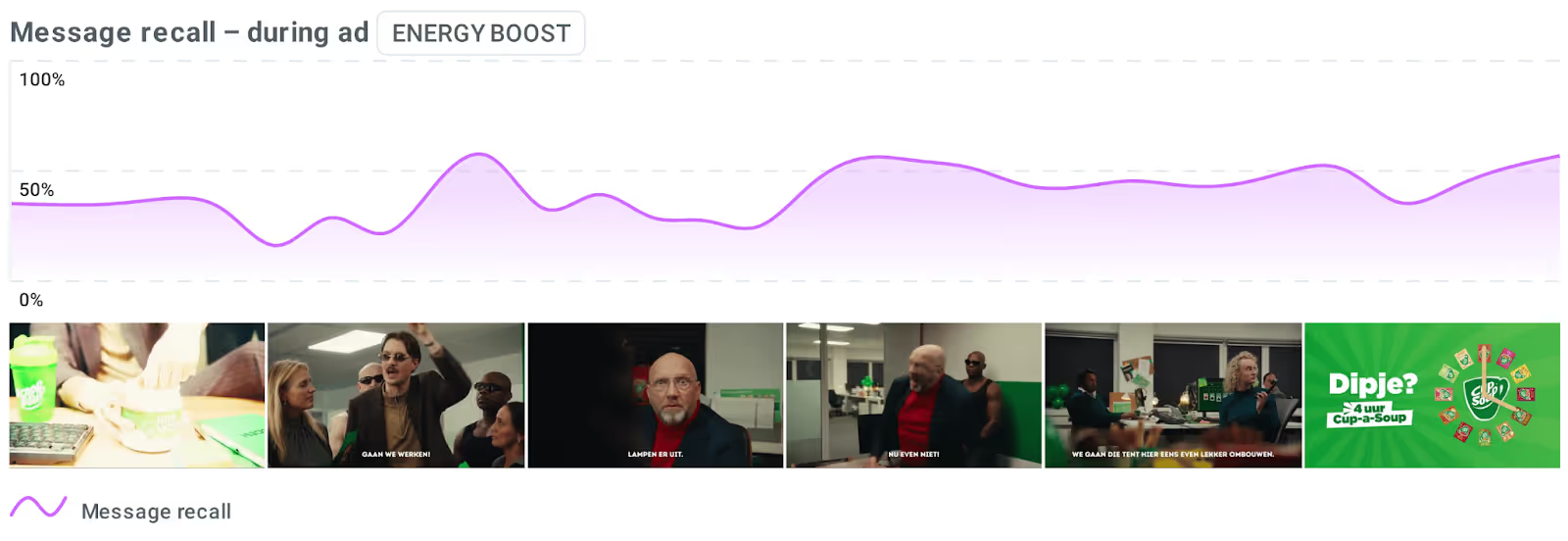
- 47% also pick up the “energy boost” message, again below the 57% norm for message recall.
Throughout the ad, the category and message recall climb at certain points, but not consistently. The curves rise in the first half and again towards the end, suggesting that the product and benefit appear in flashes rather than as a simple, continuous thread.
What makes this extra painful: Cup-a-Soup already owns this territory. Before people saw the ad, Cup-a-Soup was by far the strongest brand linked to instant soup (62%) and also led on energy boost (43%) versus Unox, Maggi and others.
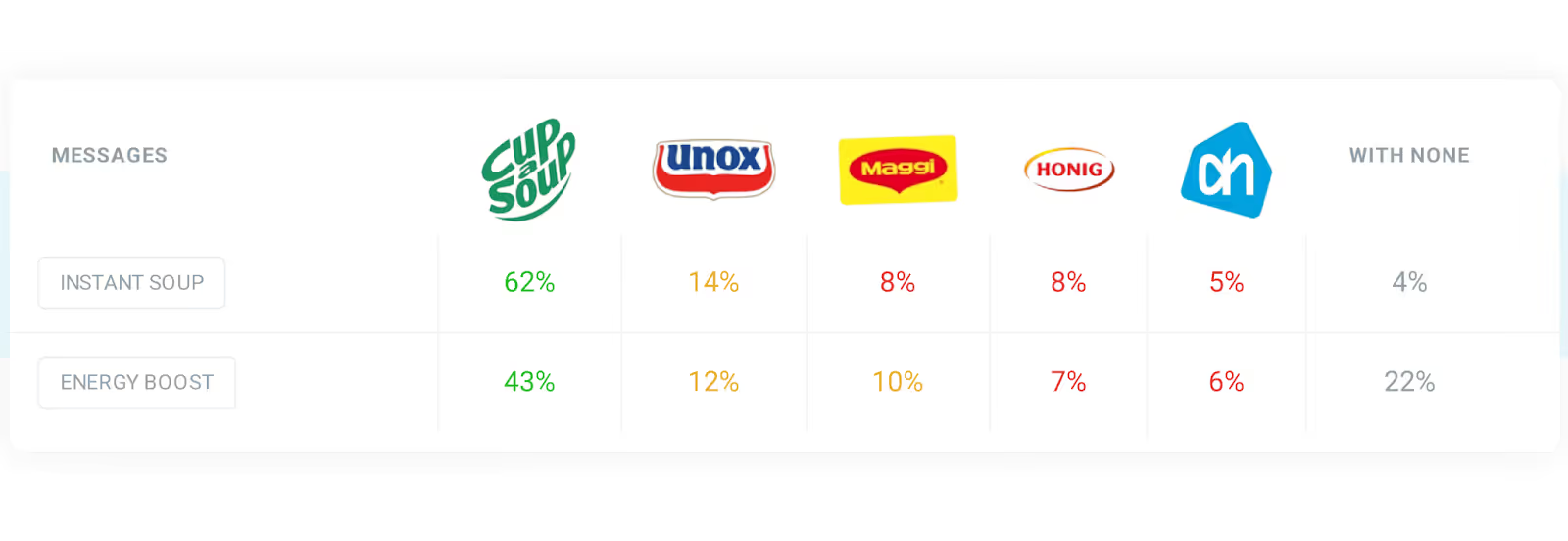
In other words, the brand has the right to talk about quick, energising soup, but the execution just isn’t reinforcing that mental link as strongly as it could.
Takeaway: the spot spends a lot of time on office politics and parody, and not enough on clearly, repeatedly showing “instant soup that gives you a boost.”
Emotion: humour that divides the room
Emotion is the number one reason why this ad is making waves. The reaction to the “Scoop-a-Soup” commercial is nothing short of controversial.
18% of viewers experienced strong negative emotions, which is extremely high. For comparison, most ads tend to fall between 1-3% for strong negative emotions, and even the most controversial campaigns rarely exceed 10%. This is more than double the strong positive emotions, meaning the ad is getting twice as many haters as lovers.
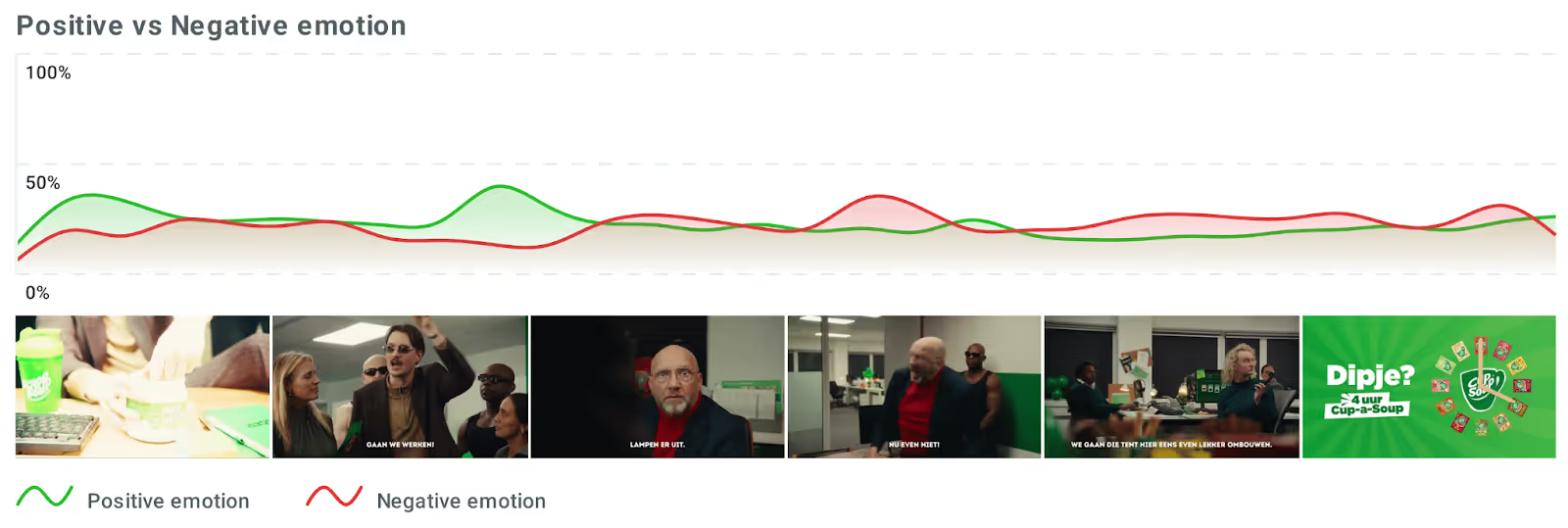
Here’s where things get more granular:
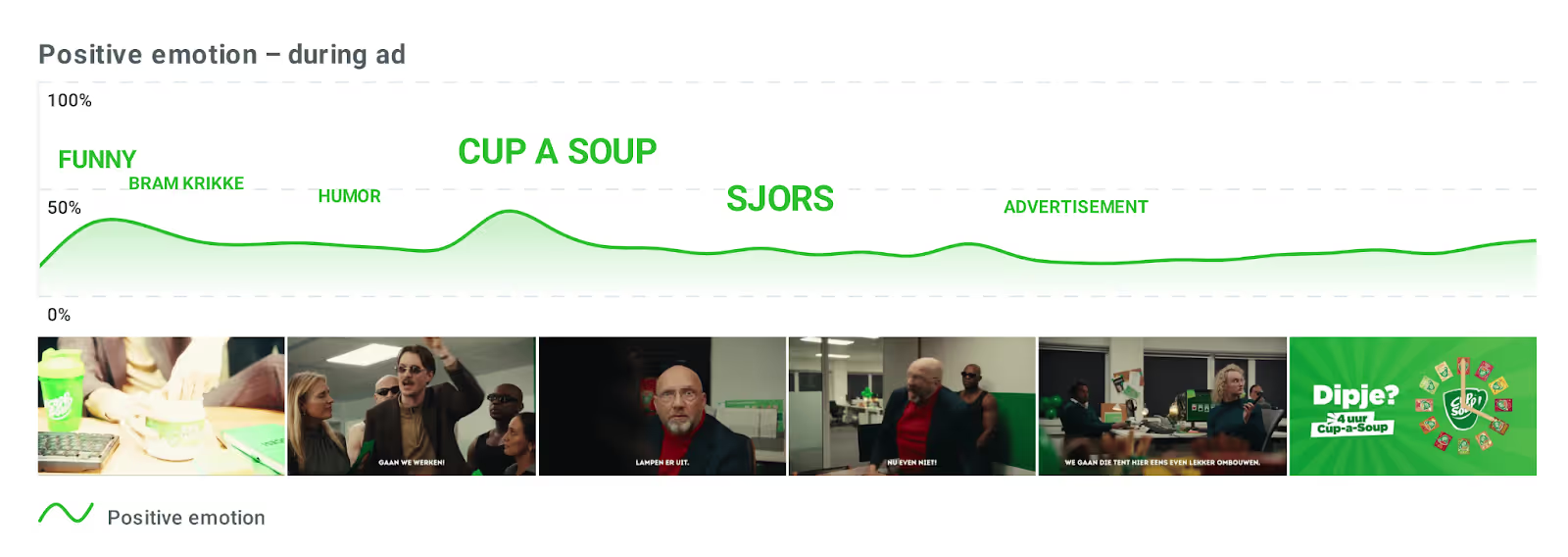
- The positive emotional peaks are centred entirely around Sjors, Cup-a-Soup’s former star, when he’s alone on screen. Viewers associate him with familiarity, comfort, and humour, driving the positive emotions.
- The negative emotion peaks occur when Davy, the new manager (Bram Krikke), is introduced. This is when aggression, frustration, and irritation dominate the emotional charts. There’s a clear, direct correlation: the more Davy is on screen, the stronger the negative feelings get.
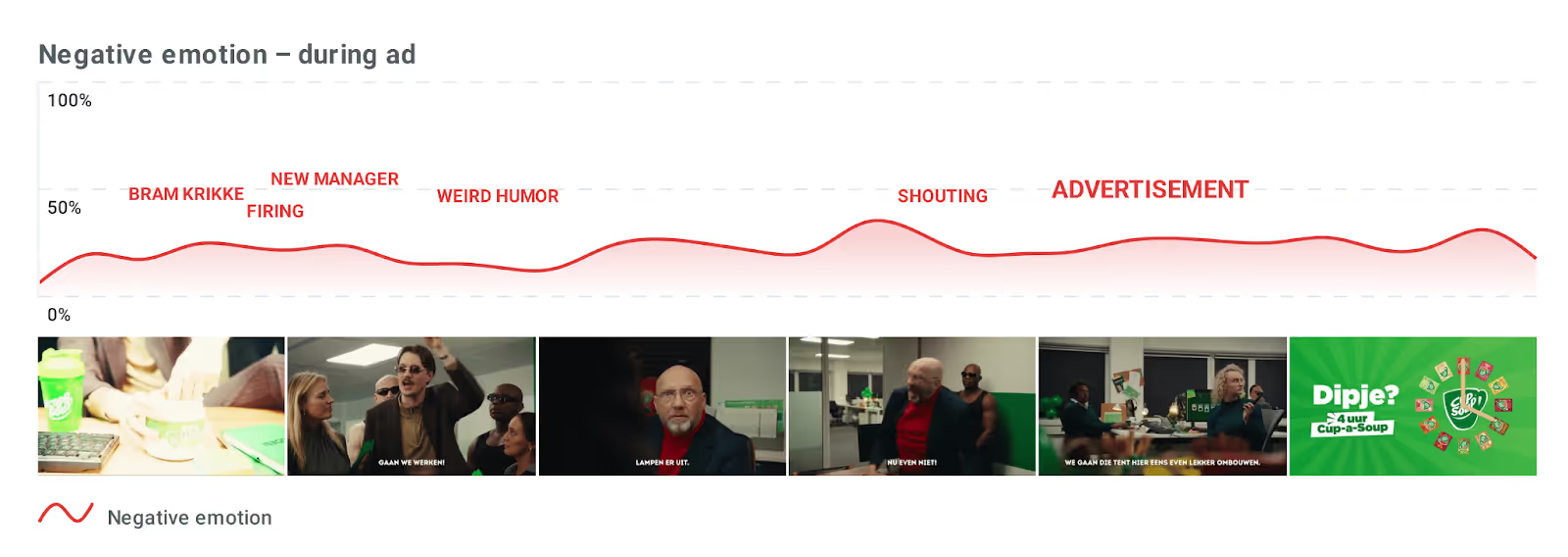
The distinction clear: negative emotions skyrocket when Davy appears, and the positive moments drop when Sjors is replaced by Davy.
The word clouds for positive and negative emotions clearly reflect this shift: humour, charm, and familiarity versus shouting, aggression, and conflict. You can explore the full viewer verbatim comments here to see their raw emotional reactions.
Two more warning lights:
- Only 49% find the ad original, below the distinctiveness norm of 57%.
- Just 69% say the ad is easy to understand, versus a huge 92% average. Confusion is clearly amplifying irritation.
Takeaway: negative emotions need to be quickly resolved to prevent them from sticking to the brand. This isn’t the case here. The ad lingers on negative feelings without a strong positive resolution, leaving Davy’s aggression to overshadow the humour and charm.
Final thoughts
Cup-a-Soup’s “Scoop-a-Soup” campaign tries to modernise a classic brand with a younger manager, influencer casting and satire of supplement culture.
The results shows that this creative ambition isn’t yet matched by effectiveness:
- The brand is somewhat recognised, but not used to its full potential.
- The category and “energy boost” messages – which Cup-a-Soup is perfectly placed to own – don’t come through strongly enough.
- The humour splits the audience, with many finding the story confusing, shouty or simply annoying.
Key wins
✅ Early brand recognition is decent (41% recall in the first 5 seconds).
✅ Some viewers do enjoy the humour and the presence of Bram Krikke, meaning there is an entertaining version of this idea hidden inside.
Opportunities to improve
⚡ Tighten the story. Cut scenes that add noise but don’t help people understand who Davy is, what Scoop-a-Soup is, and why it matters.
⚡ Put product and benefit at the centre. Show the afternoon slump, then clearly show instant soup + protein + energy boost as the simple solution.
⚡ Soften the rough edges of the humour. Keep the playfulness, but avoid shouting, irritation and firing-scene tension that push emotions into anger and boredom.
The bottom line: this campaign is trying to talk to a new generation with a new product…that’s the right move.
But to make the most of Cup-a-Soup’s strong brand position, the next cut needs less chaos, clearer need communication and humour that makes more people smile than wince.