.avif)


Most TV ads fail not because of poor media planning, but because of weak creativity.
After measuring thousands of TV ads across brands and categories, one pattern keeps repeating: brands that avoid a small number of creative mistakes grow significantly faster than those that don’t. And the difference isn’t subtle, it’s often worth millions in wasted or unlocked media spend.
This article breaks down what actually makes TV ads effective, the behavioral science behind it, and the five most costly mistakes that quietly destroy ad impact, often without marketers realizing it.
Creative quality is your biggest unfair advantage
When brands talk about performance, the conversation often turns to targeting, reach, or media efficiency. But data consistently shows that creative quality matters far more.
Google estimates that around 70% of an ad’s impact comes from the creative itself, while only 30% comes from targeting.
We’ve seen this play out repeatedly. For example, in controlled pre- and post-tests, we’ve seen two ads with the same media spend deliver dramatically different results. One creative increased awareness among ad viewers by 20 percentage points, while the other barely moved the needle.
Same budget. Same audience. Completely different result.
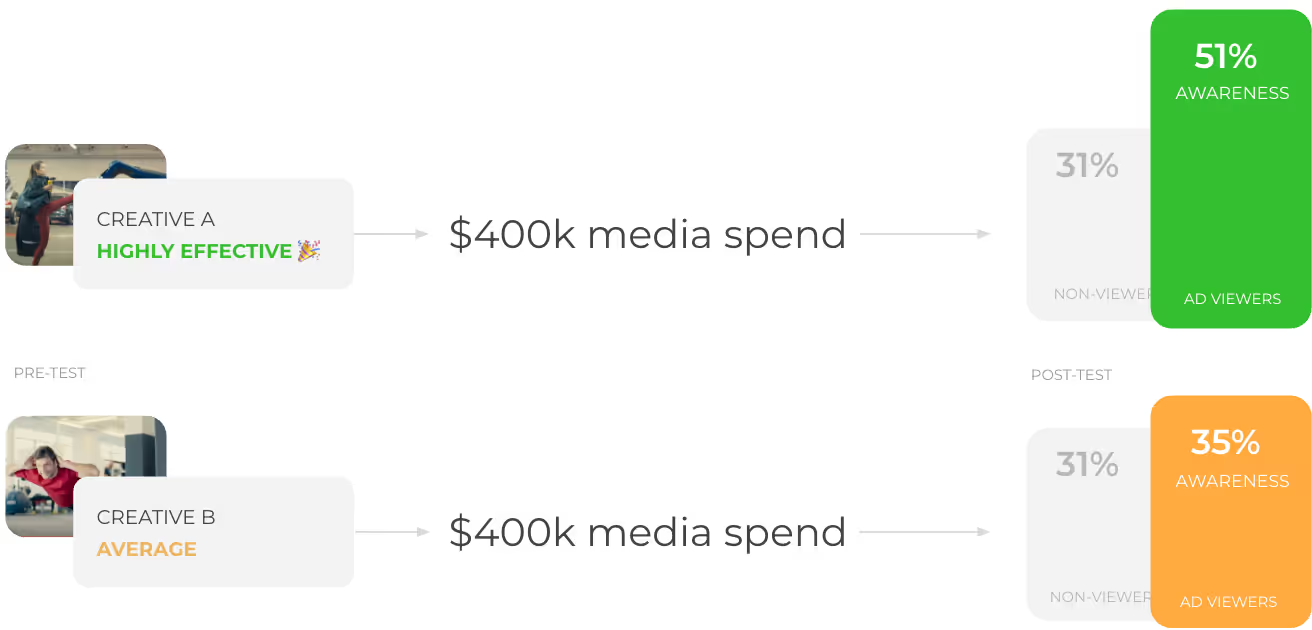
This isn’t an exception. The best creatives can deliver up to 11× higher profits than mediocre ones. Strong ideas don’t just look better, but they also multiply the impact of your media spend.
What makes a TV ad effective?
People are overwhelmed with choice. A typical supermarket offers around 45,000 products, making fully rational decision-making impossible. As a result, around 95% of buying decisions happen subconsciously.
In this environment, the brand that wins is usually the one that comes to mind fastest.
That’s why the most effective TV ads are not the most entertaining or clever ones, they are the ones that build strong, quick memory links between:
- a brand
- a need or occasion
- and an emotion
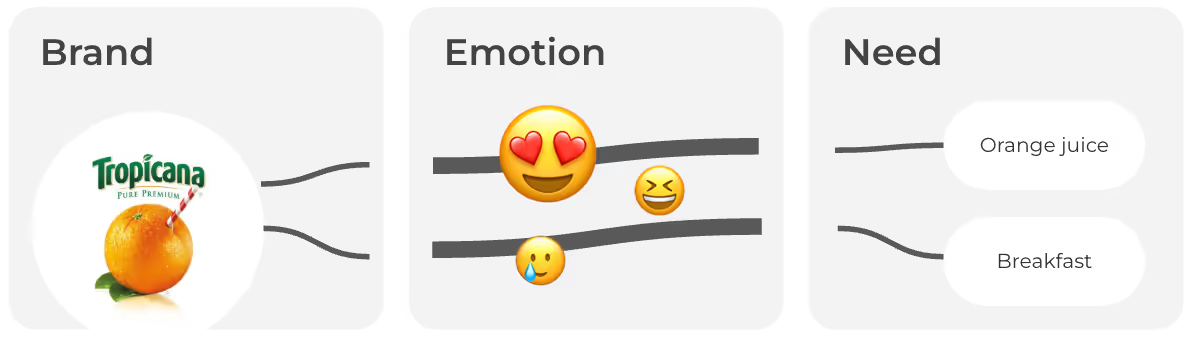
When those elements are repeatedly activated together, the brain forms shortcuts. Later, when the buying situation appears, the brand is already mentally available.
The 5 most costly TV ad mistakes
Based on our large-scale ad measurement, five mistakes show up again and again. Let's break down each one and how to avoid them in the future.
1. Slow emotion
Many TV ads still follow a classic “story arc”: slow build-up, emotional payoff near the end, branding at the finish.
That approach no longer works.
Viewer attention drops almost immediately, and by around 13 seconds, most people have already tuned out. If emotion arrives late, it often arrives too late to matter.
How to avoid it:
Start with your strongest emotional idea. Then keep the pace high with multiple emotional peaks and unexpected shifts. Emotion is what holds attention against the odds, so use it early.
2. Late branding
Relying on a final pack shot or a subtle logo in the corner is one of the most expensive mistakes brands make.
By the time the brand appears, much of the audience is already gone. And even among those still watching, many won’t consciously notice a weak branding cue.
How to avoid it:
Make your brand appear within the first 5 seconds, both visually and audibly. Strong ads introduce the brand early and keep it present throughout.
Early branding is the minimum required to avoid burning your budget.
3. Missing category or occasion
Frequently asked questions

- Slow emotion – waiting too long to engage viewers emotionally, after attention has already dropped.
- Late branding – introducing the brand too late, often only in the final pack shot.
- Missing category or occasion – failing to show what the brand is for and when people should think of it.
- Multiple messages – trying to say too many things instead of repeating one clear idea.
- No consistency – constantly changing creative assets instead of building on recognizable brand codes.
Because targeting only determines who sees the ad, while creativity determines what stays in their memory. Research shows that around 70% of an ad’s impact comes from the creative itself. Even perfectly targeted media can underperform if the ad fails to build strong memory links between the brand, the buying situation, and emotion.
Ideally within the first 5 seconds, both visually and audibly. Viewer attention drops very fast, and many people don’t watch ads to the end. If branding appears too late, the ad may entertain, but it won’t reliably drive brand growth.
- Top 20 Creative Thinking Marketing Statistics 2025 – Yusra Bintemohiuddin, Amra And Elma LLC, 29 Sep 2025