How Surreal cereal's advertising disrupted the breakfast category
The story behind Surreal cereal advertising shows how a small challenger brand can disrupt one of the most established FMCG categories.


What would you do if you wanted to launch a new brand of cereal?
Your competitors are Kellogg's and Nestlé, brands with decades of shelf presence, multimillion-pound ad budgets, and the kind of brand recognition that gets baked into childhood memories.
Perhaps you would try to find a gap, play it safe, and hope for the best.
Surreal did the opposite.
And in their first year, they hit £1.5 million in revenue, landed listings in Sainsbury's, Whole Foods, and Holland & Barrett, and somehow built a cult following of 144,000 people on LinkedIn. Yes, a cereal brand. On LinkedIn.
So how did Surreal cereal ads and campaigns manage to break through in such a crowded category? Let’s take a look.
How Surreal reframed the cereal category
Surreal's co-founders Kit Gammell and Jac Chetland didn't position themselves as another "healthy" cereal. They also didn't go head-to-head with the sugary nostalgia brands.
Instead, they carved out a third lane: high protein, zero sugar, but with the taste and personality of the cereals you grew up eating.
Their message: "The cereals you loved as a kid, rebooted for today." Simple. Clear. Instantly understood.
This is textbook category reframing. Rather than fighting for existing shelf space, Surreal invented a new mental category where they're the only obvious choice.
Their product pages literally show side-by-side comparisons with Coco Pops, Crunchy Nut, Cheerios, and Weetabix to make the contrast do the talking. 17g protein vs 3g. Zero sugar vs 8g. The winner is clearly recognizable here.

Why Surreal chose LinkedIn for their cereal advertising
When you think of marketing in the FMCG category, you probably think of Instagram. Maybe TikTok. Almost certainly not LinkedIn.
Yet LinkedIn became one of the most effective channels for Surreal cereal advertising. Why?
Here’s what the brand understood: their target customer (health-conscious adults aged 25-44) isn't just eating cereal. They’re also sitting in morning stand-ups, scrolling LinkedIn during lunch. and discussing marketing and brand strategy online.
This insight inspired one of the brand’s most talked-about Surreal cereal ads: the “Marketing for Marketers” billboard campaign, which directly addressed people working in marketing and invited them to buy the cereal.
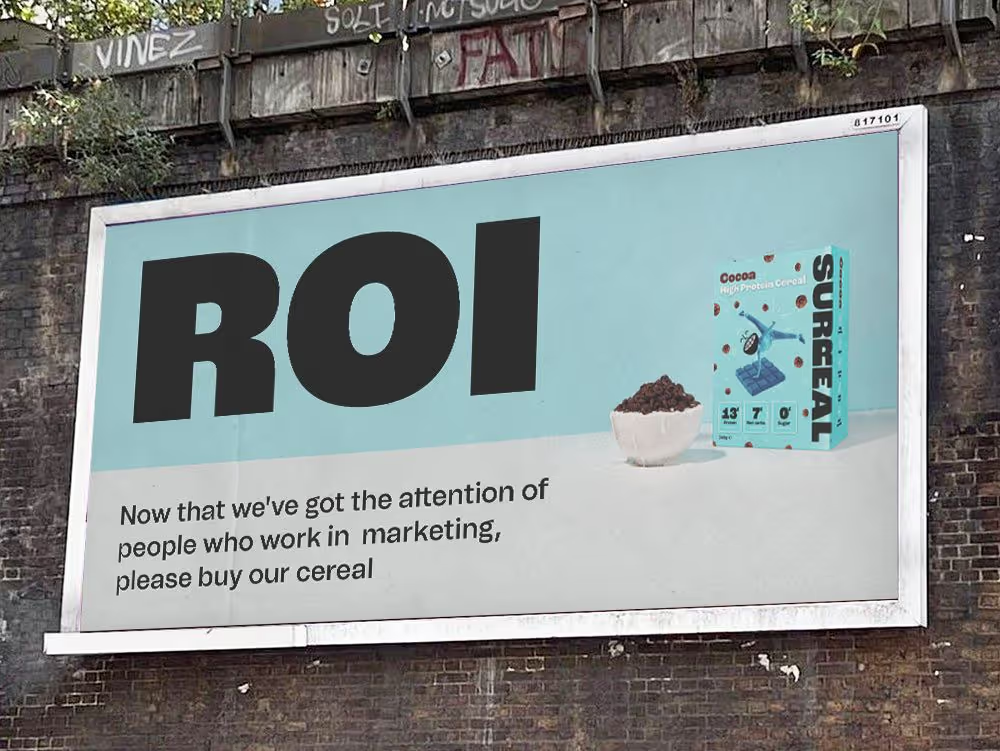
The campaign generated more than 500 comments on LinkedIn, mostly from marketers who immediately recognized the clever self-referential humor.
Co-founder Kit Gammell puts it simply: "It is a perfect fit for our tone of voice and what we're trying to do. Our customer is probably within the 25-to-44 age range, and unfortunately, as we grow older, we're all spending more time on LinkedIn."
As you can see, a deep understanding of your audience pays off. Because you can discover where they actually are, and that can lead to a more appropriate choice of communication channel, even if it’s unexpected.
Surreal’s billboards are designed to go viral
One of the most distinctive elements of Surreal’s marketing strategy is the brand’s approach to out-of-home media.
Surreal treats billboards as shareable content assets. The goal isn't footfall past the poster. It's screenshots on social media.
Every OOH activation is designed with one question in mind: will someone photograph this and share it online?
Let’s take a look at some notable examples of this strategy in action.
The fake celebrity endorsement campaign
As you may have seen, Surreal recently featured endorsements from people named “Dwayne Johnson” and “Serena Williams.”
But not the famous ones.

The deliberate ambiguity and humor are what got people talking, not the celebrities themselves.
The “Not Barry Scott” ad
The campaign featured the original Cillit Bang actor — famous for the chaotic “Bang! And the dirt is gone!” ads — back in full, unhinged glory, this time hawking cereal with the same manic energy that turned him into a cultural icon.
Seeing him enthusiastically promote cereal created an instantly recognizable and humorous moment.
The Comic Sans billboard
One of the simplest Surreal cereal billboard ads read: “Can’t be bothered this January? Same.”
Set entirely in Comic Sans, the ad went viral in a category that normally runs aspirational morning-routine content.
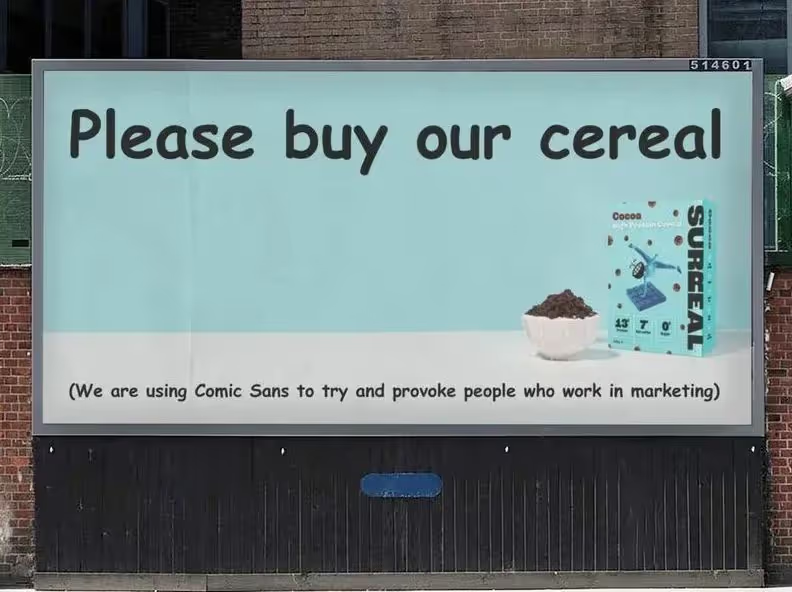
So, what’s the pattern here? None of these campaigns required massive budgets. But all of them were highly memorable. And memorability, as every good brand builder knows, is the most valuable outcome in advertising.
The psychology behind Surreal’s advertising success
It's easy to look at Surreal and assume the formula is simple:
Be funny.
Post on LinkedIn.
Do weird billboards.
But that's just the surface. The deeper truth is that everything Surreal does is grounded in a precise understanding of its target audience's psychology.
They know their customer wants two things at the same time:
- the comfort and taste of childhood cereals
- the health benefits expected by adults
They know nostalgia is a powerful emotional trigger. They know that adults who grew up on Frosties and Coco Pops are still craving that emotional satisfaction; they've just learned to feel guilty about it.
Surreal resolves this tension. They promise permission to enjoy nostalgic cereal without guilt. In that sense, the product is almost secondary to that emotional resolution.
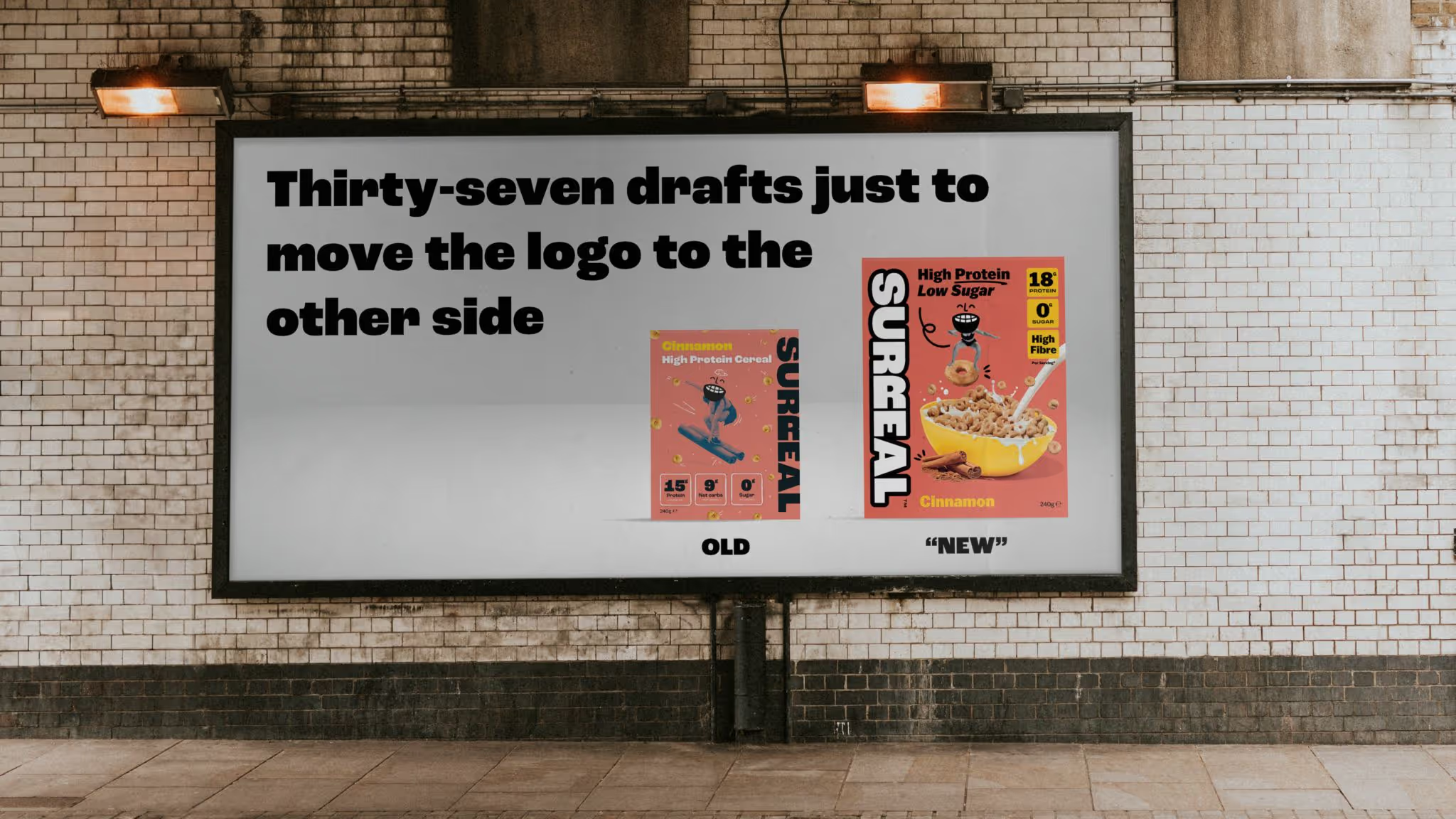
People buy what feels right in the moment, shaped by emotion, memory, habit, and association. Surreal tapped into that instinctively. Their marketing works because it’s grounded in a precise understanding of customer psychology.
They understand:
- how nostalgia influences purchasing
- how guilt shapes food choices
- how humor spreads socially
- how modern professionals consume content
This insight guides everything from their LinkedIn posts to billboards.
And this is exactly where most brands fall. Not because they lack creativity, but because they don't actually understand what's driving their customers' decisions. They run surveys asking, "Would you buy this?", and get answers that tell them very little about what will actually make someone reach for a box on a shelf.
What marketers can learn from Surreal cereal
You don't need to use Surreal's exact tactics or tone of voice to replicate their success. But their approach offers a useful framework for any brand:
- Find the emotional tension in your category.
What do customers want but feel they shouldn’t have? That tension is your opportunity. - Choose your channels with intent.
Don’t just follow industry norms. Find where your audience naturally congregates. That's where you belong. - Design campaigns for shareability, not just reach.
Content that people want to share is exponentially more valuable than content they passively scroll past. - Study behavior, not just opinions.
People often can’t articulate why they buy something. Understanding real behavior leads to stronger marketing decisions.
Get insight into your campaigns
If you want to know what really drives your customers’ decisions before launching a campaign, Behavio helps uncover the subconscious drivers behind brand and advertising effectiveness.
Behavio’s ad testing uses the same principles of behavioral measurement that could have predicted the success of campaigns like Surreal’s viral cereal ads.
Try it yourself — book a demo!
Frequently asked questions

Surreal cereal billboards are designed to be photographed and shared online. By creating simple, witty messages, the brand turns out-of-home ads into social media content that spreads far beyond the billboard location.
Surreal cereal ads stand out for their humor, unconventional tone, and bold creative ideas. Instead of traditional FMCG messaging, Surreal cereal advertising focuses on memorable billboards and social-first content designed to spark conversation and sharing.
Surreal chose LinkedIn because their target audience (health-conscious adults aged 25–44) spends time there professionally. The Surreal cereal ad campaign used marketing humor that encouraged marketers to share the ads organically.