The 2-second attention war: how to make social media ads people remember
Your team has just made a brilliant 20-second video. The story builds, the joke lands, and just when everything comes together, the brand finally appears. Unfortunately, most viewers have probably moved on by then.



On social media, people spend an average of just 1.5 seconds looking at an ad before scrolling past. That leaves very little time to grab attention and make your brand memorable.
To understand how to make those first seconds count, we teamed up with branding consultant, former Kantar expert, and marketing author Dan White. We looked at the differences between big and small brands, tested different creative approaches, and found some surprisingly simple ways to improve brand recall.
Here’s what we learned, along with practical tips you can use to make your next social media ad more effective.
How long do people watch ads on social media?
Much shorter than most advertisers would like. Research into ad viewing shows a striking difference between traditional TV and social media: people watch TV ads for almost half their length, but give social media ads about as much attention as a stranger they pass on the street.
- 30-second TV ad 13.8 seconds
- Instagram Stories 1.7 seconds
- Facebook in-feed 1.6 seconds
- Instagram in-feed 1.3 seconds
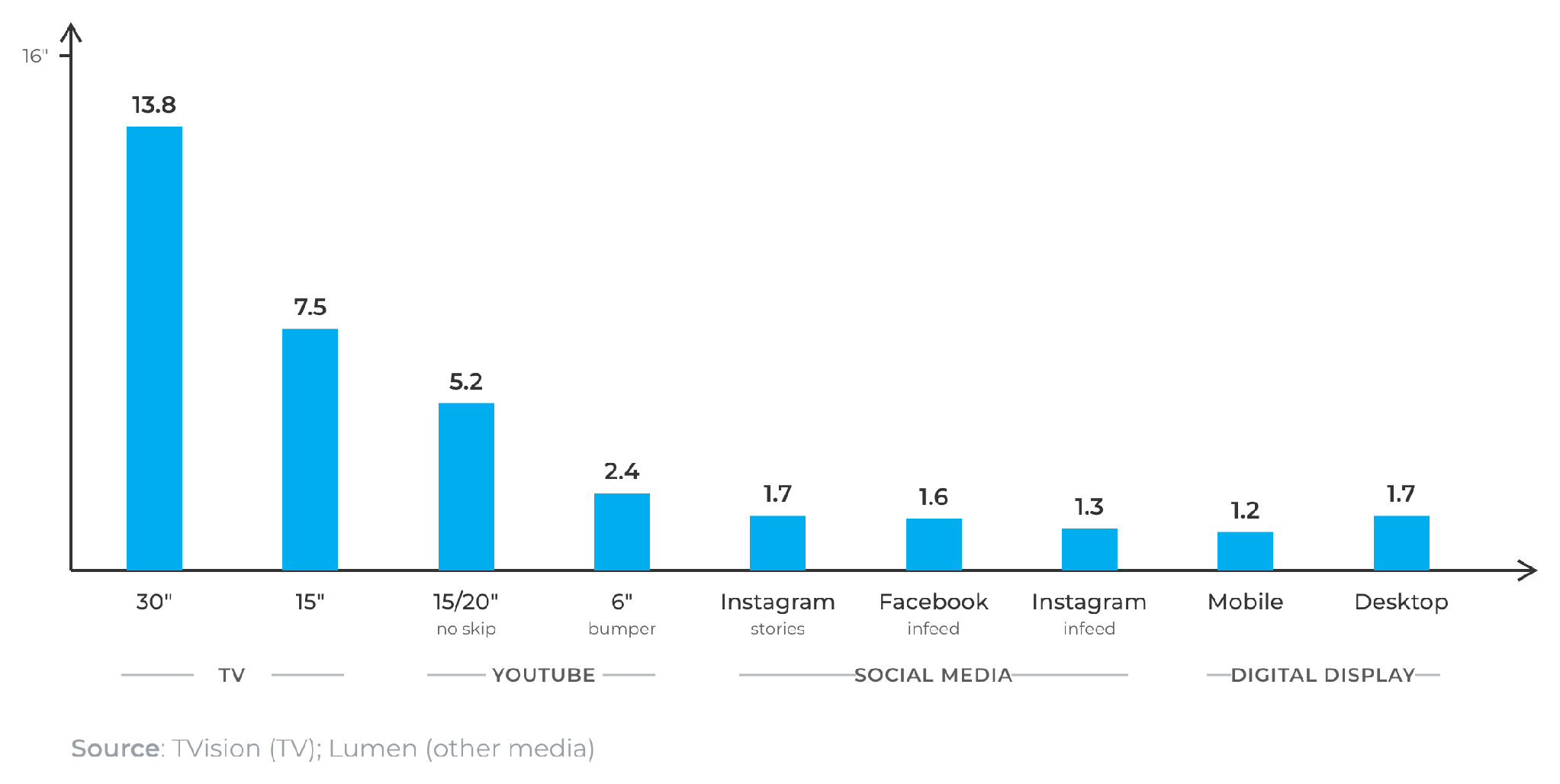
Average seconds of attention per ad, by channel. Source: TVision (TV), Lumen (other media)
Data shows that 85% of skippable ad impressions get less than 2.5 seconds. The other 15% get only 4 to 5 seconds on average.
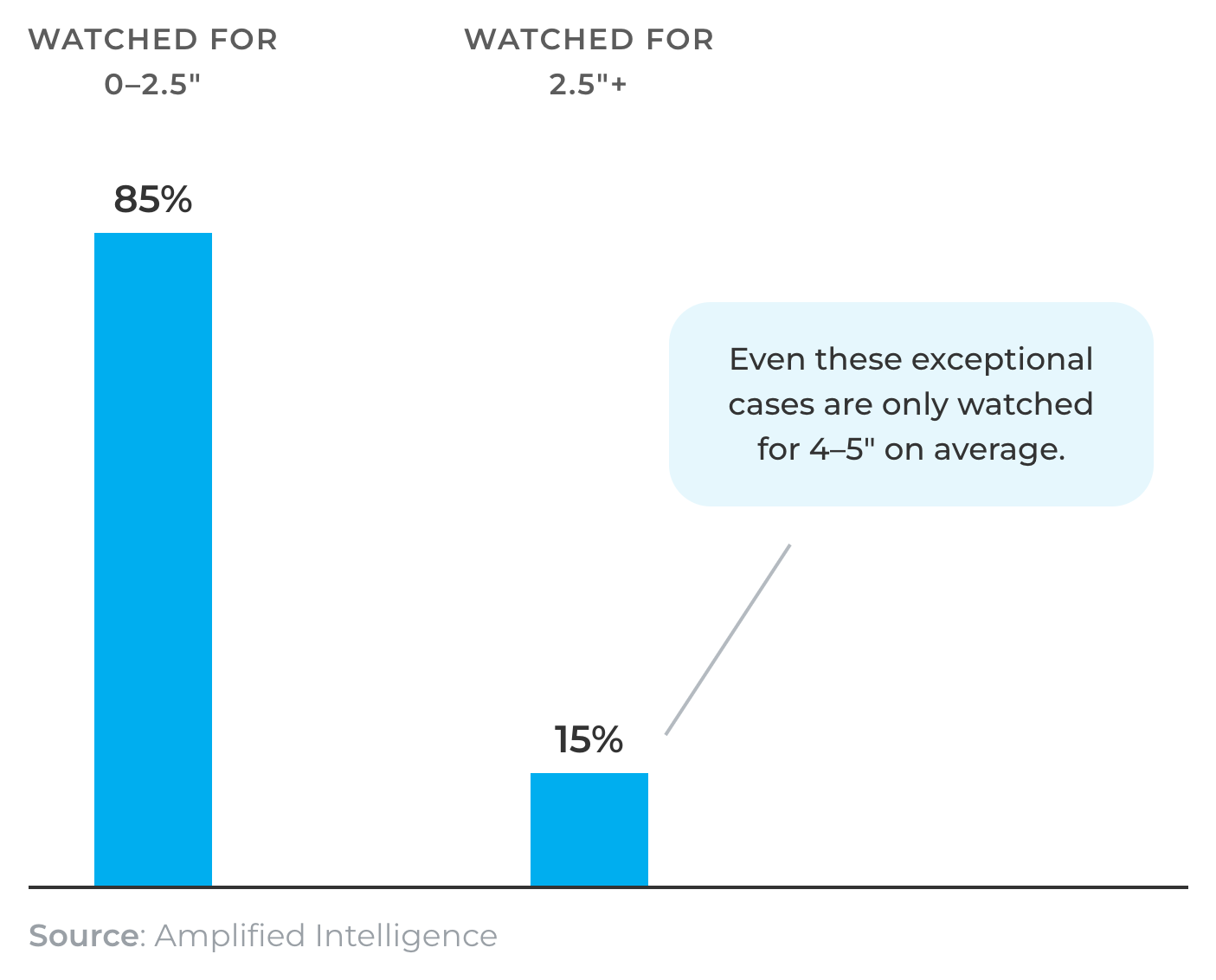
Share of skippable ad impressions by watch time. Source: Amplified Intelligence
What decides how long people watch an ad?
Three things decide how long people watch an ad, and they don’t carry equal weight:
🥇 The channel matters most.
🥈 The audience comes second.
🥉 The creative comes last.
Your creative still matters because it’s the part you can control. But even a brilliant ad can’t make people watch TikTok the way they watch TV.
That’s why small brands should take a serious look at TV. It might seem expensive, but people watch TV ads much longer. As a result, the cost per second of attention can be comparable to social media. Our webinar Why small brands must use TV walks you through the data and shares practical tips for smaller brands.
If your audience is on social media, though, you have about two seconds to grab their attention. There are two ways to make those seconds count, and the right one depends on how well people already know your brand.
When should you show your logo in a social media ad?
It depends on how well people know your brand. Big brands can show their logo right away. Smaller brands should grab attention with a hook first, then introduce their brand immediately after.
Big brands: show your brand in the first second
If people already know your brand, the safest move is to show who you are right away.
We tested this live in our webinar* The 2-second attention war: how to create ads that stop the scroll*. Attendees watched three ad openings, each about 2.5 seconds long. Most recognized McDonald’s, even though its logo appeared for less than half a second. When your brand is that well known, a blink is enough.
We then compared two cuts of the same Corona TikTok ad. Cut 1 opened with the Corona logo, while cut 2 opened with a trending hook: a satellite map that asked viewers to guess the location.
Most viewers preferred the second cut, which also held their attention longer. About 20% were still watching at the two-second mark. But by the time the Corona logo appeared, most viewers had already scrolled away.
The first cut lost viewers quickly, too. But because the logo appeared immediately, around 60% of viewers likely got a quick Corona reminder in under a second.
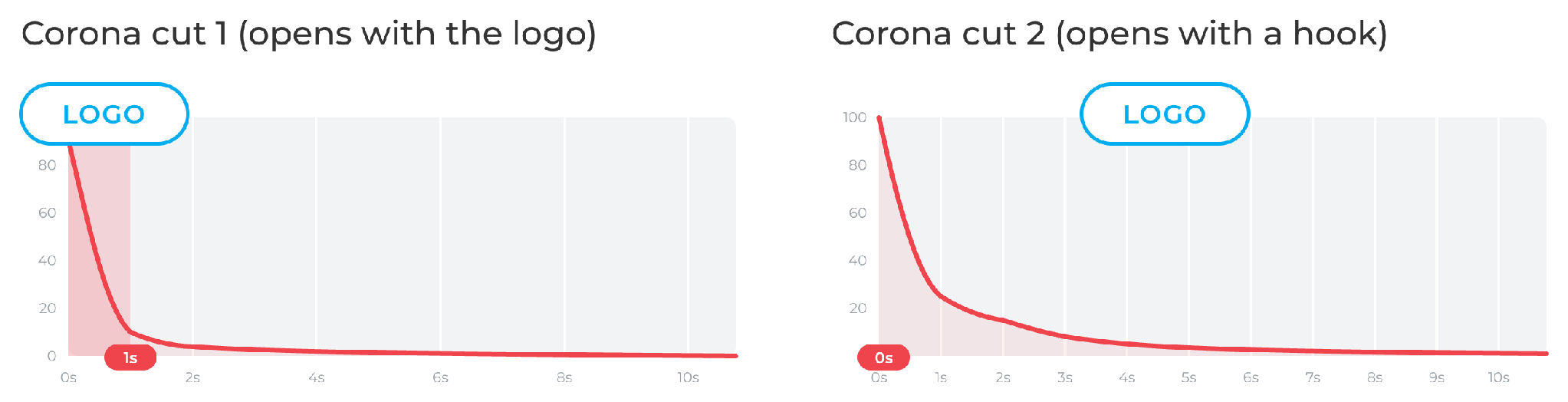
Corona cut 1 vs cut 2: where the logo lands on the retention curve
Source: TikTok Ads Manager (viewer retention by second)
Use distinctive brand assets so people recognize you faster
Showing your brand early works even better with distinctive brand assets, like a mascot, a jingle, a signature color, or a familiar character. Research from Amplified Intelligence and VCCP (2025) found that these assets help people recognize brands faster, even when they only glance at an ad.
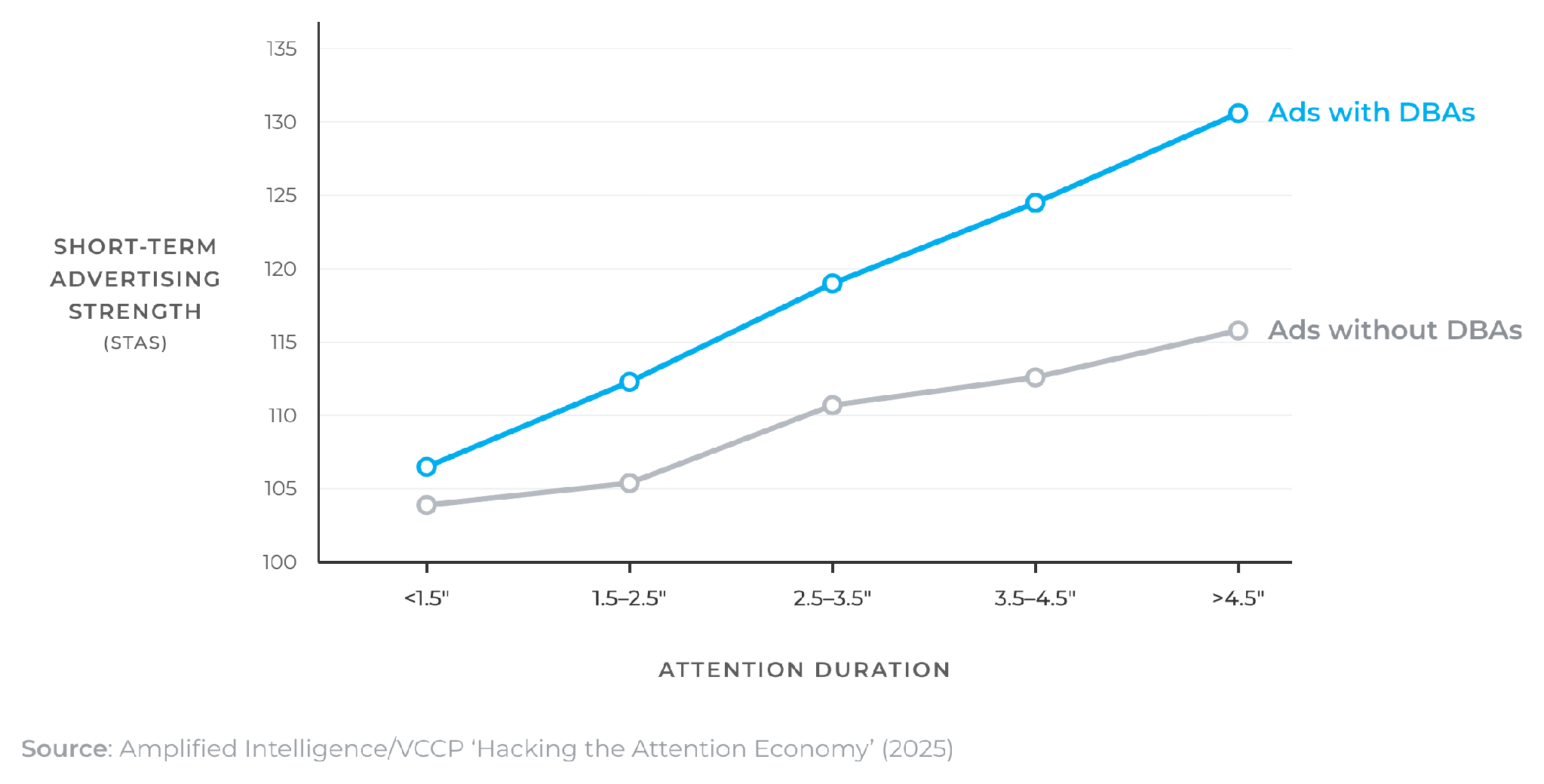
Ads with distinctive brand assets work harder at every attention length. Source: Amplified Intelligence and VCCP, Hacking the Attention Economy (2025)
So instead of slapping your logo on the first frame and hoping for the best, have some fun with your brand assets. You can make your ad more enjoyable while helping people recognize your brand.
If you’d like to take it a step further, our blog post shows you how to make people recognize what your brand stands for just as quickly.
Small brands: hook first, then show your brand
There’s one catch: showing your brand for a split second only works if people already know it.
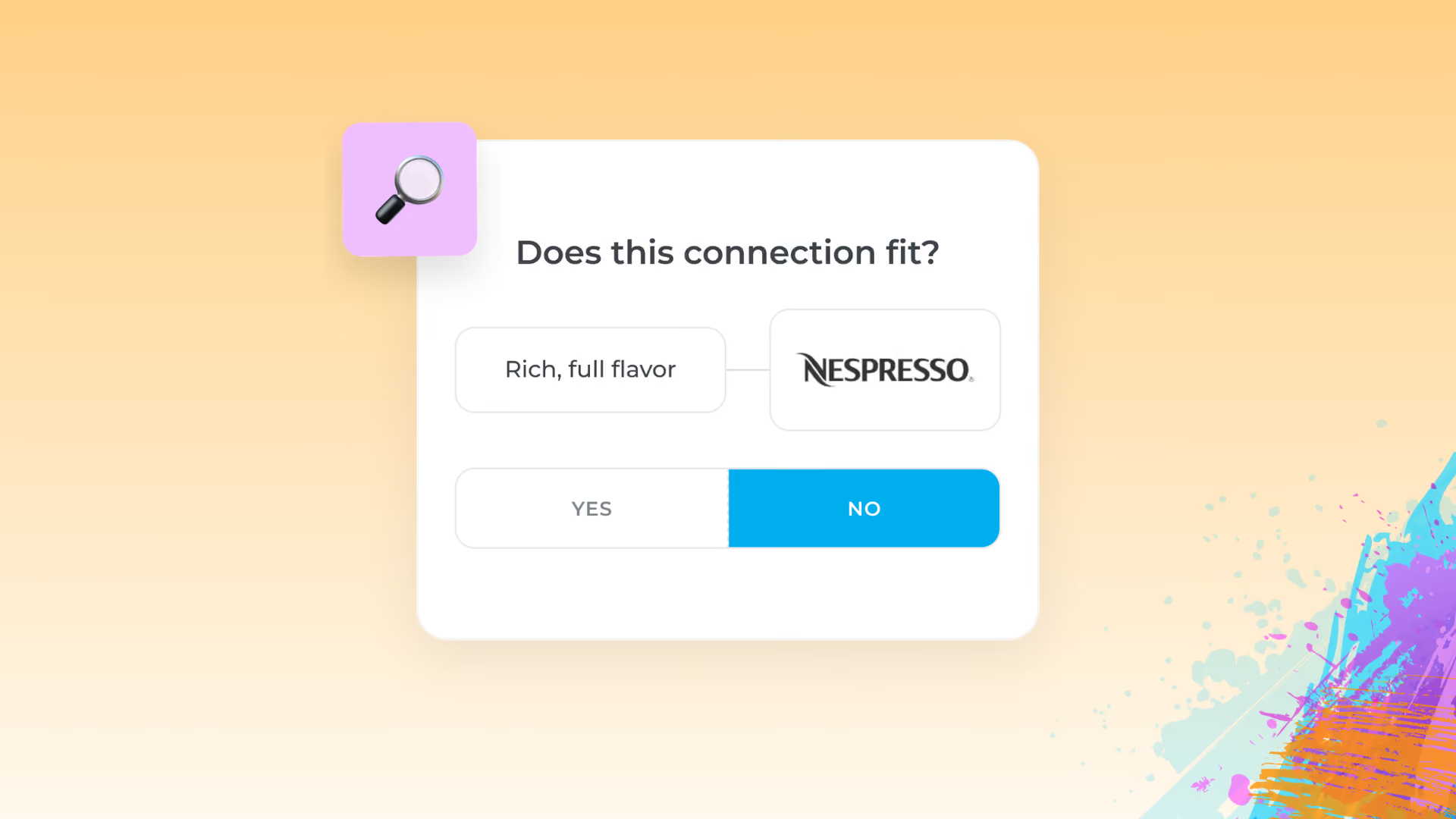
In a Behavio experiment, people had just two seconds to spot a logo in an image. They easily recognized famous brands, while lesser-known ones mostly went unnoticed.
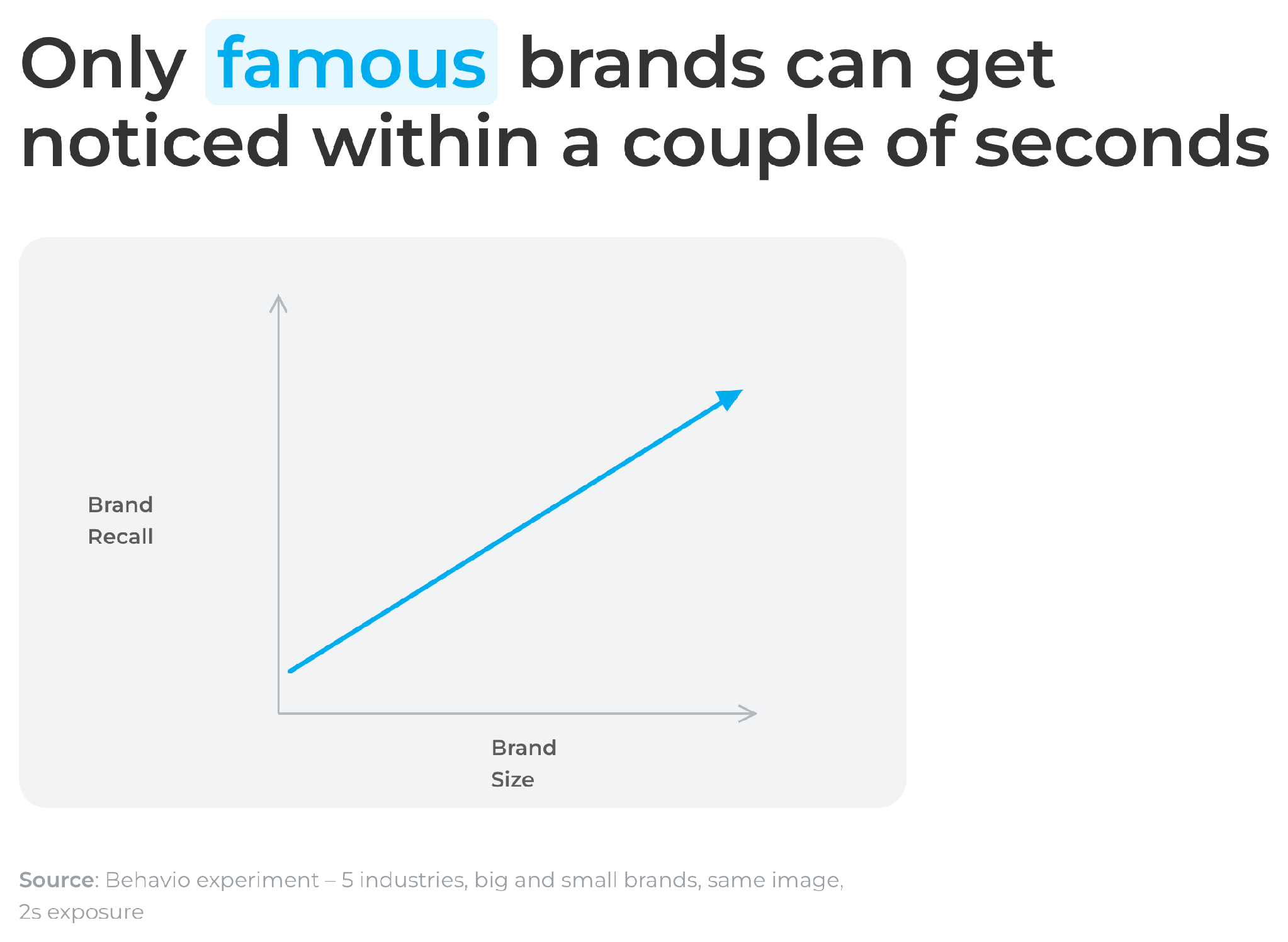
Only famous brands get noticed within a couple of seconds. Source: Behavio experiment across 5 industries, big and small brands, same image, 2-second exposure
Why heavy branding alone doesn’t work for small brands
More branding doesn’t always mean better brand recall. We analyzed an ad from a small brand that followed all the usual rules: its logo stayed on screen throughout, appeared several times in the middle, and the brand name was repeated out loud. Yet only about 41% of viewers remembered which brand the ad was for.
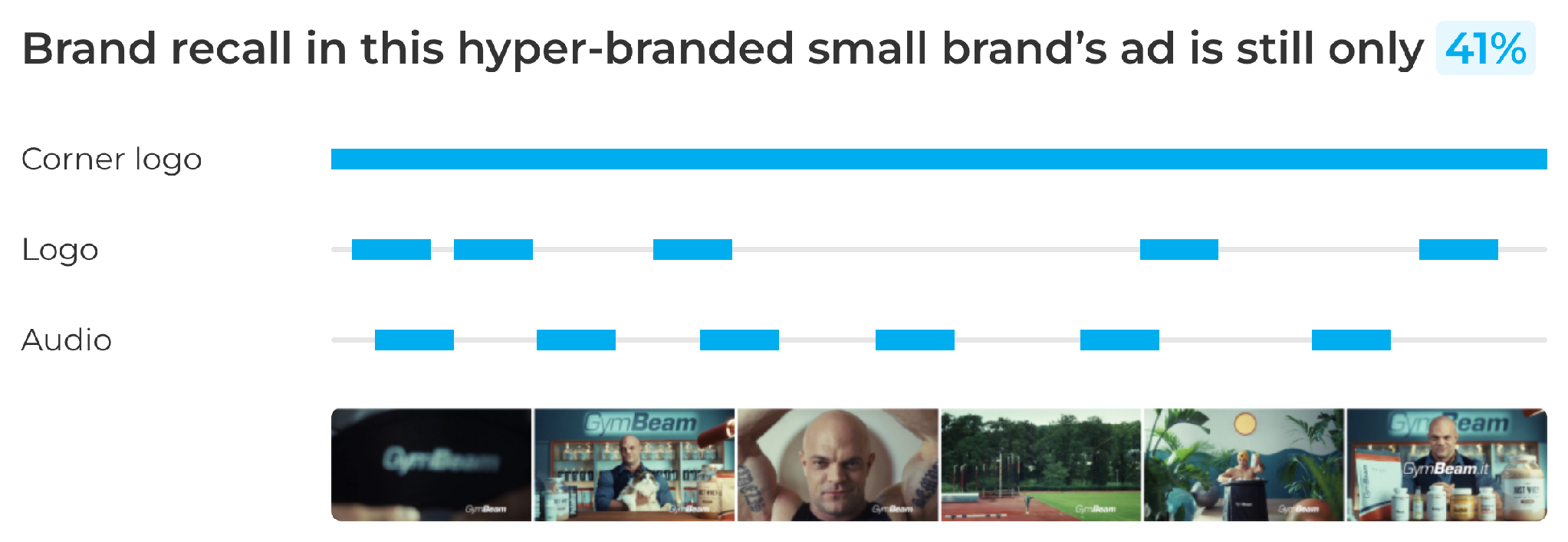
Brand recall in this heavily branded small-brand ad: 41%. Source: Behavio
That means that small brands face two challenges on social media:
- Show your logo first, and more people scroll past.
- Even if they stay, a quick glimpse isn’t enough to make an unfamiliar brand memorable.
What you need is a few more seconds of attention, and that’s exactly what a good hook earns you.
How to hook viewers in the first 2 seconds
A good hook buys you a few extra seconds, and for a small brand, those seconds can make the difference between being remembered and being ignored.
Try one of these approaches in your next ad:
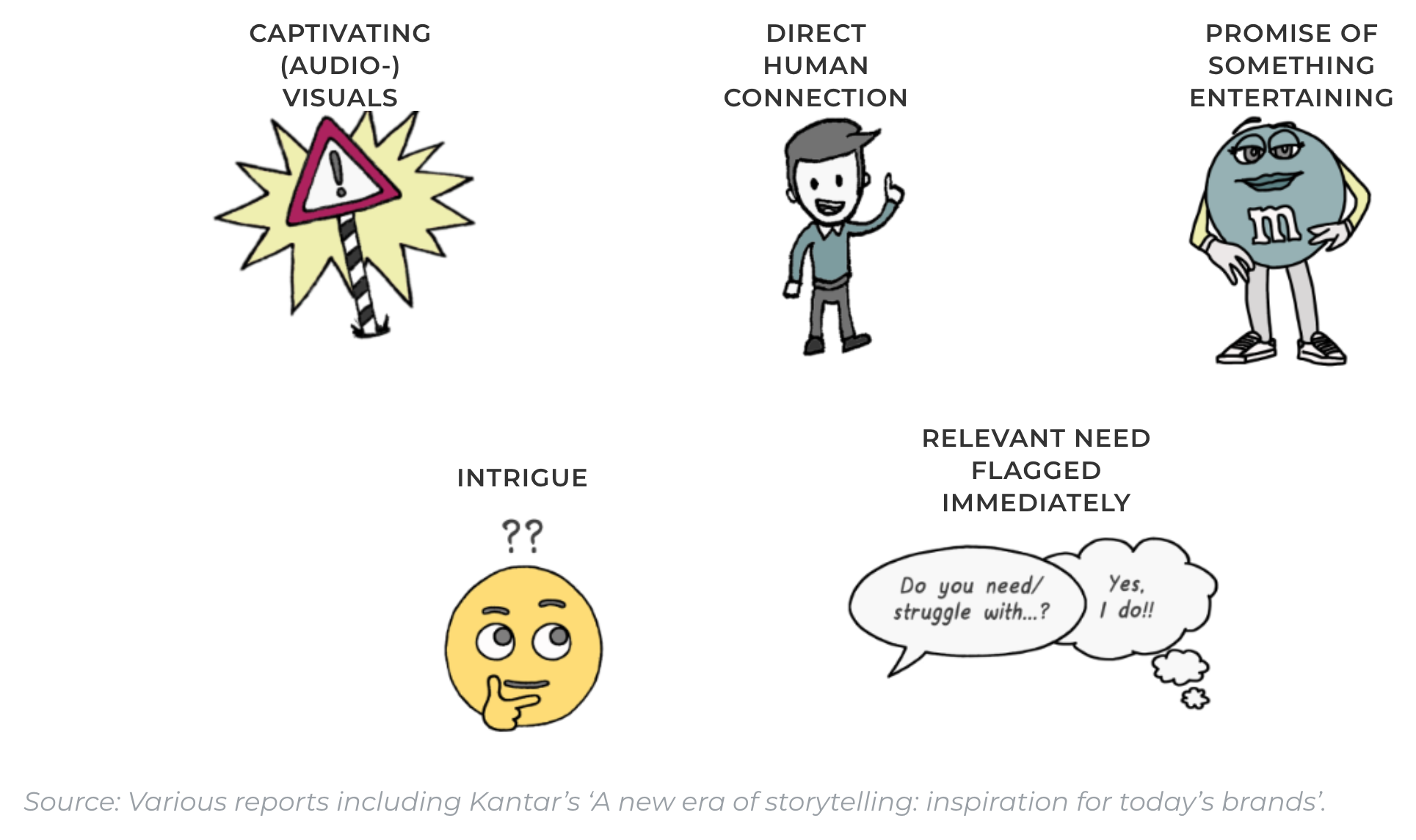
Five types of hooks that buy extra seconds. Source: various reports, including Kantar’s A new era of storytelling: inspiration for today’s brands
1. Surprise the eyes and ears
Open with something unexpected, whether it’s a striking visual or an unusual sound. Keep the pace high to hold their attention.
2. Look straight into the camera
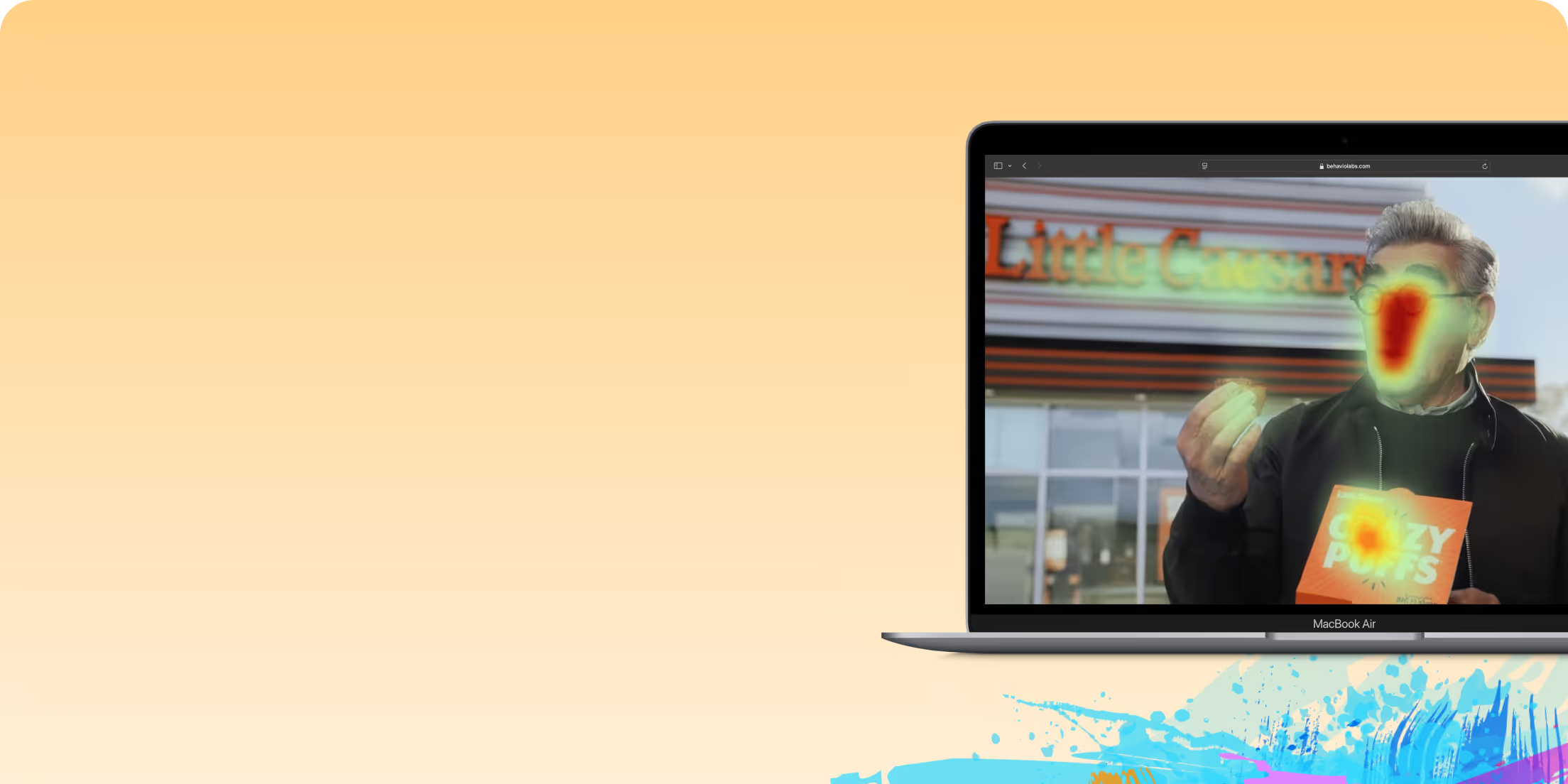
Direct eye contact is hard to ignore, even in a busy social media feed.
3. Promise a good time
Familiar characters signal that an ad will be entertaining. If you use a celebrity or influencer, give your brand a clear role, or people may remember the famous face and forget your name.
4. Spark curiosity
Show something so unusual that viewers want to see what happens next.
5. Tap into a familiar need
Start with a problem your audience recognizes or a product they’re looking for. This helps the right people see why they should keep watching.
How to structure a social media ad, second by second
Picture your next social ad, second by second.
Seconds 0–2: Hook them. Surprise viewers, make eye contact, or spark their curiosity. Whatever you choose, do it fast. If your hook takes four to six seconds to land, most viewers will already be gone.
Seconds 2–4: Brand it. While you still have their attention, show your logo prominently in the center of the screen and say your brand name out loud. People are more likely to remember what they see and hear together.
If you have to choose between your brand and your message, prioritize your brand. Most viewers won’t buy today, but you want them to remember you when they’re ready.
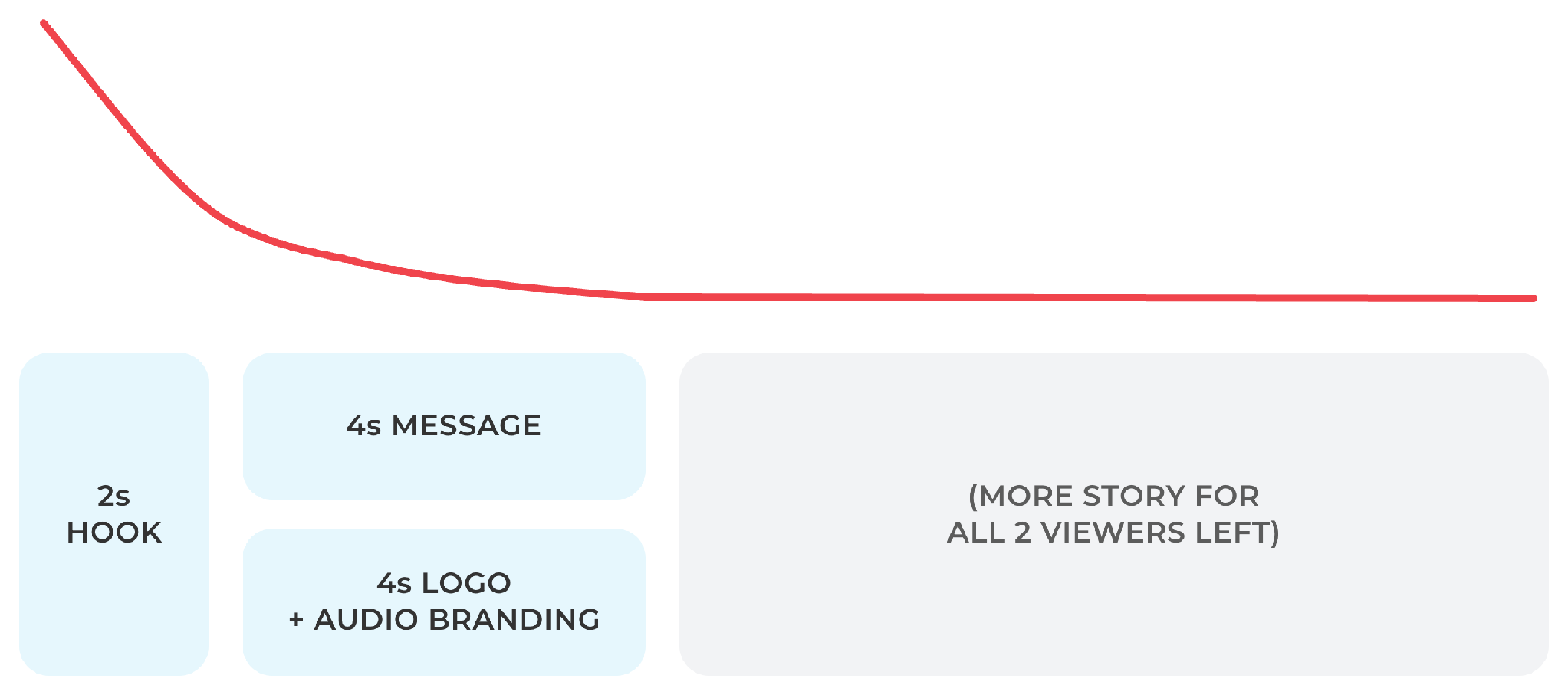
The small-brand structure: hook, then brand and message, then the rest of the story
Then tell the rest of the story for whoever is still watching. It might feel backwards if you’re used to TV ads, but on social media, the end is where most viewers are already gone.
Big brands can flip the order. Show your brand in the first second, then use a hook to keep people watching longer.
How to improve brand recall without a reshoot: 3 editing fixes
The good news is that most of the problems we found don’t require a reshoot. A few tweaks in post-production can make a difference.
We used the Behavio AI Pre-Test to identify them. Upload your video, and in about 15 minutes, you’ll get predictions of how viewers will feel, where they’ll look, and when they’ll recognize your brand, second by second. Built on more than ten years of Behavio campaign testing with real people, it helps you spot weak moments before you spend money on media.
Fix 1: Move your logo to right after the hook
This rodeo ad had one of the strongest hooks we found on TikTok, with around 40% of viewers still watching at seconds two or three. But the brand didn’t appear until the very end, when most viewers had already scrolled away. As a result, only about 35% could name the brand.
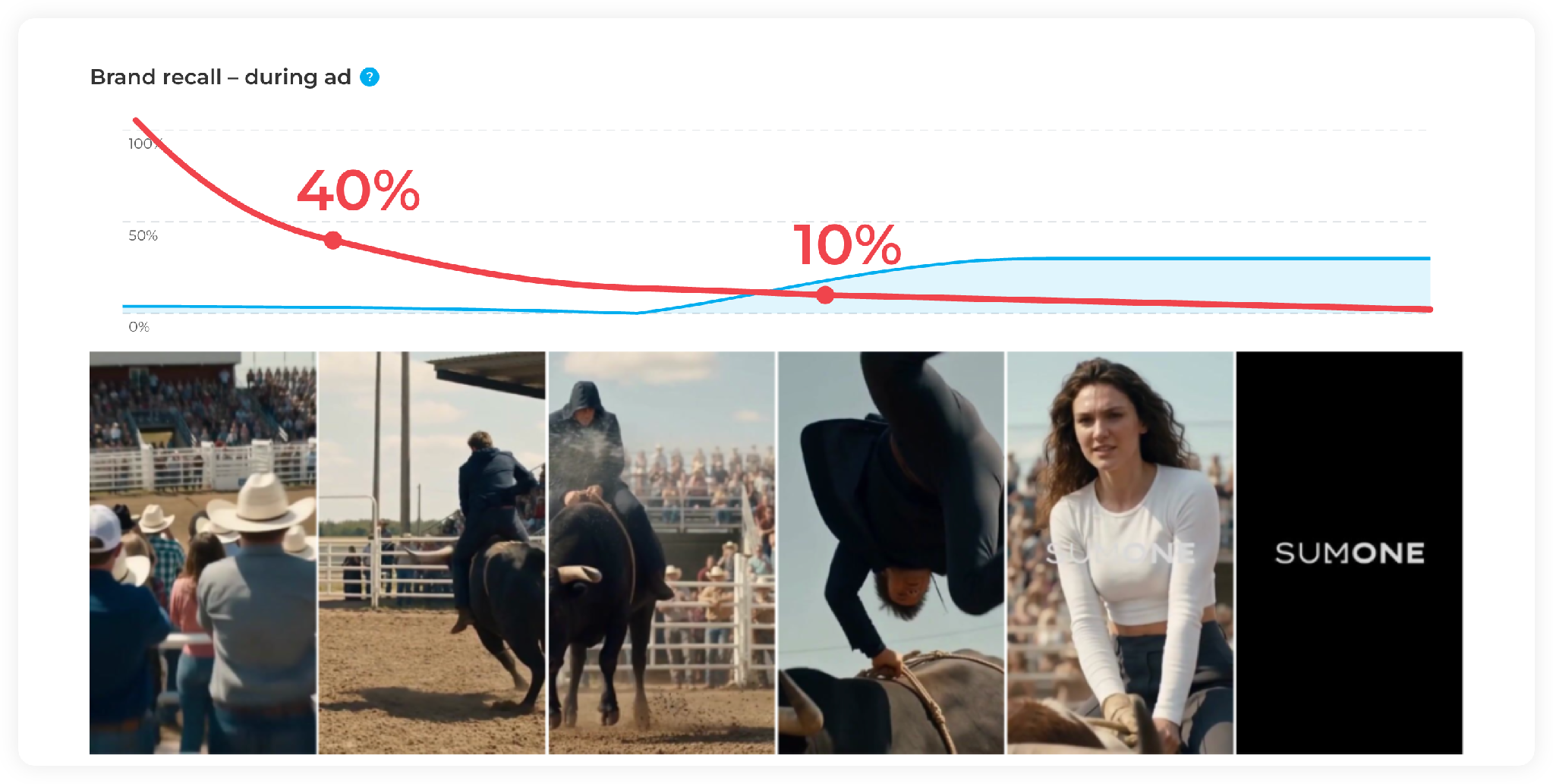
Source: TikTok Ads Manager (viewer retention by second, in red) and Behavio AI Pre-Test (predicted brand recall, in blue)
Ask your editor to add a large logo and a voice-over saying your brand name right after the hook, around seconds two or three. This simple re-edit could roughly triple brand recall.
For your next shoot, make the product itself part of the branding. In this ad, the rider was wearing the very jacket being advertised, so showing the brand on the jacket could help viewers connect the ad to the product.
Fix 2: Put your logo where viewers are looking
This hammock ad showed its logo early, yet people still couldn’t name the brand. Eye tracking data revealed why: most people focused on the person walking, and only about 10% looked at the logo. The “40% off” banner was likely overlooked, too.
[Image 10]
Source: Behavio AI Pre-Test (predicted attention heatmap and the share of attention each element gets)
Ask your editor to make the logo large enough to stand out and place it in the center of the screen. Time it with the line about the world’s first recycled hammock, while the voice-over says your brand name.
That’s when viewers are most curious about the product, making it the perfect moment to show them who’s behind it.
Since hardly anyone notices the discount banner, you can remove it.
Fix 3: Open with your strongest scene
This M&M’s ad saved its best scene for second 12, far too late for social media. We re-edited it to open with a stronger scene instead. No reshoot needed, and the ad now grabs attention with a bigger emotional impact while keeping the joke intact.
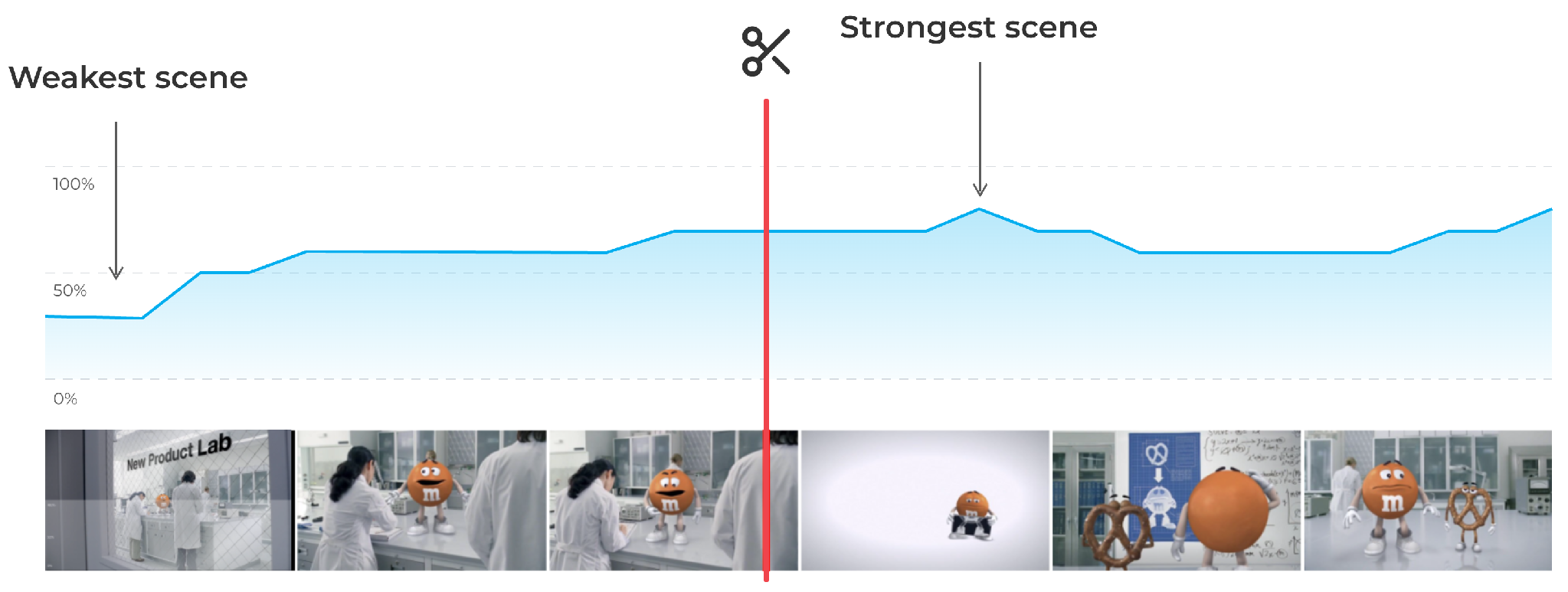
Source: Behavio AI Pre-Test (predicted positive emotion, second by second)
Try opening your own ad with its strongest moment. Some scenes only work thanks to the build-up, so use the data as a guide, not a strict rule.
Want to see how your ad performs? Try Behavio AI Pre-Testto find out when viewers recognize your brand, second by second.
Key takeaways
- Plan for 1.5 seconds. That’s about how long a typical social media ad holds attention.
- Choose your channel wisely. The channel matters more than the creative, so consider TV if you need more attention.
- Big brands: Brand from the start. Show your brand in the first second, using distinctive assets like mascots, jingles, or signature colors.
- Small brands: Hook first, brand second. Grab attention, then show a large, centered logo and say your brand name out loud.
- Make every second count. A strong hook can buy you 2 to 4 seconds of attention. Use them to make your brand memorable.
Test your video ad before you spend on media
You’ve just seen how moving a single logo could roughly triple brand recall. The tricky part is knowing which fix your own ad needs.
Upload your video to Behavio AI Pre-Test, and in about 15 minutes you’ll see how people feel, where they look, and when they can name your brand, scene by scene, along with tips on what to change. It works for social, TV, and any other video ad.
Frequently asked questions

About 1 to 2 seconds. Lumen data shows 1.6 seconds for Facebook in-feed and 1.3 seconds for Instagram in-feed. Amplified Intelligence found 85% of skippable ad impressions last under 2.5 seconds.
If you're a well-known brand, yes. If you're a small brand, show it right after a 2-second hook. Half a second isn't enough for people to learn a new name.
About 2 seconds. A hook that takes four to six seconds has already lost most of its viewers, so bring in your brand around seconds two to four while people are still watching.
A quick glimpse isn’t enough to learn a name people have never heard before. In one small-brand ad with the logo on screen the whole time and the name said out loud repeatedly, only about 41% of people remembered who it was for.
They’re the things people link to your brand without seeing the name, such as a color, a character, a sound, or a jingle. On social media, they help people recognize you faster. Ads that use them work harder at every attention length.
- The Challenge of Attention, Ebiquity, Lumen, and TVision, 2021.
- The DNA of Distinctive Brands, Distinctive BAT, 2025.
- Hacking the Attention Economy, Amplified and VCCP Media, 2025.
- A dual-process model of how incorporating audio-visual sensory cues in video advertising promotes active attention, Simmonds, L., et al., 2020.