TV advertising for small brands: the science, the myths, and a practical playbook
Most marketers at small brands have quietly written TV off. Too expensive. Only reaches older audiences. Hard to measure. It all makes sense — except it's wrong.



When you look at how brands actually grow (through mental availability, attention, and reach), the evidence points somewhere surprising:
TV may be better suited to small brands than big ones.
Big brands can get away with 1.5 seconds of social scrolling – their logo flashes past, and your brain fills in the rest.
Small brands don't have that luxury. They need time, attention, and trust to make a dent.
We teamed up with Dan White, author of Marketing Illustrated, to bust the biggest myths holding small brands back from TV and build a practical playbook you can act on today.
Why small brands hit a growth ceiling — and can't spend their way out
Before we talk about TV, let's look into what happens when small brands rely entirely on digital.
At first, search converts, social delivers, and for a while, the numbers feel exciting. Then, somewhere around 18 months to 3 years in, something shifts. You keep spending more, but the returns flatten. That's the performance plateau, a well-documented structural problem.
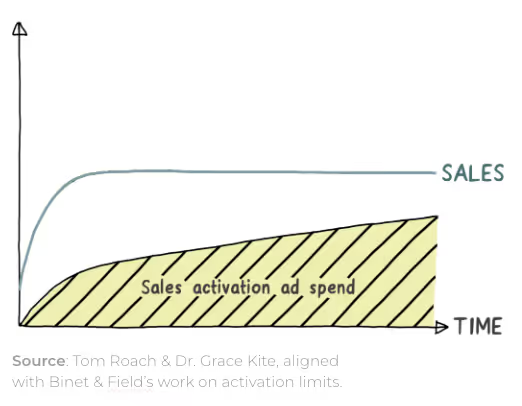
Pure activation channels like search, social media, and performance marketing run out of new people to reach. As budgets grow, frequency goes up, but reach doesn't. You're paying to reach the same people, over and over again.
The fix is adding brand-building reach to the mix. And no channel does that better than TV.
Why is TV advertising especially well-suited to small brands?
1. Small brands need more attention, not less
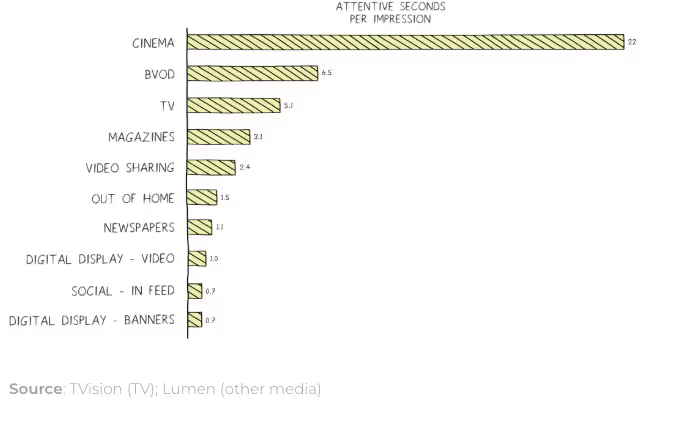
It turns out 85% of digital ad impressions generate less than 2.5 seconds of active attention, which is not enough time to build a memory.
For an established brand, that barely matters. Bosch or Coca-Cola can be recognized in a fraction of a second because their brand assets are already burned into your brain. But for a brand no one has heard of yet? Two seconds are almost useless.
However, broadcast TV delivers around 5 seconds of active attention per impression – more than double what you get from social media. That extra window is exactly what a small brand needs to introduce itself, land a message, and start building something in people's minds.
2. TV breaks through the growth plateau
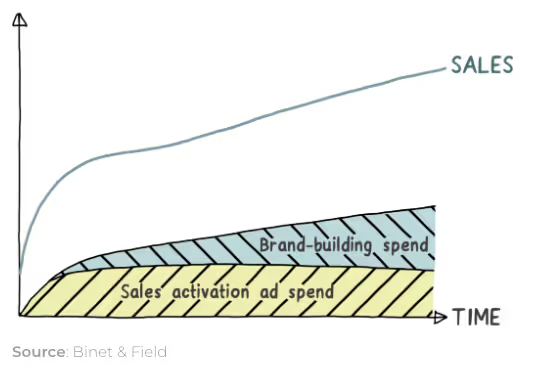
When brands shift even part of their budget from activation to brand-building, growth resumes. As TV spend increases, sales uplift keeps rising – while social media, YouTube, and display quickly plateau.
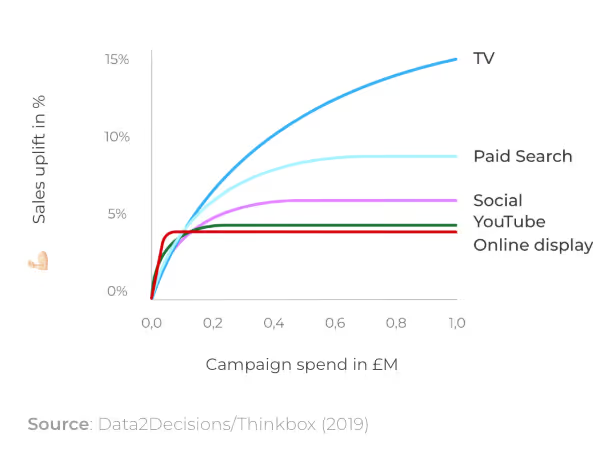
TV expands reach and finds genuinely new people, where digital channels just recycle frequency.
Binet and Field suggest a roughly 50/50 split between activation and brand building delivers the strongest long-term results.
For most digital-first brands, that means tilting the balance toward brand building. And TV is the most natural place to start.
3. TV lends credibility to brands no one has heard of yet
Trust in advertising varies enormously by channel. According to Ipsos/Thinkbox data, 35% of people trust TV ads – compared to just 6% for social media. That gap is growing, not shrinking, as scam ads proliferate on social platforms.
For a small brand, appearing on TV is a signal. It says: we're real, we're regulated, we're worth your attention. That credibility is much harder to build when your ads are sandwiched between scammy skin cream promotions on Instagram.
4 small brands that used TV to break through
Hedepy: from flat revenue to 50% sales growth
Hedepy is a European online therapy platform. After a strong early start, their revenue flatlined for more than a year at around €3 million. Social campaigns had stopped working. Classic performance plateau.
They made the leap to TV – but did so carefully. They tested a storyboard with Behavio (which scored average), revised it, and retested the final video (which scored high). Then they launched in Q3, when media costs are lower.
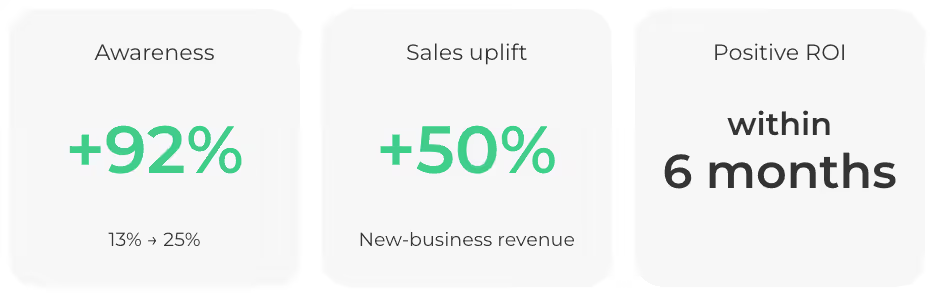
Awareness nearly doubled (from 13% to 25%), new-business revenue grew by 50%, and they recouped their investment within 6 months!
Monzo: word-of-mouth bank, TV-scale growth
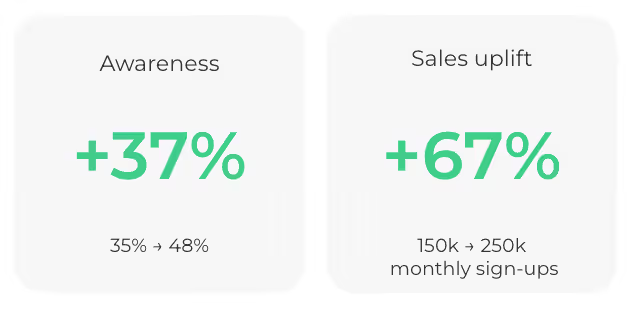
Monzo had grown mostly through referrals before their first TV campaign. Before TV, they averaged around 150,000 monthly sign-ups. In their strongest month after launching, they hit 250,000 – a 67% jump in monthly sign-ups.
What made this unusual was that sales growth outpaced awareness growth. That happens when there's strong latent demand – people were already frustrated with their banks and just needed to hear about Monzo on TV to act. The channel amplified a need that already existed.
GymBeam: from #5 to #3 in three months
GymBeam entered the Italian sports nutrition market where they were essentially unknown.
They took a TV concept that had worked in other markets, localized it with an Italian influencer, pre-tested it locally (high score), and launched in Q1 to take advantage of lower media costs.
Within three months, awareness had more than doubled (+121%), and the brand jumped from number five to number three in the category.
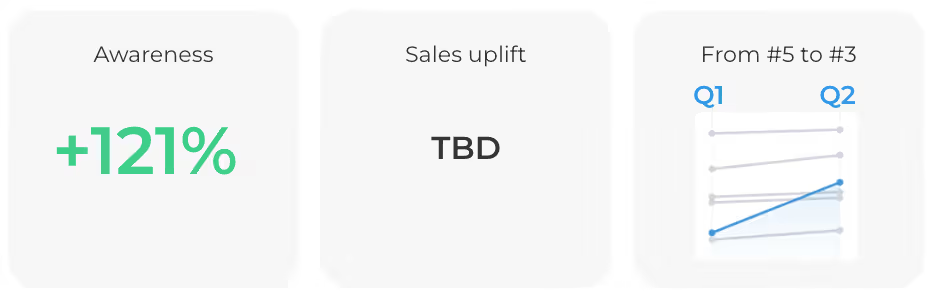
Within three months, awareness had more than doubled (+121%), and the brand jumped from number five to number three in the category. GymBeam also identified strategic white space before they briefed the creative — see the de-risk section below for what that process looks like in practice.
Tony's Chocolonely: strong consideration lift on first UK TV campaign
Tony's Chocolonely is a well-known Dutch brand but had relatively low presence in the UK.
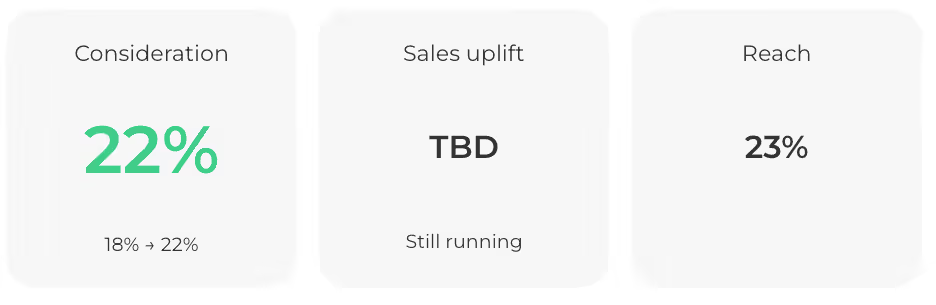
Their first UK TV campaign (launched in January, partly to benefit from quieter media pricing) delivered a 22% lift in consideration (from 18% to 22%), even with only 23% reach.
Consideration is a stronger predictor of actual sales than awareness. And they got that lift before the campaign had even finished running.
But isn't TV expensive?
Less than you think. And it’s getting cheaper, because:
Creative costs are falling. Agency fees have been declining for decades. Today, AI is accelerating that even further — nearly 40% of digital video ads now use generative AI in some form.
Behavio has tested many fully AI-produced TV ads, and some are topping our emotional benchmarks. Consumers don't notice, and they don't care.
Shorter ads work better anyway. 10- and 20-second ads deliver the best ROI for small brands. They're cheaper to buy and cheaper to produce — and they force you to communicate one clear thing, which is exactly what small brands need to do.
Off-season buying saves significantly. Q1, Q3, and surprisingly December offer lower media costs with similar sales uplift.
Hedepy launched in Q3. GymBeam launched in Q1. Both saved meaningfully on media costs without sacrificing results.
Cost per attentive second is competitive. TV looks expensive on a CPM basis. But when you measure cost per second of attention, the gap narrows as low-attention channels like social and display become the most expensive.
Broadcast TV costs around 4p per attentive second in the UK, while programmatic display comes out at 7.5p.
What about the "only old people watch TV" problem?
Linear TV reaches 55% of 16–34 year-olds weekly in the UK. Add connected TV (CTV), and that rises to 95%.
The "TV is for old people" narrative is outdated. Live sports, live events, and reality TV pull in broad, younger audiences.
And CTV (streaming services with ads) skews young. If your audience watches Netflix, Amazon, or ITVX, you can reach them.
The two ways first TV campaigns fail, and how to de-risk both
The case for TV is one thing. Actually getting a TV campaign to work is another. Most first TV campaigns that flop don't fail because TV doesn't work — they fail at one of two specific points. Both are catchable before you spend on media.
Risk 1: Creative failure (your branding doesn't land)
For small brands, branding is the single strongest driver of awareness lift. It's also surprisingly easy to get wrong.
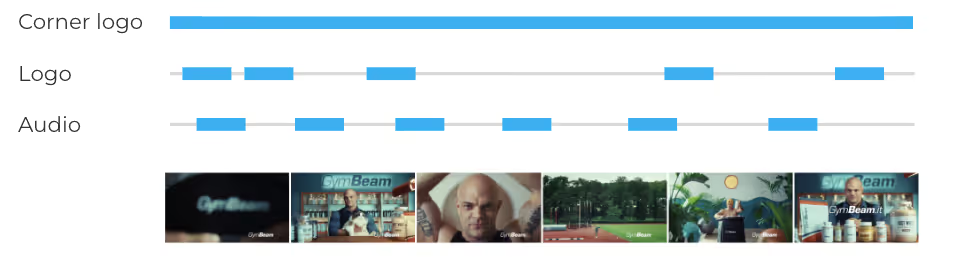
Compare two real Behavio pre-tests. GymBeam's TV ad used a corner logo throughout, repeated in-frame logo appearances, and multiple audio mentions. Brand recall: 41%, a strong result for a small brand.
Micazu's ad showed their logo only at the beginning and end of the spot. Brand recall: 15%.
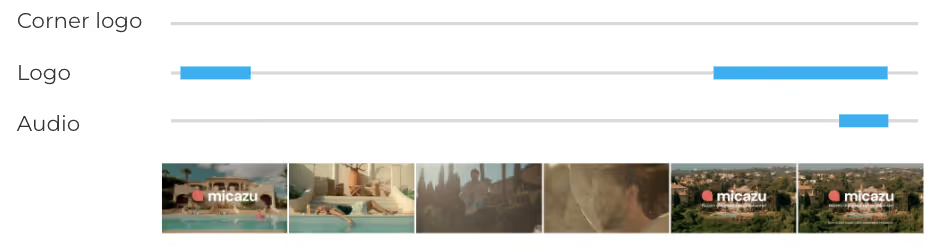
Subtle branding doesn't work when you're not yet famous. Bosch and Coca-Cola can get away with two seconds of exposure because their brand assets are already burned into consumer memory. A brand no one has heard of yet doesn't have that shortcut. The branding has to feel almost excessive on the brief, or it won't be enough on screen.
The fix: Brief your creative with branding as a non-negotiable requirement. Corner logo throughout. Brand name in the audio. Logo visible in-frame the whole way through. Then pre-test before you shoot. A storyboard pre-test costs around €2,500 for 500 real respondents in three to five days. An AI pre-test delivers reliable branding scores in around 15 minutes for around €250. Either is a fraction of your media budget. Hedepy did exactly this: tested a storyboard, scored average, revised, retested, scored high. Then launched.
Risk 2: Strategic failure (your message lands for the wrong brand)
If you target a need that's already owned by a bigger competitor, your ad might remind people of them, not you. Researchers call this misattribution.
Micazu built their campaign around "houses perfect for holidays" — a large need, but completely owned by Booking.com and Airbnb. GymBeam in Italy did the opposite: they targeted "vitamins and supplements for every sport", a large need with genuine white space, no dominant competitor. Three months later, they'd moved from #5 to #3 in the Italian fitness supplements market.
The fix: Map your territory before you brief the creative. A market mapping study surveys around 1,500 real consumers and shows which needs in your category are large, which are already owned, and which are genuinely available. It costs roughly €6,000 and takes five to ten days, almost negligible against a TV media budget, and it changes which message you'd brief in the first place.
The five-step de-risking checklist
- Map your territory. Identify needs that are large, unclaimed, and credible for your brand. Without this, you're guessing at the strategic level.
- Brief creative with branding as a hard requirement. Corner logo, in-frame appearances, audio mentions. Build the brief around what the data says, not what looks cleanest in mockups.
- Pre-test the storyboard early. Testing before the film is shot is cheaper and gives you room to change direction. If branding scores average, iterate before you shoot.
- Pre-test the final film before buying media. Branding score first, then emotional response and need resonance.
- Buy smart. Shorter ads (10–20 seconds) deliver the best ROI for small brands. Q1, Q3, and December typically offer lower media costs for similar sales uplift.
The same logic that makes TV feel risky is what makes it powerful. You're committing to a message at a scale that forces clarity. Brands that win on TV aren't the ones with the biggest budgets. They're the ones that map the territory first, brief for branding rather than beauty, and pre-test before they spend. The risk isn't TV. It's going in unprepared.
Key takeaways: the TV playbook for small brands
1. Use shorter ads (10–20 seconds). Cheaper to produce, cheaper to buy, and they force message discipline.
2. Target white space. Find a need that is both large and unclaimed. Don't fight Booking.com on their own turf.
3. Go heavy on branding. Corner logo throughout. On-screen logo repeatedly. Audio mentions. More than feels comfortable. Still probably not enough.
4. Prioritize the idea over production value. A strong concept with AI production beats a weak concept with expensive cinematography.
5. Pre-test it. Every time. It's cheap relative to the media spend it protects.
6. Buy during cheaper periods. Q1, Q3, and December offer the best value. Launch off-season, then sustain.
Don't gamble your media budget on a creative you haven't tested
Behavio's AI Pre-test gives you branding, attention, and emotion scores in 15 minutes, so you can spot the issues before you film.
Full pre-test with 500 real respondents takes 3–5 days. Either costs less than 1% of your TV media spend.
Frequently asked questions

Yes. Small brands often see disproportionately strong results from TV because every viewer reached is genuinely new. Case studies show awareness lifts of 92–121% and sales growth of 50–67%. Shorter ads (10–20 seconds) deliver the best ROI, AI is cutting production costs, and off-season buying (Q1, Q3, December) reduces media spend significantly.
Activation channels like search and social eventually run out of new people to reach. Budgets grow, but frequency increases while reach doesn't — you're paying to show ads to the same people. This performance plateau typically hits 18 months to 3 years in. Adding brand-building reach through channels like TV expands the audience to genuinely new people.
Yes. Linear TV still reaches a majority of 16–34 year-olds weekly in the UK. Add connected TV (streaming services with ads like Netflix, Amazon, and ITVX), and that rises to 95%. The "only old people watch TV" narrative doesn't hold up when you include the full TV ecosystem.
- The Performance Plateau – Tom Roach & Dr. Grace Kite, aligned with Binet & Field's work on activation limits
- Attention Seconds Per Impression – TVision (TV); Lumen (other media)
- The Long and the Short of It – Binet, L. & Field, P., IPA, 2013
- Trust in Advertising by Channel – Ipsos/Thinkbox
- As Seen on TV: Supercharging Your Small Business – Data2Decisions/Thinkbox, 2019
- Cost Per Attentive Second / Short Ads ROI – Data2Decisions/Thinkbox, 2019
- Why Small Brands Must Use TV – Behavio & Dan White, 2026