What beauty brands stand for: a new look at differentiation in 2026
What truly differentiates beauty brands? Using market-tracking data, we break down how consumers actually perceive leading brands, and which emotional needs and moments each one really owns.
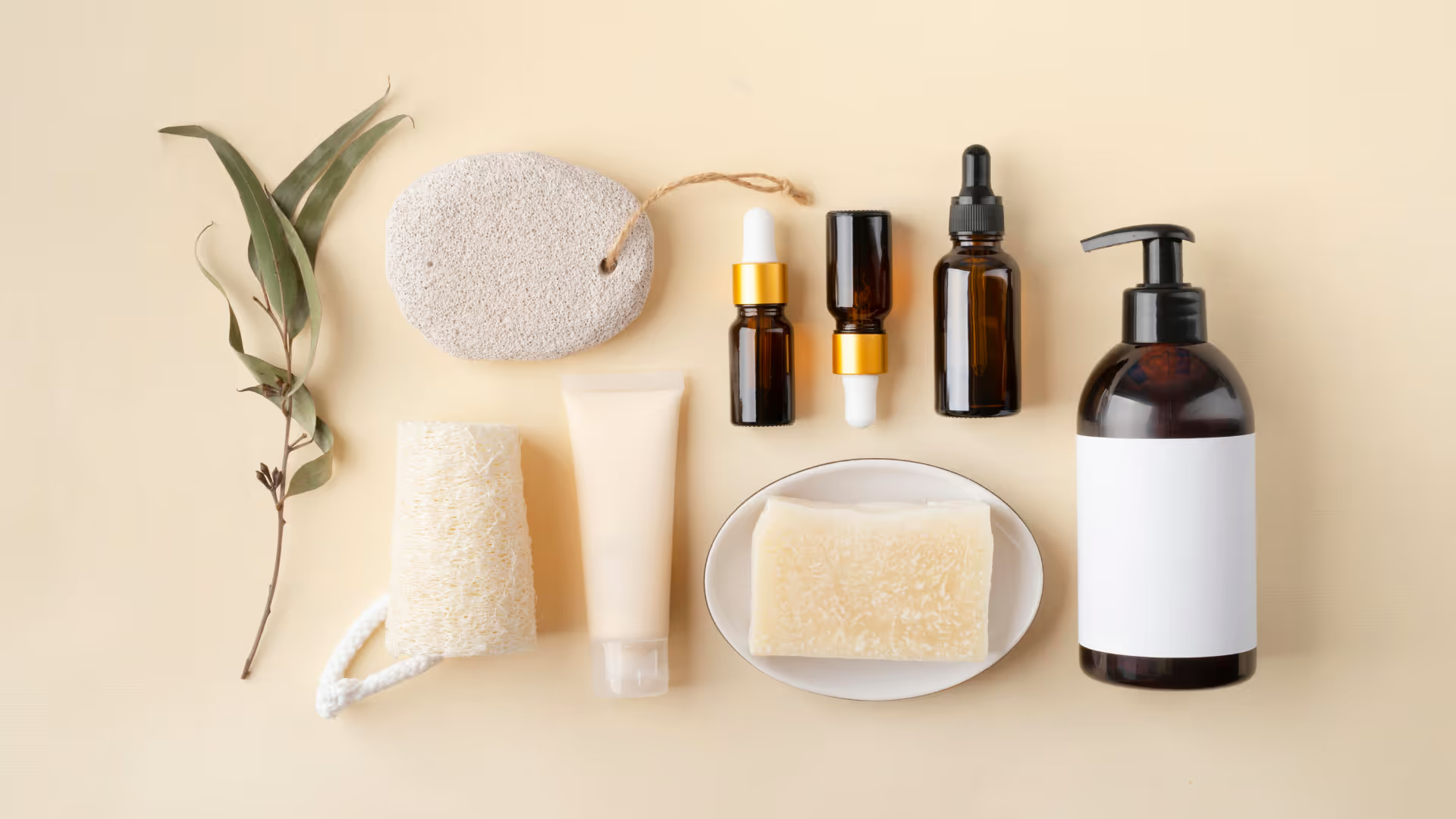


If you’ve ever watched a beauty ad, you can probably recite the buzzwords by heart: high-quality, self-care, indulgence, sustainability, gifting…the usual suspects.
But when you look past the category clichés and into what consumers actually associate with each brand, especially relative to the needs that matter most, a much more interesting picture emerges.
Using Behavio’s market tracking data, we analyzed top beauty and personal-care brands to understand which key needs each one truly “owns.”
This kind of longitudinal view is crucial; it shows not only what people think today, but how stable (or vulnerable) each brand’s mental territory is over time.
.avif)
.avif)
Rituals: the brand of daily self-care
.avif)
Rituals has positioned itself as the premium, experience-led brand that’s more about atmosphere and indulgence than functionality. That strategy plays out clearly in the data: consumers strongly link Rituals with almost every high-importance need.
- High-quality (78% association)
- Wellbeing and relaxation (76%)
- Affordable luxury (61%)
But Rituals’ most powerful advantage is emotional: It’s the brand consumers link to their personal routine.
“Part of my ritual” shows both high absolute association (47%) and the strongest differentiation in the dataset.
This is Rituals’ real moat: Not luxury. Not scent. Habit.
And habits are hard to steal.
Douglas: the curated gifting destination
As a multi-brand retailer rather than a standalone product line, Douglas naturally leans into trust, quality, and gifting. The data reinforces this positioning.
Douglas posts strong numbers across a wide range of needs, especially:
- High-quality: 69%
- Thoughtful gifting: 70%
- Luxurious experience: 61%
- Wellbeing & relaxation: 61%
Where Douglas falters is emotionally personal needs, e.g. “part of my ritual” (29%). That’s expected: retailers rarely win on deeply personal associations.
Douglas succeeds by being a dependable, premium-feeling destination for quality and gifting. Its opportunity is not emotional storytelling, but doubling down on trust, convenience, and curation.
L’Oréal: the dependable generalist
Known globally for its science-forward positioning — “Because you’re worth it” — L’Oréal tends to win on credibility and mainstream appeal. The Dutch numbers reflect that profile:
- High-quality (63%)
- Wellbeing and relaxation (60%)
- Affordable luxury (52%)
It’s not the leader on any single need, but it consistently performs well across multiple high-importance ones. This suggests a brand that is broadly trusted rather than sharply defined.
Its weaknesses lie in more intimate, emotional associations:
- Part of my ritual: 31%
- Mindful living: 38%
L’Oréal’s role in the category is “everyday premium.” Its advantage comes from broad confidence, not emotional depth, but that makes it harder for rivals to disrupt.
The Body Shop: ethical, sustainable, and emotionally resonant
If Rituals owns rituals and Douglas owns gifting, The Body Shop owns values. Consumers associate it strongly with:
- Ethical practices (41%)
- Sustainable refills (41%)
- Mindful living (44%)
Not only are these high absolute numbers, they’re also comparatively stronger than competing brands on all three.
But the caveat is that these needs aren’t among the top priorities for Dutch beauty shoppers. Ethical practices (36% importance), sustainable refills (39%), and mindful living (50%) sit well below category drivers like high-quality, wellbeing, and luxury.
In other words: The Body Shop is strongest on needs that matter less.
But that doesn’t make the brand weak. In fact, the nuance reveals something strategically important: while “ethical practices” is a rational, checkbox-style benefit, “Mindful living” is emotional, identity-driven, and culturally resonant.
This emotional layer is what truly differentiates The Body Shop, and what Lush is trying to own but hasn’t managed to secure. Despite Lush’s strong activist positioning, its associations with these same needs are far lower.
LUSH: high principle, low integration
Lush is famous for handmade products, strong ethical stances, and sensory overload shops. The data shows a brand with very clear positioning, but not mass relevance.
Associations are much lower across the board:
- High-quality: 20%
- Wellbeing & relaxation: 19%
- Affordable luxury: 15%
- Ethical practices: 16%
Even on needs where we expect Lush to shine — sustainability, ethics, rituals — it remains below competitors.
This suggests the brand is well-defined but niche: strong love among fans, but lower penetration and weaker mental availability overall. Lush doesn’t need to be everything to everyone, but increasing availability, distribution, and consistent brand assets could help it scale beyond a passionate niche.
L’Occitane: Positive but forgettable
Known for Provençal luxury and giftable skincare, L’Occitane should, in theory, perform well on premium, sensory, and gifting cues. In the Dutch market, however, the data shows extremely low associations:
- High-quality: 11%
- Wellbeing & relaxation: 10%
- Luxurious experience: 9%
- Thoughtful gifting: 9%
Even in categories where it historically has equity (luxury, gifting, rituals), it significantly underperforms, not just relative to leaders like Rituals, but even to mid-category brands.
The takeaway here is that L’Occitane has strong intrinsic brand assets, but they are not mentally available to Dutch shoppers. This is a classic salience problem: people don’t think of the brand at the right moment.
What actually differentiates beauty brands today
When you step back from the individual brands, a pattern becomes unmistakable:
1. Functional claims don’t differentiate anymore.
Nearly every brand performs similarly on high-quality, luxury, or affordability.
2. Values only differentiate when they’re lived, not stated.
That’s why The Body Shop wins on sustainability while LUSH trails.
3. The strongest mental territories are moments, not messages.
- Rituals → daily self-care ritual
- Douglas → gifting moment
- The Body Shop → ethical lifestyle
Brands who win moments win memory.
Final thoughts
Every brand in this dataset talks about the same needs. But consumers don’t distribute associations evenly; they assign ownership.
The Dutch beauty market shows that the strongest brands stand for a moment, a habit, or an identity.
Behavio’s market tracking helps brands see these mental territories as they shift, making it possible to defend what they own and spot new spaces before competitors do.
Want to find out where your brand stands on the market? Book a demo!
Frequently asked questions

True differentiation comes from owning a specific emotional need or moment in people’s lives, such as daily rituals, gifting, or mindful living. Brands that anchor themselves in these mental territories become easier to remember and harder to replace.
Because consumers don’t absorb brand messages evenly. They build mental shortcuts over time, based on habits, experiences, and cultural cues. Tracking these associations reveals what a brand actually owns in people’s minds, and highlights where equity is strong, weak, or at risk.
By understanding which needs they currently “own,” which competitors overlap, and where opportunities exist in the mental landscape. Market tracking helps brands identify emerging associations, reinforce their strongest assets, and detect shifts before they affect sales. This allows teams to sharpen positioning, improve creative, and defend valuable mental territory.
- Rituals Market Tracking – Behavio, 29 Nov 2025