


Build your brand tracking brief in 30 seconds
Enter your brand, website, and market. Get your brand attributes plus your real competitors and category buyer, ready to paste into a spreadsheet.
Everything your brand tracker needs, before you run it
Most brand tracking projects stall before they start. Not because the research is hard, but because the setup is. This gives you a complete brief in one step.

Attributes by the 4Ps
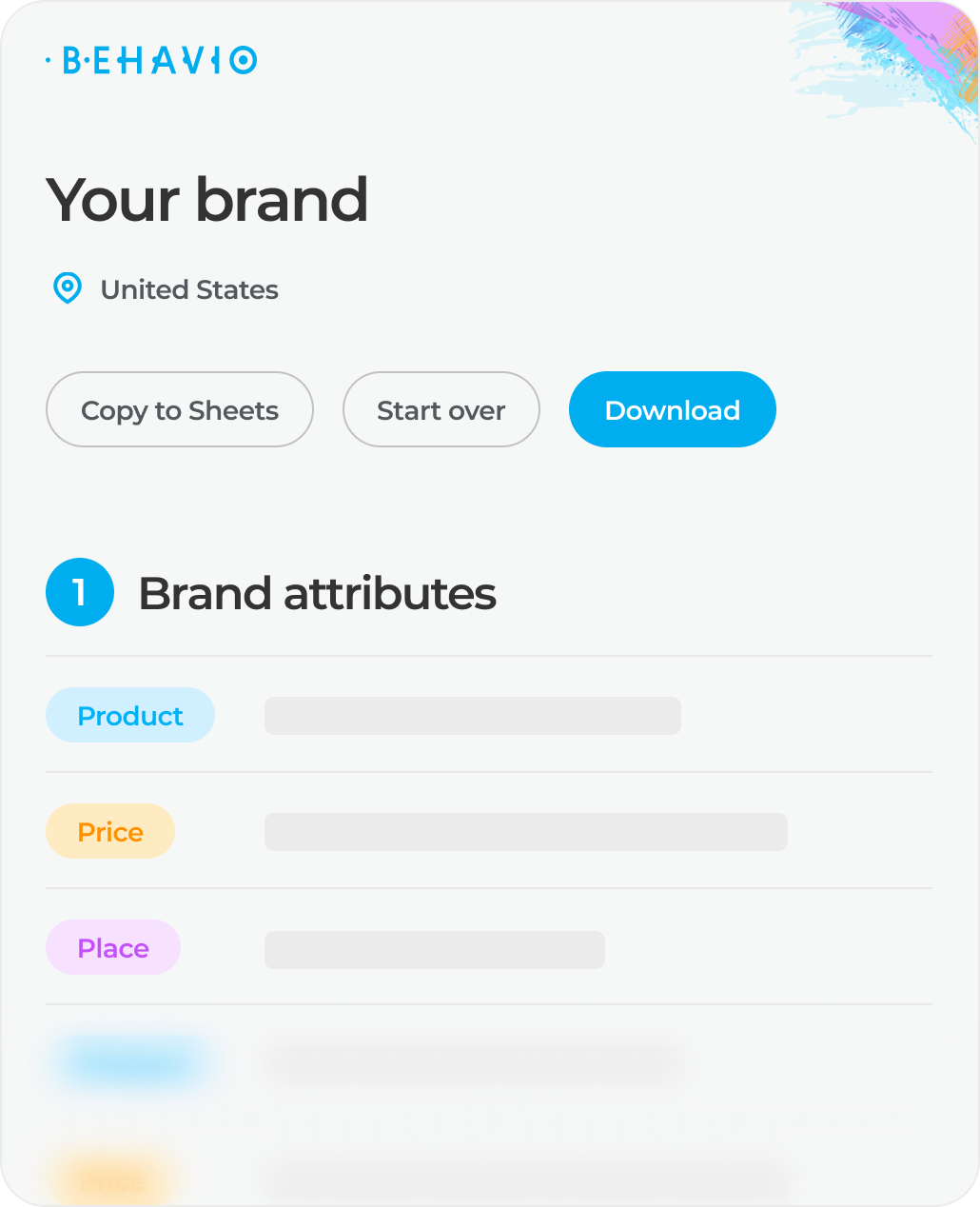
Your brand attributes grouped by price, place, promotion, and product — the four things that explain why brands grow.

Your real competitors
The brands your buyers weigh you against in your market, the competitive set your tracker should benchmark against.

Your category buyer
A clear definition of who chooses in your category and market — the context that keeps every attribute grounded in a real buyer.
You've built your brief. What now?
Generating the brief is the easy 30 seconds. Here's what turns it from a tidy spreadsheet into a brand you actually understand.
Make it yours
This is a first draft, not gospel. Confirm the competitors your buyers genuinely weigh you against, drop the ones they'd never consider, and tweak the attributes so they fit your category.
Decide what “good” looks like
Before you measure anything, know what you're hoping to see. Which competitor do you most want to close the gap on? Which attribute matters most for growth?
Get real answers, not stated opinions
A brief tells you what to measure, not how people actually feel. Behavio's Brand Tracking measures real buying behavior with behavioral methods, so you learn why you're picked or ignored, not just what people say in a questionnaire.
Turn it into a decision
Every Behavio study ends with clear next steps, what to fix, what to double down on, where the growth is, so your brief becomes a plan, not a report that sits in a folder.
What is a brand tracking brief?
A brand tracking brief is the set of decisions you make before you track anything: which attributes to measure, which competitors to benchmark against, who counts as a category buyer, and which questions your tracker needs to answer. Get the brief right and the tracking is straightforward. Get it wrong and no amount of data will save you.
A good brief covers three things:

Salience

Perception

Behavior
Nail those three in your brief, and brand health stops being a gut feeling and becomes something you can report and act on.
Is this a brand tracking survey?
Not quite, and the difference matters. A traditional brand tracking survey asks people to rate you on scales and hope they're being honest and accurate. The trouble is that people are bad at explaining their own choices, so survey scores often measure what people think they should say, not what actually drives buying.
This tool builds the brief, what to measure and who to measure it against. How you measure it is where the old survey model falls down, and where Behavio does things differently.
So use this to get your brief right in 30 seconds. When you're ready to measure it, Behavio tracks your brand using behavioral methods that get at real choice, not stated opinion, which is why growing B2C brands use us as the alternative to DIY surveys.
How to choose competitors for your brand tracker
The most common brand tracking mistake is benchmarking against the wrong brands. The competitors that belong in your brief are the ones consumers actually consider, not the ones that keep your leadership team up at night.
Start from the category entry point: the moment a buyer decides they need what you sell. Whoever they'd consider at that moment is your real competitive set. That's usually a mix of category leaders, direct rivals, and the substitute people reach for when they don't think of you at all.
The tool suggests five competitors based on your site and market. Treat it as a starting list, confirm the local players, and drop the ones your buyers would never actually consider.
01. Category leaders
The brands buyers think of first when they enter your category.
02. Direct rivals
The brands people weigh against yours at the moment of choice.
03. Substitutes
The alternatives people reach for when your brand never comes to mind.
Ready to put your brief to work?
Behavio turns your brief into a live brand tracker — real consumers, behavioral methods, and clear next steps across your markets. No DIY surveys.
Brand tracking, explained simply
Common questions about brand tracking, what a good brief includes, and how Behavio measures brand health without relying on survey guesswork.
Do I need a survey to track my brand?

No. Traditional brand tracking surveys ask people to rate you on scales and hope they're accurate, but people are poor at explaining their own choices. Behavio tracks brands using behavioral methods that get at real choice instead of stated opinion. This free tool builds the brief; Behavio runs the tracking without the survey guesswork.
What goes into a good brand tracking brief?
Four things: the attributes you'll measure, the competitors you'll benchmark against, a clear definition of your category buyer, and the questions your tracker needs to answer (salience, perception, and purchase behavior). The tool above drafts all four for your brand in about 30 seconds.
What questions should a brand tracker answer?
Three: are we top of mind (salience), what do people think of us (perception), and do people actually buy us (behavior). Your brief should map each one. How you measure them is the important part, and where behavioral methods beat a standard survey.
How do I measure brand equity?+
Brand equity comes from combining awareness, perception, and behavior over time. A good brief gives you the right inputs; tracking them consistently, with methods that reflect real choice, shows whether your equity is growing.
How many competitors should a brand tracker include?+
Usually four to six, the brands consumers genuinely consider in your category and market. Fewer misses the real competitive picture; more makes tracking unwieldy. The tool suggests five as a starting point.
Do I need an account to use it?+
No login is needed to build your brief. You'll only enter an email if you want it sent as a CSV.



