


The best market tracking platforms for B2C brands in the Netherlands (2026)
A market tracking platform is a tool that shows you how your whole category works: which consumer needs drive purchase, who currently owns those needs in buyers' minds, and where the open space to grow sits.
For a B2C marketing lead, that's a wider job than most vendors admit. Many tools track one slice – social chatter, a consumer panel, or competitor ad spend – and call it "market tracking." That narrower definition leaves you with numbers, not a decision.
The honest short answer: there's no single best market tracking platform for every Dutch B2C brand. The right one depends on your team size, budget, how often you need fresh reads, and whether you want a dashboard or a clear next step.
Full-service agencies suit big budgets and slow timelines. DIY survey stacks suit teams with in-house research skills. Social listening is great for live reputation, weak on category structure. Behavioral market-mapping platforms suit lean teams who need to know what to do.
This guide ranks the realistic options for the Dutch market, says who each is best and worst for, and gives you a framework to choose.
What does "market tracking" mean for a B2C brand?
For a B2C marketer, market tracking means understanding the structure of your category so you can decide where to compete.
It answers three questions:
- Which consumer needs actually drive buying?
- Which of those needs your competitors already own?
- Where the white space is that you can grow into with the least resistance?
That's broader than the way most vendors use the term. Some call repeat social listening "market tracking." Others mean a quarterly consumer panel, or a competitor ad-spend monitor. Each tells you something real, but none of them on its own tells you the shape of the category.
The distinction that matters most for a lean team is dashboards versus next steps. A dashboard shows you what's happening – mentions are up, share is flat, a rival launched.
A category decision tool tells you what to do about it: which need to target next, and why it's open. If you don't have an insights team to turn the first into the second, you need a platform that does that work for you.
It's also worth separating market tracking from brand tracking, two terms people mix up constantly (more on that in the FAQ).
Brand tracking watches your own brand's health over time. Market tracking maps the whole category around you. You often need both, but they answer different questions.
The main types of market tracking platform in 2026
There are four broad types of tool a Dutch B2C brand can use to track its market. Here's what each does well, and who it's wrong for.
Full-service research agencies (Kantar, Ipsos, Nielsen)
Full-service agencies run bespoke, large-sample studies designed and interpreted by their own researchers. In the Netherlands you'll also see strong local players like DVJ Insights and Blauw Research alongside the global names.
- Best for: large brands with big budget, complex multi-country questions, and a need for methodological rigor that will stand up in a boardroom or to a regulator. If you have an internal insights team to brief them and absorb the output, agencies deliver depth not much else matches.
- Not for: lean teams on a deadline. Studies are expensive, often run for weeks, and arrive as long decks that still need someone to turn them into a decision. If you're a one- or two-person marketing function, the cost and cycle time rarely fit.
DIY panel + survey stacks (e.g. a survey tool plus a bought sample)
DIY stacks let you field your own surveys to a panel you buy access to. You control the questions and the timing, and the per-study cash cost looks low.
- Best for: teams with genuine in-house research skill who want full control and run studies often enough to justify the setup.
- Not for: most lean marketing teams. The hidden cost is time and expertise: writing an unbiased questionnaire, choosing a representative Dutch sample, weighting the data, and interpreting it correctly are jobs in themselves. Do any of them wrong and you get confident-looking numbers that point the wrong way. The cash is cheap; the risk and the hours are not.
Social listening tools
Social listening tools track what people say about brands and topics across social media, news, and forums in real time.
- Best for: live reputation monitoring, spotting a PR issue early, tracking campaign buzz, and reading the language real customers use.
- Not for: understanding category structure. Social listening tells you what the vocal, online minority is posting about right now – not what the whole market quietly needs, or which needs are unmet. It over-weights loud topics and misses the silent majority of buyers. As a read on category demand and competitive occupation, it has a real blind spot.
Behavioral market-mapping platforms (Behavio's approach)
Behavioral market-mapping platforms measure the intuitive associations in buyers' minds –which needs matter, and which brand each need is mentally linked to – and turn that into a ranked map of where to grow.
They draw on behavioral science: roughly 95% of brand choices are made fast and intuitively, so they measure implicit memory links rather than only stated opinions.
That matters for a reason beyond accuracy: because these methods capture what people instinctively do rather than what they report, they tend to be more predictive of real buying behavior than self-reported survey answers, which often don't match how people actually choose at the shelf.
- Best for: lean B2C teams who need a category decision, not a data dump. The output is marketer-readable and comes with a clear next step, so you don't need an insights team to translate it.
- Not for: brands that need continuous daily reputation monitoring (that's social listening) or precise sales-volume modeling (that's MMM and retail panels). Market mapping is a periodic category read, not a real-time feed or a sales forecast. It complements those tools rather than replacing them.
What's different about tracking the Dutch market?
Tracking the Dutch market well takes more than translating an English-language tool. Three local factors trip up B2C brands that treat the Netherlands as an afterthought.
Language and nuance. Most Dutch consumers speak excellent English, which tempts teams to field research in English to save effort. But people answer questions about needs, emotion, and brand associations most honestly in their first language. An English questionnaire run on Dutch buyers quietly distorts the very associations you're trying to measure. Tools and methods built for English markets carry that distortion in.
Sample quality. The Netherlands is a smaller market, so a clean, representative Dutch sample is harder to assemble than a UK or US one. Cheap panels can over-index on certain regions or age groups. If you can't trust the sample, you can't trust the map – verify how any platform sources and balances its Dutch respondents.
Multi-market capability. Many Dutch B2C brands grow by expanding outward – into Belgium, the DACH region, the Nordics, or wider EU markets. A tool that only reads the Netherlands forces you to start from scratch in each new country. Platforms like Behavio that map multiple markets on the same methodology lets you compare categories like-for-like as you expand, which is exactly when the structure of a new market matters most.
How to choose the right market tracking platform for your team
Choose your market tracking platform by matching the tool to four things: your team, your budget, your cadence, and whether you need actions or just a dashboard. Run through these in order.
- Team size and research skill. No dedicated insights person? Rule out DIY stacks and most raw agency engagements – you'll drown in setup and interpretation. Favor a platform that delivers a marketer-ready answer.
- Budget and frequency. Need a deep one-off read of a category before a big bet? A one-time market map fits. Need continuous brand health? That's an ongoing brand tracking subscription, a different spend. Match the billing model to how often you'll actually use it.
- Cadence – snapshot or stream. Reputation and campaign buzz need a real-time feed (social listening). Category structure needs a periodic, rigorous read, not a daily one. Don't pay for real-time you won't act on.
- Actions or dashboard. This is the deciding question. If you have analysts to turn charts into strategy, a dashboard-only tool is fine. If you don't, insist on a platform that hands you a ranked list of what to do next. Otherwise the data sits in a tab and the decision never gets made.
You may also want a dedicated read on competitors specifically – which tools provide competitor benchmarking for Dutch markets goes deeper on that one job.
Where Behavio fits: Market Mapping
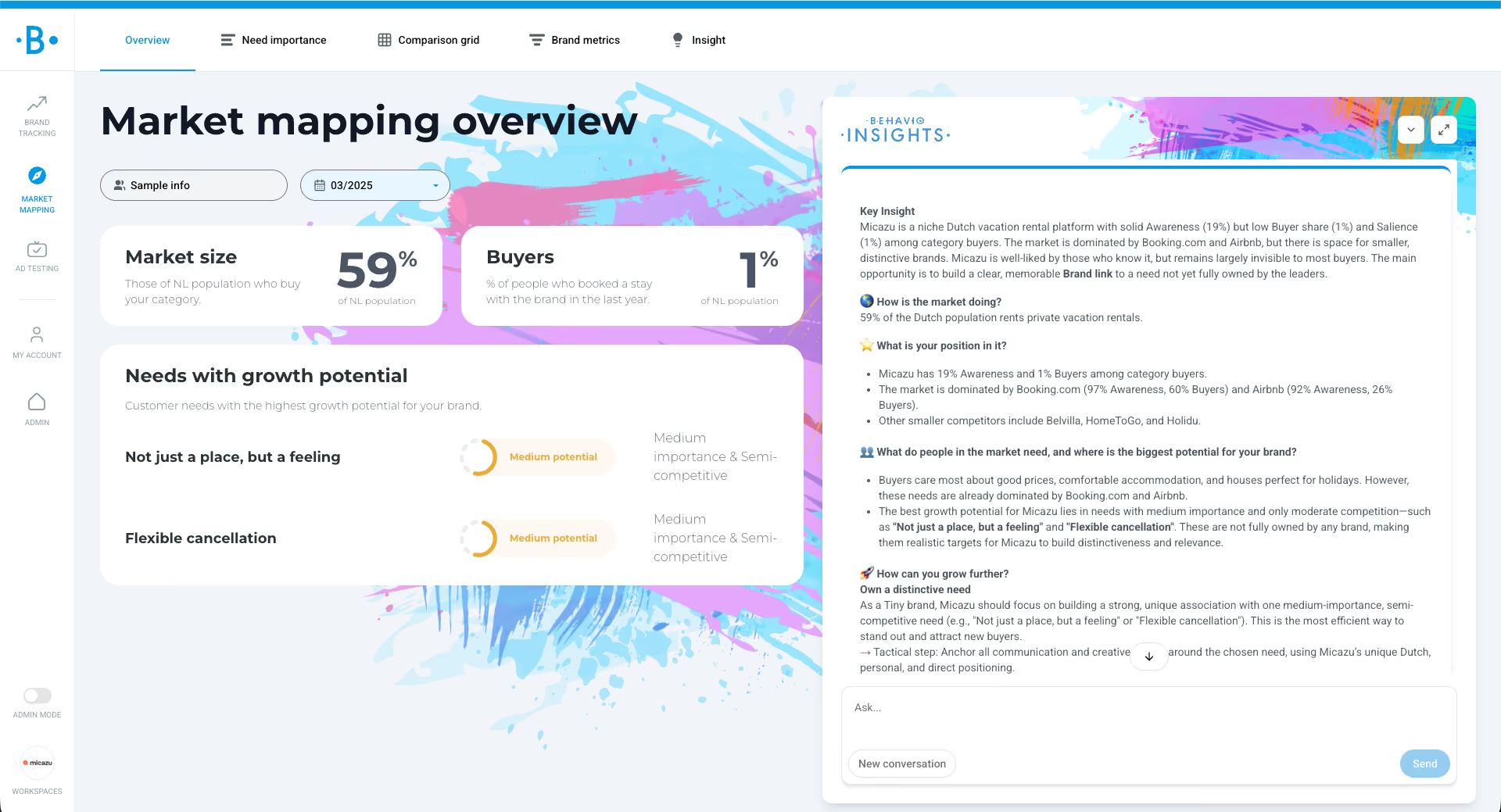
Behavio's Market Mapping is a behavioral market tracking platform that maps your whole category and hands you a ranked shortlist of needs to target. Built for marketers, with no insights team required. It's the action-first, multi-market option from the framework above.
Here's how it works. Market Mapping measures two things for every consumer need in your category:
- Need importance: the share of your audience for whom this need is a key purchase motivator. Behavio bands it High (≥80%), Medium (60–79%), or Low (≤59%).
- Competitive occupation: whether a need is already "owned" in buyers' minds (measured through implicit System 1 memory links, not stated opinion) or still open. A need counts as free mind-share when no competitor holds a strong brand link to it.
It crosses those two axes into a priority matrix, then an algorithm runs that matrix against your brand's size and outputs a ranked shortlist of three to six needs where you can grow with the least resistance – each with the reasoning attached.

You get an interactive dashboard, an exportable executive report, AI-generated Key Insights that a human brand expert validates, and an AI chat to interrogate the results. The whole thing is readable by a marketer, not just a researcher.
A worked example: Dutch fashion e-commerce
When Behavio mapped the Dutch online fashion category in early 2026, About You looked like a laggard on raw numbers: tiny awareness, just 4% salience.
But on the equal-size view, it owned the most valuable need in the category: it was seen as more on-trend than Zalando. That's a textbook Market Mapping read. The need (trend-forward style) is high-importance and, on a per-capita basis, already won. The gap is mental availability.
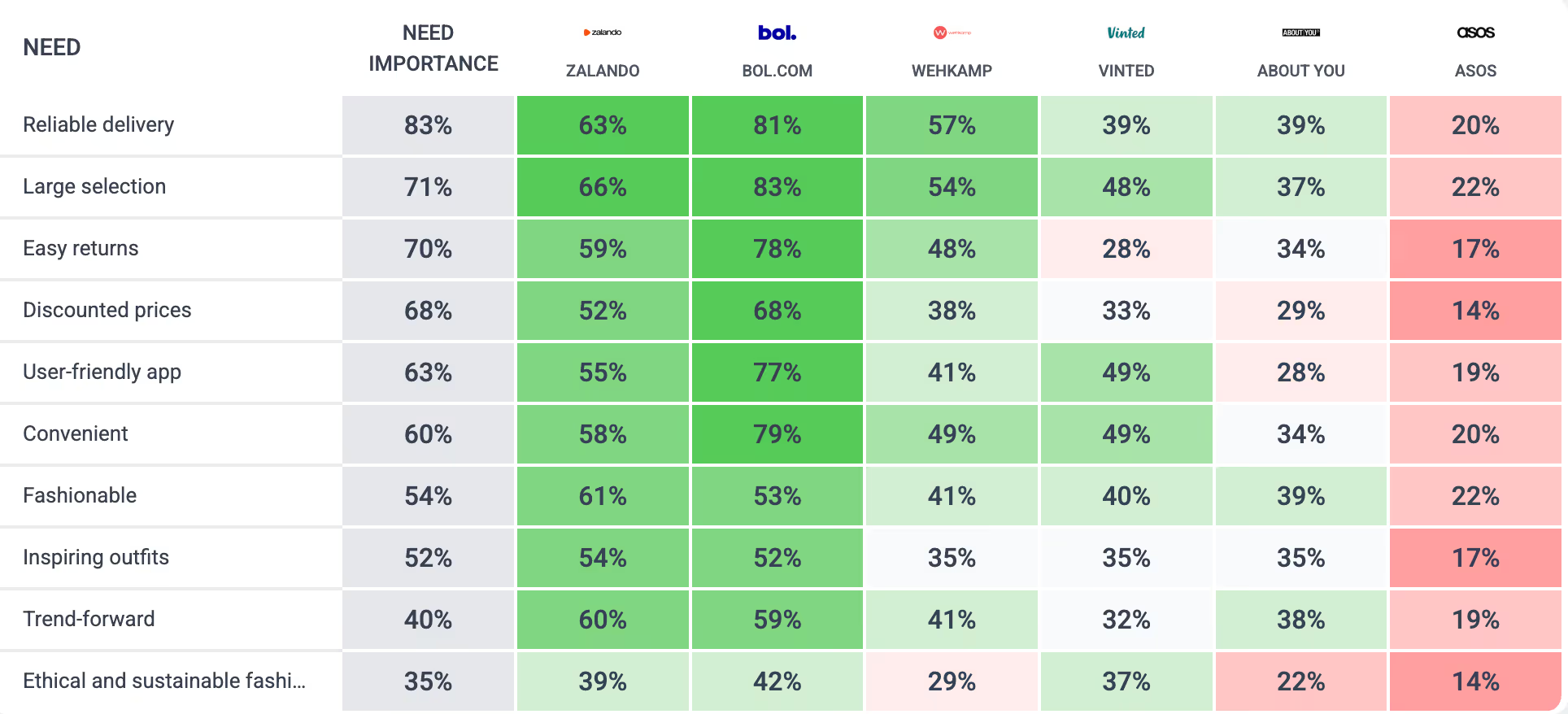
The next step writes itself: pour budget into broad awareness, not into proving the brand is fashionable – because buyers who meet it already believe that. A raw share table would have hidden this entirely; About You's small buyer base makes it look like a laggard until you see the territory it owns.
See how Market Mapping maps your category. Book a Market Mapping demo!
Last updated: June 2026
Frequently asked questions

A market tracking platform is a tool that shows how a category works from the consumer's point of view: which needs drive purchase, which brands own those needs, and where the open space to grow is. The stronger platforms don't just display this – they rank where you should compete next. It's broader than social listening (live chatter) or a one-off panel survey (a single snapshot).
Use a platform that does the interpretation for you. The hard parts of market research – questionnaire design, sampling a clean Dutch panel, weighting, and turning numbers into a decision – are exactly what a lean team can't staff. A market-mapping tool like Behavio runs that work automatically and outputs a marketer-readable shortlist of what to target, so you skip the agency retainer and the in-house analyst.
It varies widely by type. Full-service agency studies typically run into five figures per project. Behavio Market Mapping is a one-time payment of around €5,900 per market, with no annual subscription for a single category read. DIY survey stacks look cheaper in cash but carry a real cost in staff time and the risk of getting the method wrong.




.avif)