.avif)


Most ecommerce brands don’t struggle because they lack data. They struggle because they can’t tell which signals actually predict sales.
As a B2C ecommerce brand, look for brand tracking tools that offer real-time or near real-time data, competitor benchmarking, and behavioral measurement.
The strongest platforms don’t just ask people what they think — they capture subconscious buying drivers and track core brand metrics like awareness and salience.
The best brand tracking tools balance affordability with predictive power, so you can prove ROI and make confident marketing decisions.
What metrics should B2C ecommerce brands track?
The most critical brand tracking metrics for ecommerce brands measure both awareness and behavior.
Brand awareness metrics show how many potential customers know about your brand, while brand sentiment reveals how they feel about it.
Key brand tracking metrics include:
- Brand awareness: Percentage of consumers who recognize or recall your brand when prompted.
- Brand salience (mental availability): Refers to the percentage of respondents who recall a brand spontaneously when thinking about a specific category or a buying situation, a key predictor of market share growth.
- Brand attributes and associations: Reveals what qualities consumers connect with your brand, from price positioning to emotional benefits.
- Brand sentiment: Captures the emotional responses consumers have toward your brand.
- Purchase intent: Measures likelihood of consumers choosing your brand when making their next purchase.
- Market size and category growth: Helps you understand the total addressable market and track category expansion opportunities.
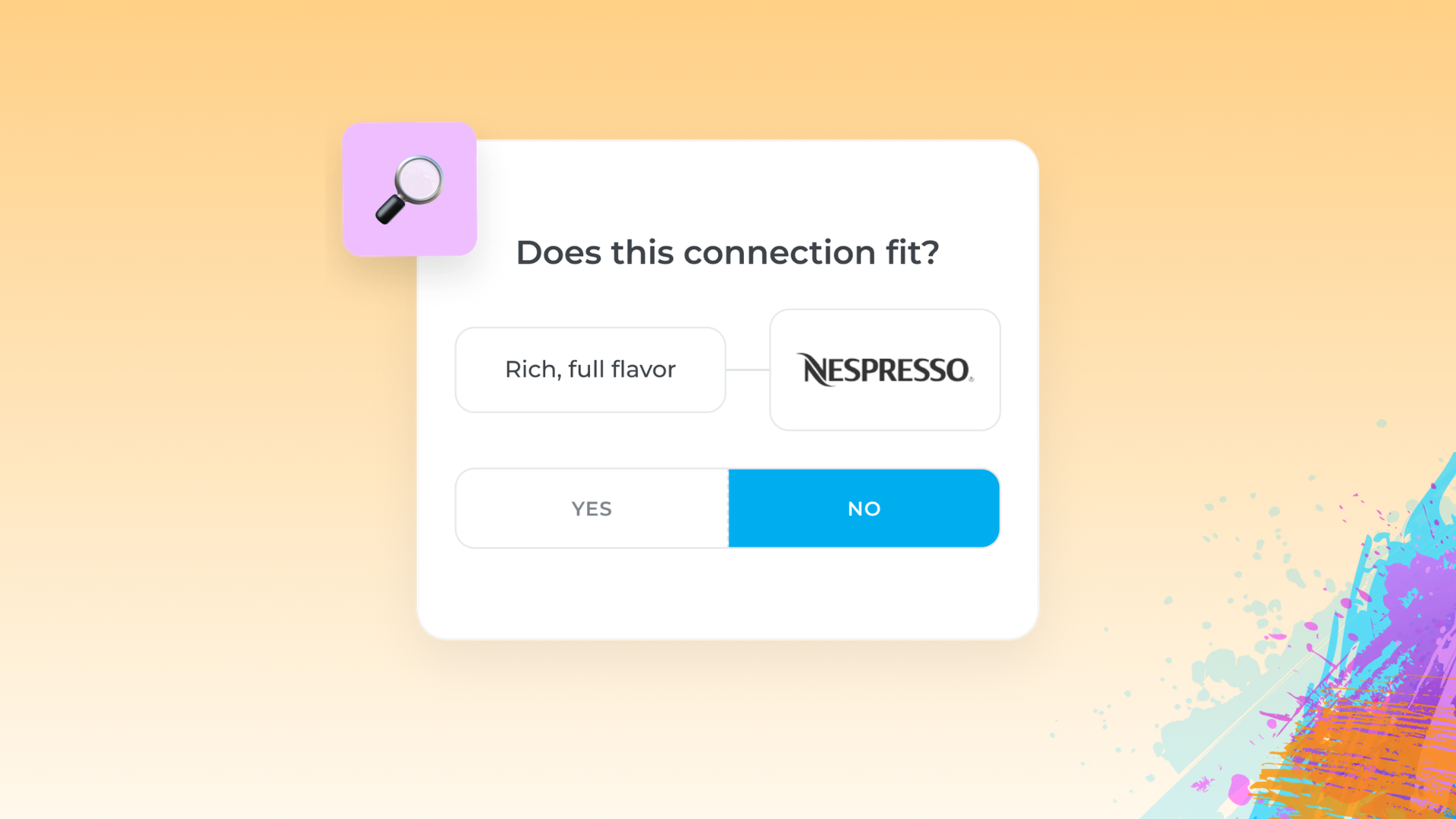
Advanced brand tracking tools like Behavio use implicit association testing to measure these metrics at the subconscious level. This behavioral approach predicts real-world buying behavior more accurately than traditional surveys, because it captures automatic mental associations rather than considered, rational answers.
How often should ecommerce brands measure brand health?
Measurement frequency depends on your market dynamics and campaign activity. Ecommerce brands running continuous advertising should track brand health monthly or quarterly to capture the impact of campaigns and competitive moves.
Fast-moving consumer goods categories may require even more frequent tracking, while established brands in stable categories can measure quarterly.
Real-time or weekly tracking helps when you need to react quickly to:
- Competitor launches
- PR issues
- Big campaigns
- Product changes
However, most ecommerce brands find quarterly tracking hits the sweet spot between speed, insight, and cost. The key is consistency, because according to McKinsey, businesses that use consumer data more consistently are 1.5x more likely to report above-average growth than their peers.
How should brand tracking integrate with existing analytics?
Brand tracking delivers maximum value when connected to your broader marketing analytics ecosystem.
Integration with platforms like Google Analytics, CRM systems, and ecommerce platforms lets you correlate brand health metrics with actual business outcomes. This closed-loop measurement proves ROI and helps you optimize budget allocation across brand-building and performance marketing.
Look for brand tracking solutions that export data easily through APIs, CSV or PDF downloads, or direct integrations with business intelligence tools like Tableau or Looker. The ability to layer brand metrics onto sales data, customer acquisition costs, and lifetime value calculations creates powerful insights about marketing efficiency.
Modern brand tracking platforms like Behavio provide dashboards that speak the language of executives and stakeholders. When brand tracking data integrates seamlessly into board presentations and strategy reviews, it becomes easier to secure larger budgets for brand marketing initiatives.
How can brand tracking prove marketing ROI to executives?
Proving brand marketing ROI requires connecting brand health metrics to business outcomes.
Brand tracking software often makes this possible by demonstrating how improvements in awareness, sentiment, and mental availability correlate with sales growth over time. When you can show executives that a 10-point increase in brand salience predicts 5% revenue growth, brand budgets become much easier to defend.
Track your conversion funnel from awareness to purchase alongside brand metrics. This reveals how brand building impacts customer acquisition efficiency.
Brands with higher mental availability typically enjoy lower customer acquisition costs because consumers seek them out rather than requiring expensive performance marketing to generate each transaction.
Dashboard visualization matters enormously for executive buy-in. Choose brand tracking tools that present insights in business language rather than research jargon. Clear trends, competitive comparisons, and concrete recommendations help C-suite leaders understand brand investments as strategic growth drivers rather than marketing expenses.
What are the must-have features for ecommerce brand tracking?
For ecommerce brands specifically, certain brand tracking capabilities deliver outsized value.
Regular sentiment monitoring helps you respond quickly to product launches, influencer partnerships, or customer service issues that impact brand perception.
The ability to segment brand metrics by customer demographics, purchase behavior, or geographic region lets you optimize marketing for high-value audiences.
Final thoughts
Choose a brand tracking partner who helps you prove ROI and secure larger marketing budgets through data-driven storytelling. The right brand tracking investment pays for itself many times over through improved campaign performance and strategic clarity.
Want to try out this approach for your ecommerce brand? Book a demo to see how Behavio helps ecommerce brands prove business impact with behavioral science.
Frequently asked questions

Yes. Modern brand tracking tools like Behavio are far cheaper than traditional market research. Many small brands start with quarterly tracking of core metrics and scale over time.
Track competitors too. Benchmarking shows where you stand, uncovers gaps, and highlights threats early.
Many brand tracking platforms deliver results within 2–5 business days, versus 2–4 weeks with traditional research. Faster results enable quicker optimization.



.avif)