The 2026 World Cup sent every Dutch marketer reaching for the same box of tricks: orange everywhere, a crowd singing as one, and the promise of cheering the team on together.
Three big retailers, Jumbo, Albert Heijn, and Electroworld, all built a campaign on that instinct. So, who kicked it out of the park?
Behavio tested all three campaigns with Dutch viewers, measuring branding, message clarity, and emotional response.
The results don’t show that one brand simply made a better ad. They show that even when multiple brands use the same creative theme, it only works when it feels authentic to the brand behind it.
Here’s what the data reveals and what it means for anyone planning event-driven creative.
The first five seconds decided everything
Before viewers process the story, they need to know whose ad they’re watching. And skippable video is unforgiving – if viewers can't name the advertiser in the opening moments, the reach is wasted.
On that one measure, the difference between the three campaigns was dramatic:
- Jumbo: 90% brand recall in the first five seconds
- Albert Heijn: 74%
- Electroworld: 22%
The benchmark is 47%. Both supermarkets comfortably exceeded it. Electroworld landed at less than half the benchmark, meaning roughly four out of five viewers watched the opening without registering whose ad it was.
Jumbo: a masterclass in playing to your strengths

Among the three campaigns, Jumbo is the clear winner, leading on branding, emotion, and distinctiveness. Overall, 81% of viewers recognized the brand, well above the roughly 50% benchmark, and the branding remains strong from the opening frame through to the final packshot.
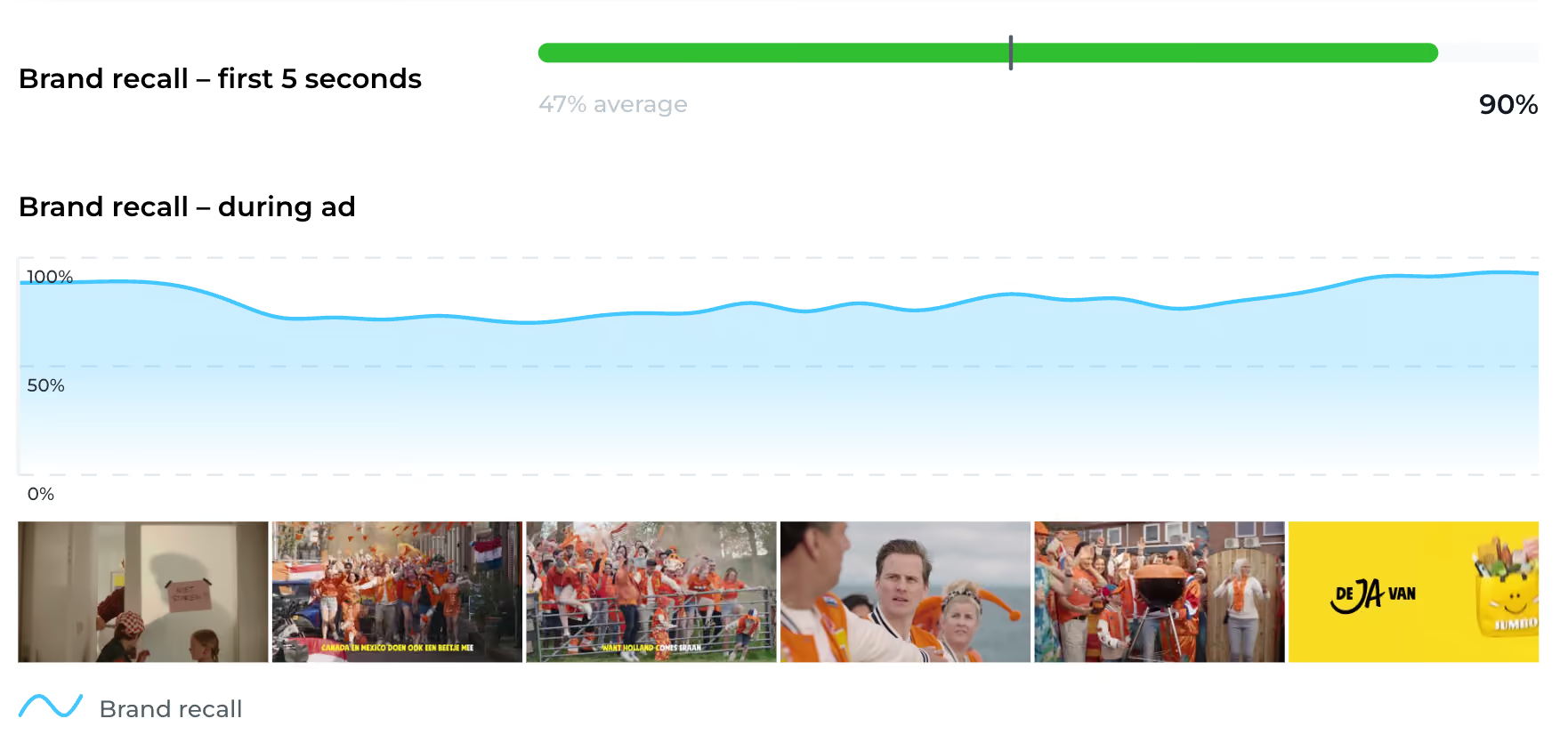
The creative also resonated emotionally. Two-thirds of viewers (66%) liked the ad, while 63% described it as distinctive, the highest score of the three campaigns. Viewers were drawn in by the collective celebration, the sing-along soundtrack, and Rob Kemps.
Crucially, Jumbo keeps the brand closely tied to those emotional moments, rather than saving it for the end, making the positive feelings much more likely to reinforce memory of the brand.
Post-test proved Jumbo’s impact
Because the campaign also ran nationally, Behavio measured its impact afterwards with a post-test comparing people who recall seeing it against those who do not.
It reached 86% of the population, compared with a benchmark of 39%, and the difference in salience between viewers and non-viewers was between 26 and 30 percentage points, versus an average of just 9 points. In other words, the ad did not just test well in the abstract; it measurably increased the likelihood that people would think of Jumbo for this buying occasion.
But perhaps the sharpest lesson hides in a detail. While the campaign achieved an impressive 76% recall for its core message cheering together for the team, a closer look at the individual messages reveals a clear pattern.
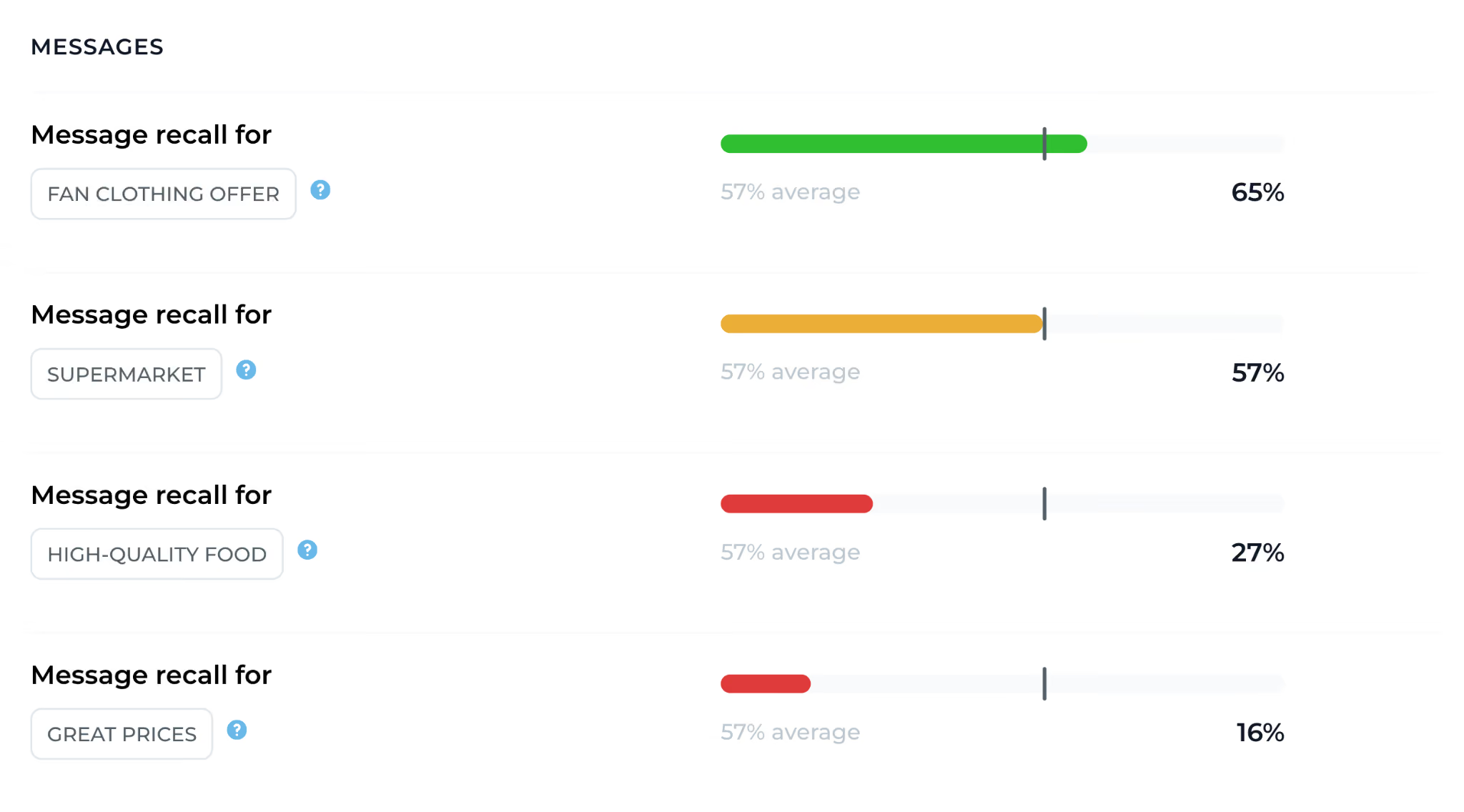
The football messages fly past the 53% benchmark. But Jumbo’s everyday positioning barely moved: messages around affordable prices and quality food both scored well below average.
Why? Because the campaign reinforced associations consumers already had rather than creating new ones.
Focus on your strengths, don’t dilute the messaging
Before testing the campaign, Behavio measured which needs people naturally associated with five major Dutch supermarkets.
Jumbo already owned the football territory: 40% of consumers linked it with cheering together for the team, and 44% associated it with Oranje fan clothing.
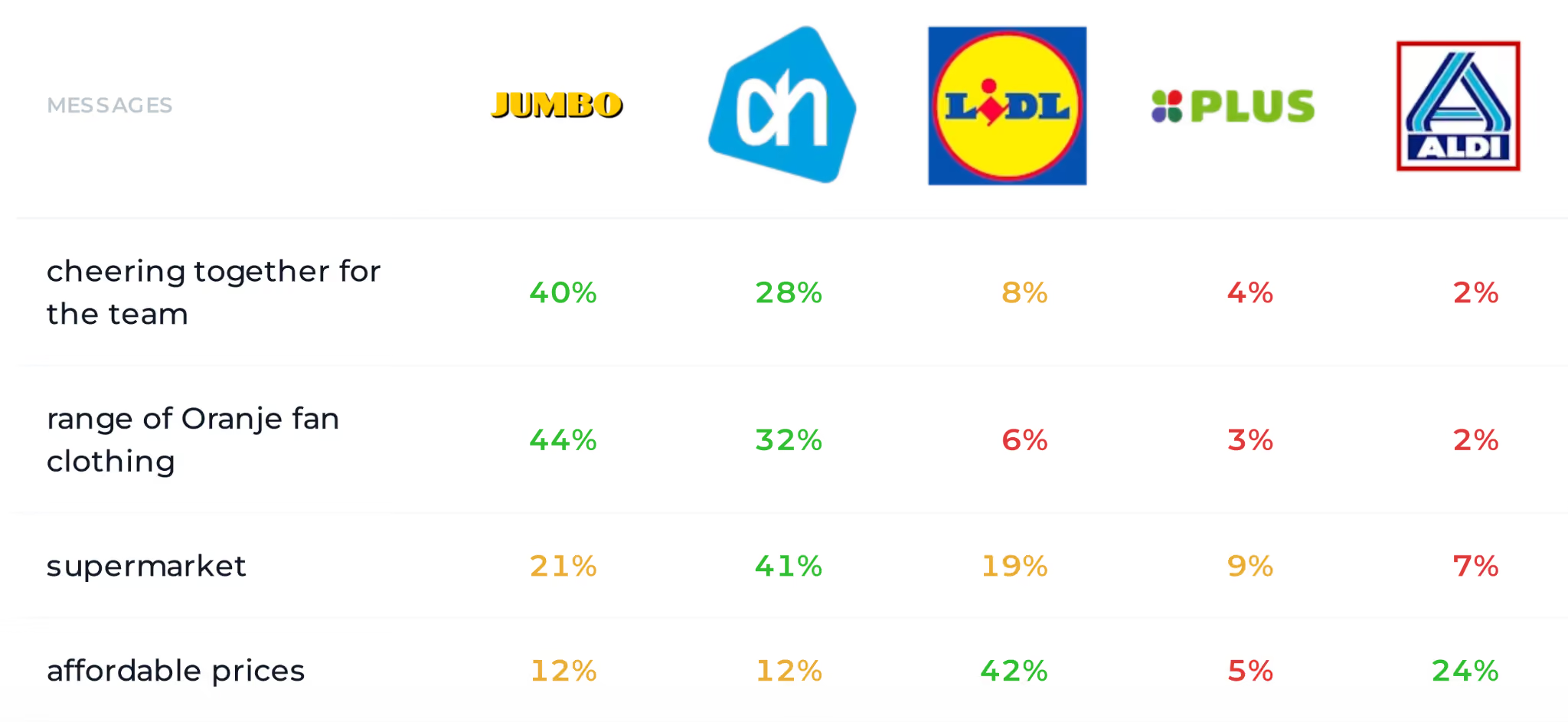
But price belongs to the discounters (42% tie it to Lidl, 24% to Aldi, only 12% to Jumbo), and quality food belongs to Albert Heijn (48%, against Jumbo's 16%).
The campaign strengthened the territory Jumbo already owned but made almost no progress on territory consumers already attribute to competitors. Even a top-performing campaign couldn’t convince people to rethink those established associations.
Verdict: A disciplined, brilliantly branded campaign that succeeded because it amplified what Jumbo already stood for, rather than trying to own something else.
Albert Heijn: the same playbook, run well on friendly ground
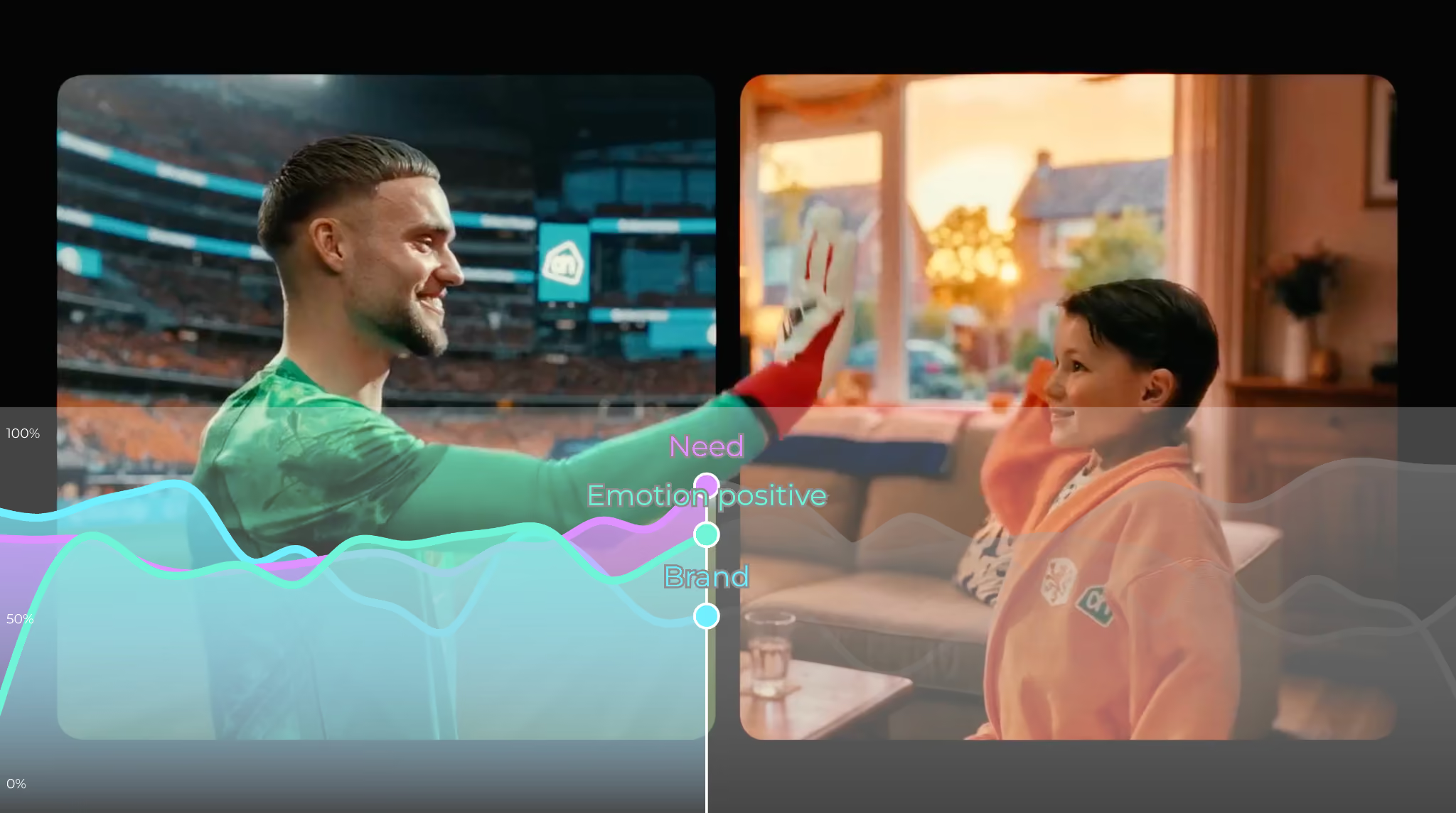
Albert Heijn took a very similar approach to Jumbo, centering its campaign on football and togetherness. For a supermarket, that’s a natural fit, and the results show it.
The campaign achieved 66% overall brand recall, while 74% of viewers identified the brand within the first five seconds, comfortably exceeding the 47% benchmark.
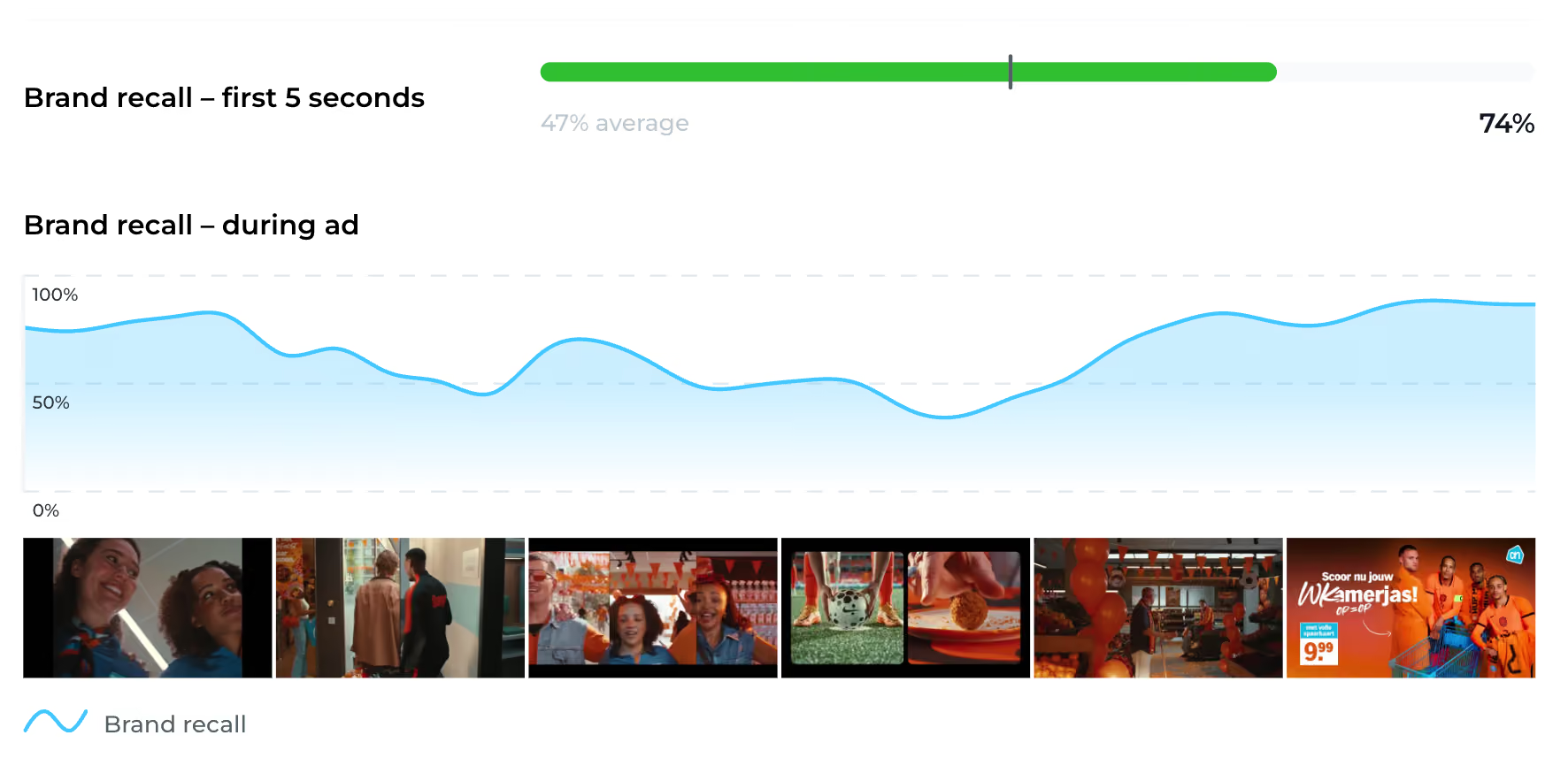
Its core message of cheering together reached 65% recall, and the Oranje fan clothing promotion registered with 58% of viewers.
The ad also resonated emotionally. 64% of viewers liked it, and among football fans (the audience it was designed to reach), the results were even stronger, with early branding rising to 79% and positive emotion to 70%.
In other words, the campaign connected particularly well with exactly the people it was trying to engage.
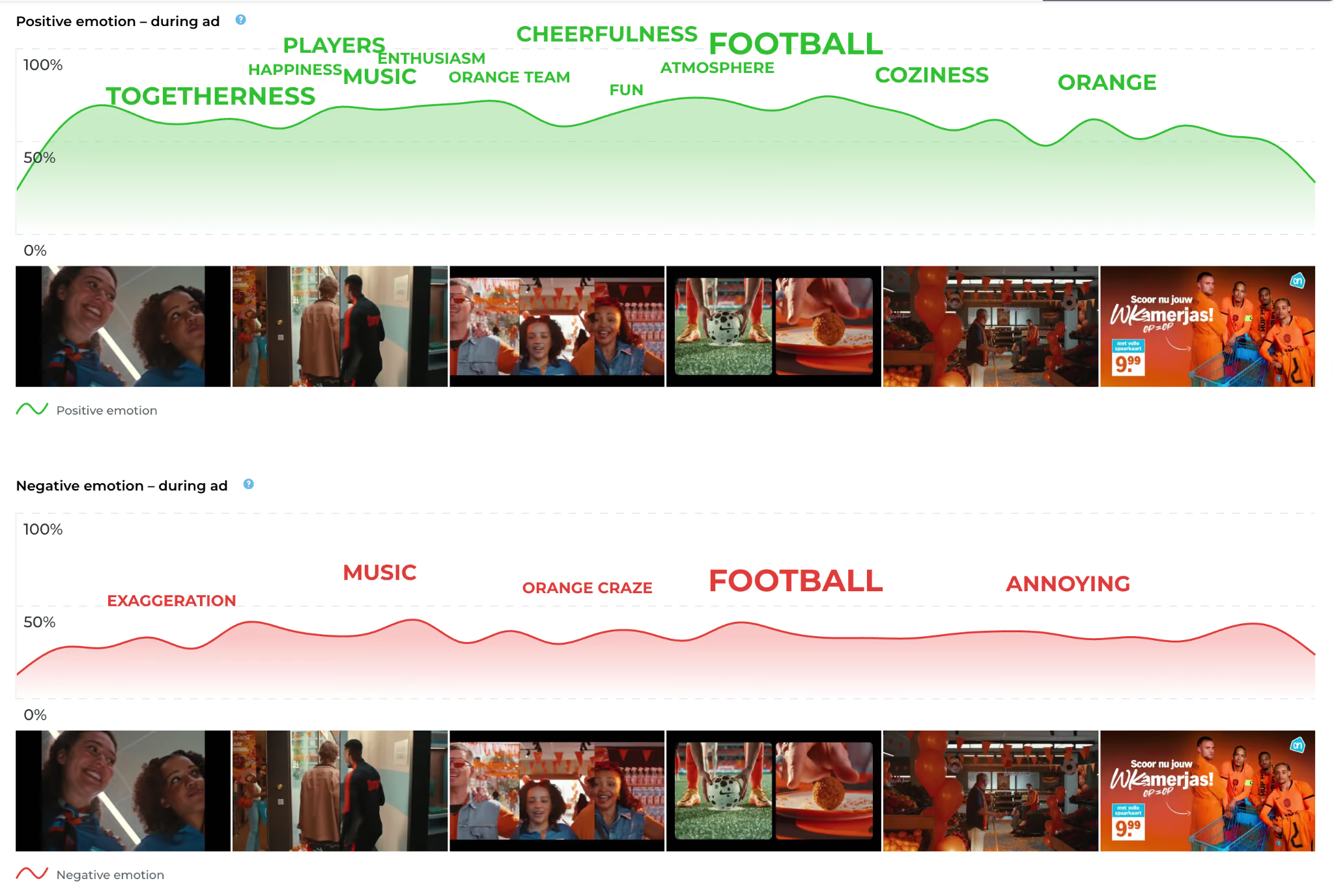
More distinctiveness might have paid off
So, is there anything the brand might want to improve?
Unlike Jumbo, Albert Heijn’s execution isn’t especially distinctive. While the story is engaging, several emotional high points occur without the brand being fully integrated, making those moments less memorable than they could have been.
The campaign also reveals the same pattern we saw with Jumbo. Although Albert Heijn is strongly associated with quality food as a brand, its everyday supermarket messages around food quality and price were overshadowed by the football theme.
Even when a brand already owns a need, an event campaign still has to actively reinforce it; otherwise, the event becomes the dominant memory instead.
Verdict: A strong, well-branded campaign that plays to Albert Heijn’s natural strengths, but one that lacks the distinctive execution needed to outperform Jumbo.
Electroworld: a cautionary tale about borrowed themes
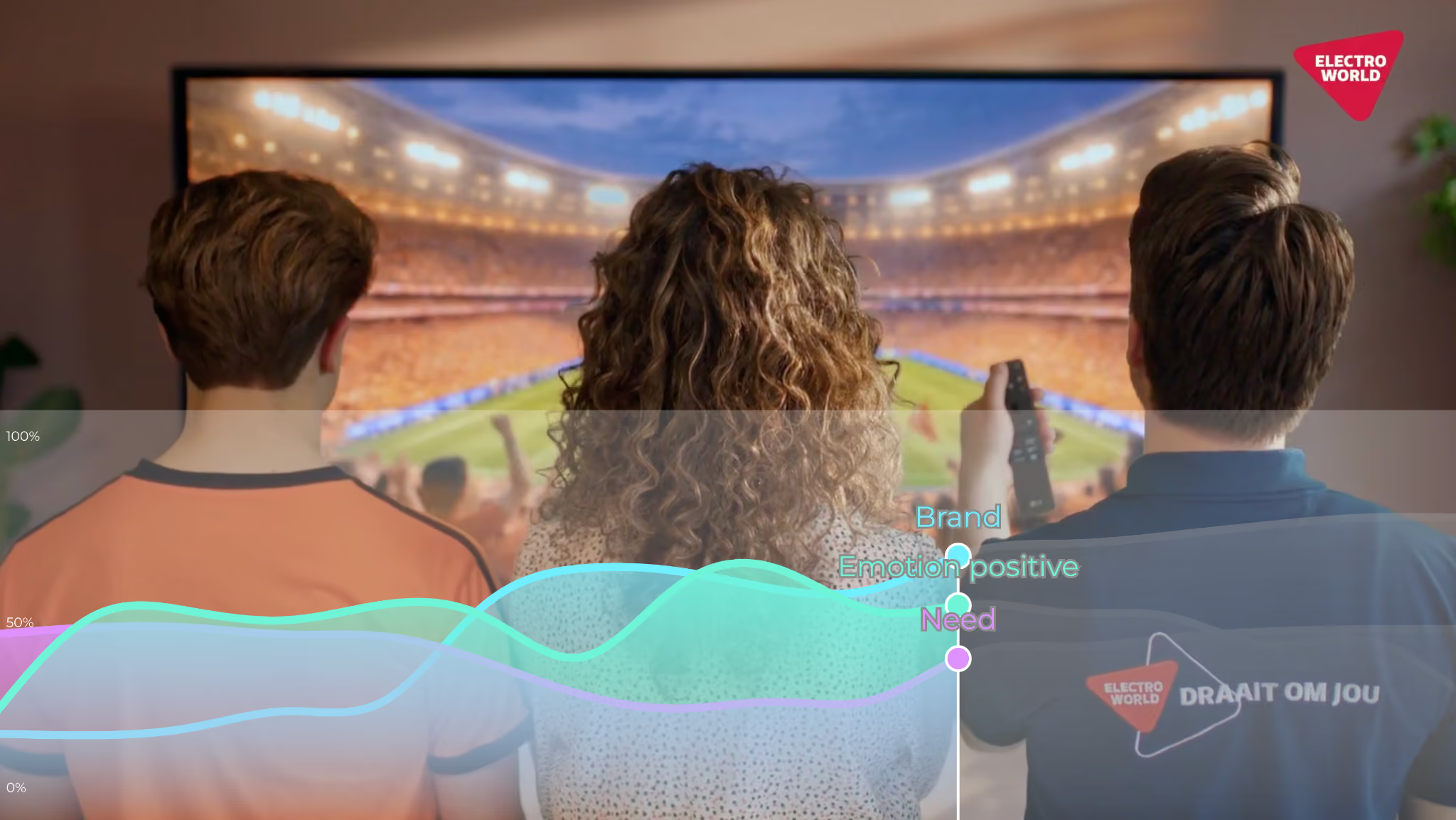
Electroworld demonstrates the limits of chasing a popular event theme when it doesn’t naturally fit the brand.
Unlike the supermarkets, Electroworld’s advantage isn’t bringing people together around football; it’s helping them create a better viewing experience at home.
Yet instead of leaning into that distinctive role, the campaign adopted the same cheering together narrative as the grocery retailers. The results reflect that disconnect.
Missing branding in the first seconds lessens ad’s impact
Only 22% of viewers identified the brand within the first five seconds, less than half the 47% benchmark, making Electroworld almost invisible during the most important branding window.
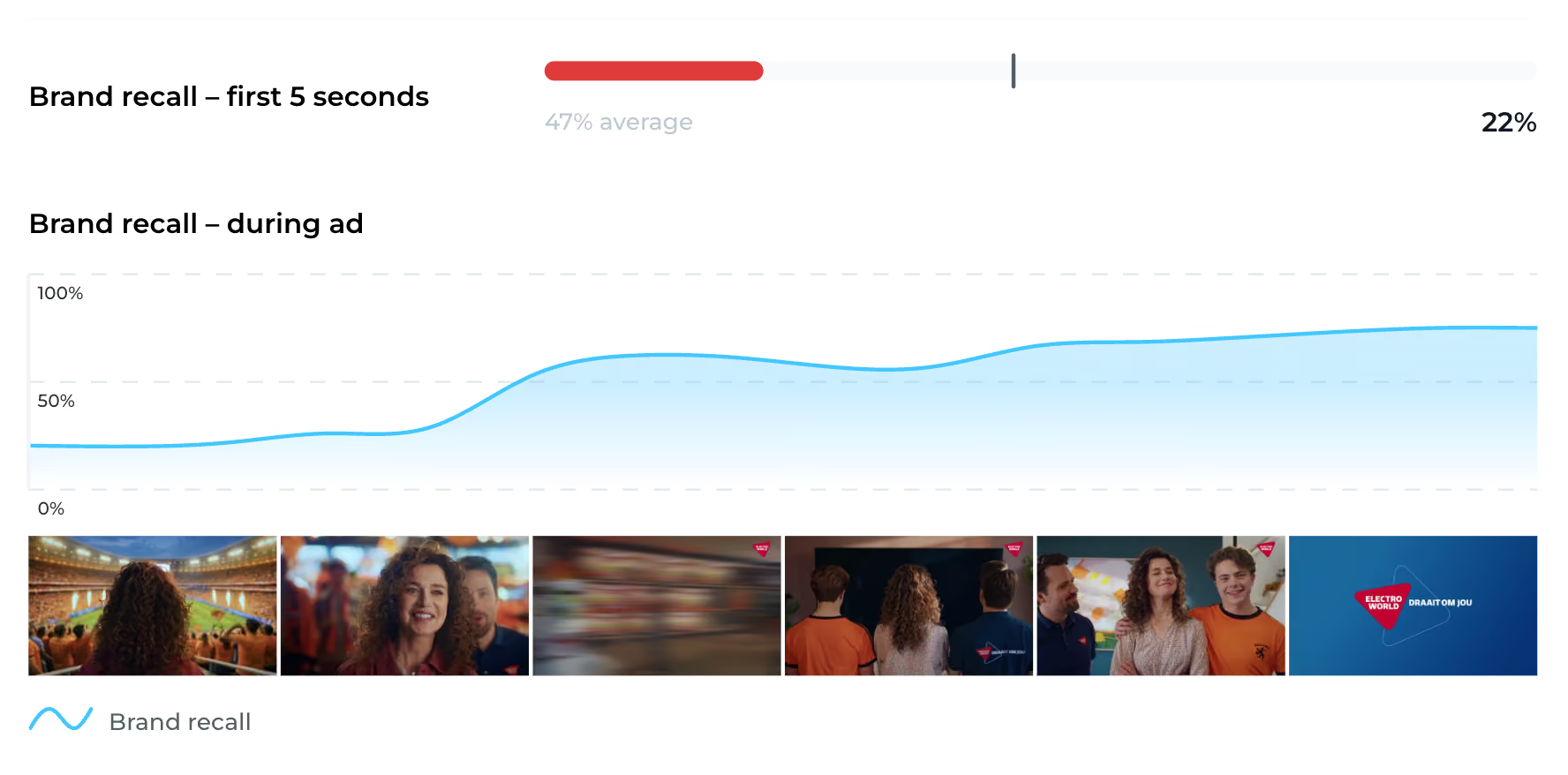
The campaign’s core football message also underperformed, reaching 43% recall, suggesting viewers struggled to connect cheering together with a compelling reason to buy electronics.
Importantly, the problem wasn’t the execution itself. The ad was easy to follow, and 60% of viewers liked it, rising to 70% among electronics buyers. People understood the story and enjoyed watching it.
Electroworld’s connection to football confuses the viewers
The issue was relevance. The campaign borrowed a football narrative that consumers naturally associate with supermarkets, rather than building on a category need Electroworld could genuinely own.
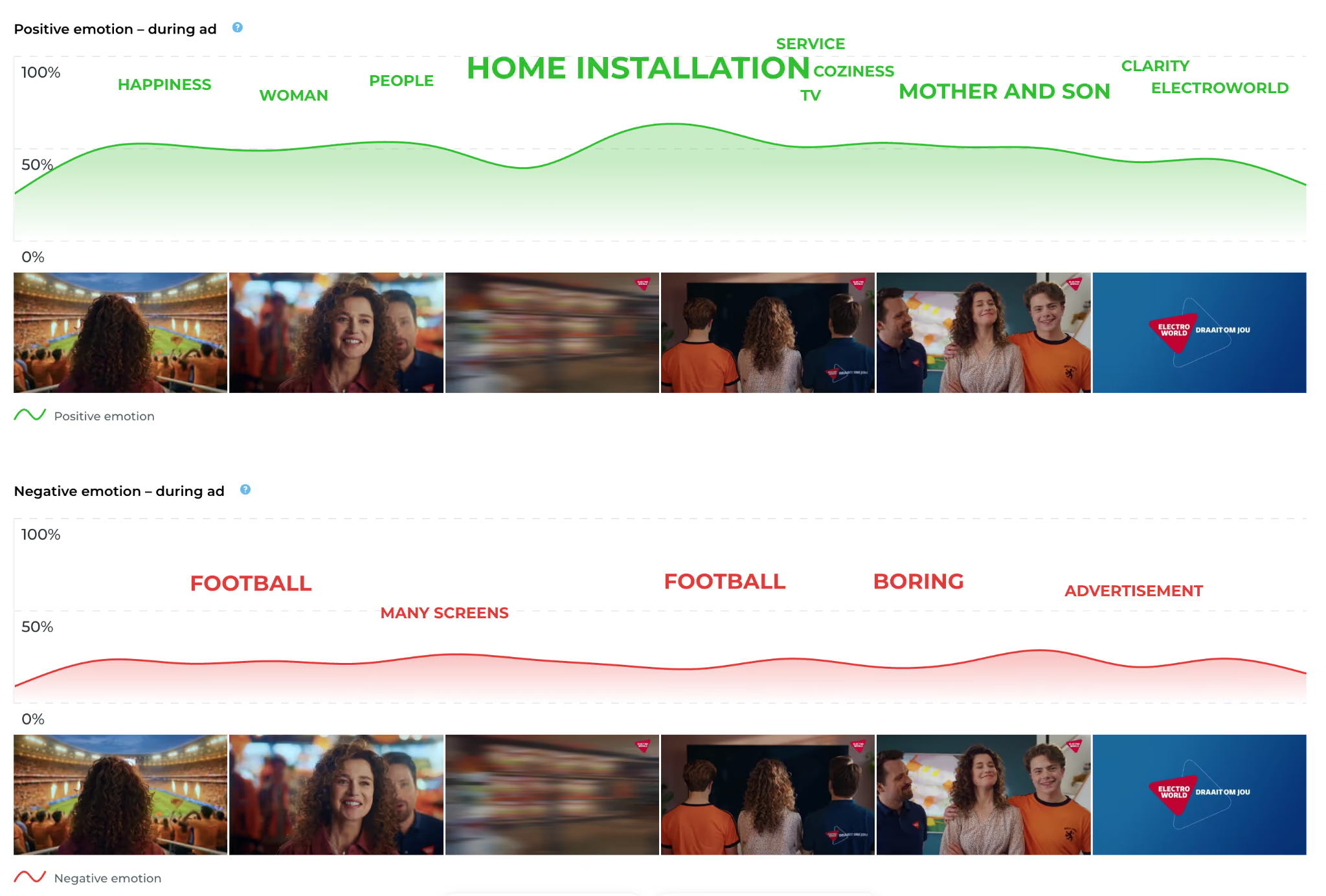
💡 Behavio’s Insight: Challengers win by owning a distinctive need, not by borrowing an incumbent’s positioning. Electroworld had a much stronger World Cup story available: helping fans enjoy the tournament with the perfect TV, sound system, or home viewing setup.
Combined with stronger branding in the opening seconds, that would have created a much clearer connection between the event and the brand.
Verdict: A warm, engaging ad whose impact was limited by a creative territory that never truly belonged to Electroworld.
Final thoughts
All three campaigns generated reach. All three created positive emotion. What separated them wasn’t production quality or the decision to lean into the World Cup. It was brand fit.
Jumbo used the tournament to strengthen a territory it already owned and, uniquely, has the post-test to prove the market moved.
Albert Heijn followed a similar strategy and delivered a strong, well-branded campaign because football naturally fits the role of a supermarket. It simply lacked the distinctive execution that made Jumbo stand out.
Electroworld, meanwhile, borrowed a theme that consumers already associate with supermarkets instead of building on a category need it could uniquely own.
The pattern is hard to miss: event advertising is a multiplier, not a shortcut. It can strengthen associations your brand already owns, but it can’t easily create new ones or steal territory from competitors.
What the strongest campaigns did
✅ Branded the ad from the first 5 seconds
✅ Built on needs consumers already associated with the brand
✅ Connected emotional moments closely to the brand, making them more memorable
Where the World Cup playbook backfired
⚡ Weak early branding meant viewers enjoyed the ad without remembering the advertiser (Electroworld: 22%)
⚡ Borrowing a theme from another category weakened the link between the event and the brand
⚡ Even a high-reach campaign couldn’t shift needs that consumers already attribute to competitors (for example, Jumbo’s price message reached just 16% recall)
In a World Cup full of orange, the campaign that won wasn’t the one that celebrated football the loudest. It was the one that used football to reinforce what the brand already stood for.
Want to dive into the full results? Check them out on Behavio's platform!