.avif)


Behavio is an ad pre-testing platform and the closest modern alternative to System1 — it uses the same behavioral (System 1) approach you already trust to predict how an ad will perform before launch, tests each creative with a nationally representative sample of 500+ people, and returns results in 3–5 days from around $2,500 per test.
It's the way to keep what you love about System1 and do more of it, for less.
Both System1 and Behavio predict ad performance by measuring the fast, subconscious reactions that drive real buying decisions, and both give you second-by-second detail.
The difference comes down to method, price, and what each one measures: System1 predicts brand-building potential from emotional response alone; Behavio adds brand recall and need recall, tests at a lower price point, and is built for brands that want behavioral rigor without an enterprise contract.
This article compares the two on metrics, ease of use, turnaround, and price, explains the key methodological difference, and shows who each tool fits best.
Is Behavio a good alternative to System1?
Yes. Behavio is a strong System1 alternative for any brand that loves behavioral ad pre-testing but wants more of it for the money. It's built on the same principle you already back, measuring subconscious response instead of what people say they think, but it tests at roughly a fifth of System1's cost and adds two metrics: brand recall and need recall, measured second by second.
You'd stay with System1 for its large global benchmark database and specific methodological nuances. You'd bring in Behavio when you want to test more creatives, at more stages, for a fraction of the price — and when you want to know why an emotional moment landed, not just that it did. Plenty of teams run both.

What both tools measure (and why the method matters)
System1 and Behavio both use behavioral, non-declarative methods, the kind that capture real reactions instead of asking people to rate an ad with their rational brain. That shared choice is exactly why System1 users tend to like Behavio: it speaks the same language.
Because 95% of buying decisions are subconscious, older methods that rely on conscious evaluation have been shown to be misleading, so much so that skipping pre-testing altogether can beat a bad declarative test. Both tools avoid that trap.
System1 measures emotional response and brand recall, and scores an ad's short-term sales potential (Spike Rating) and long-term brand-building potential (Star Rating). It tracks how emotion shifts across a video and when viewers first recognize the brand.
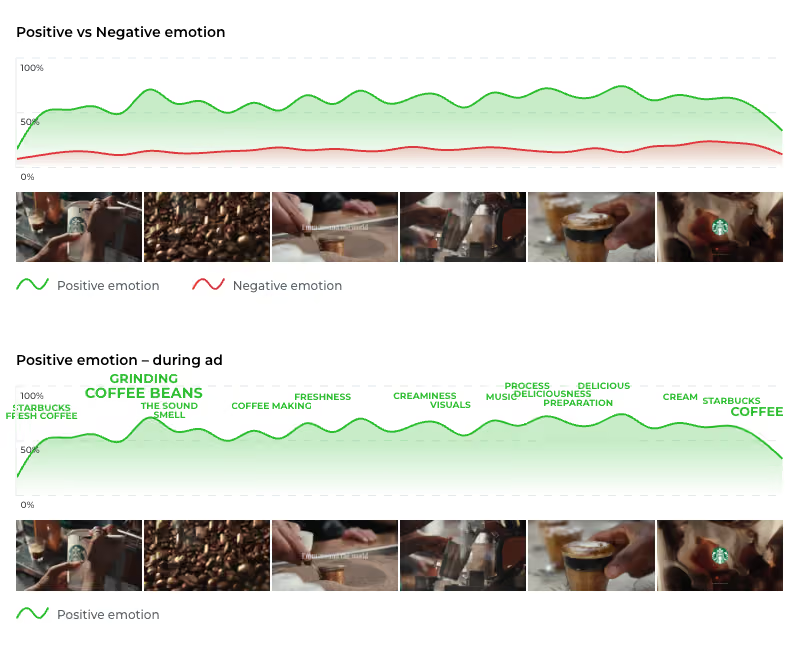
Behavio measures that same second-by-second emotion, and adds the reason behind each shift. For example, in this McDonald's TV ad case study, positive and negative emotion peaked at the same moment: people loved the visuals while a weak voiceover pulled sentiment down.
Behavio also tracks branding second by second, so you can check whether your brand is present during the emotional peaks people actually remember — research links longer branded attention to higher brand lift. And it tracks message recall, showing the moment your message actually lands.
The one real difference: is emotional response enough?
The tools share metrics but not philosophy, and this is the piece worth understanding before you choose. System1 predicts brand-building potential from emotional response alone, through its Star Rating.
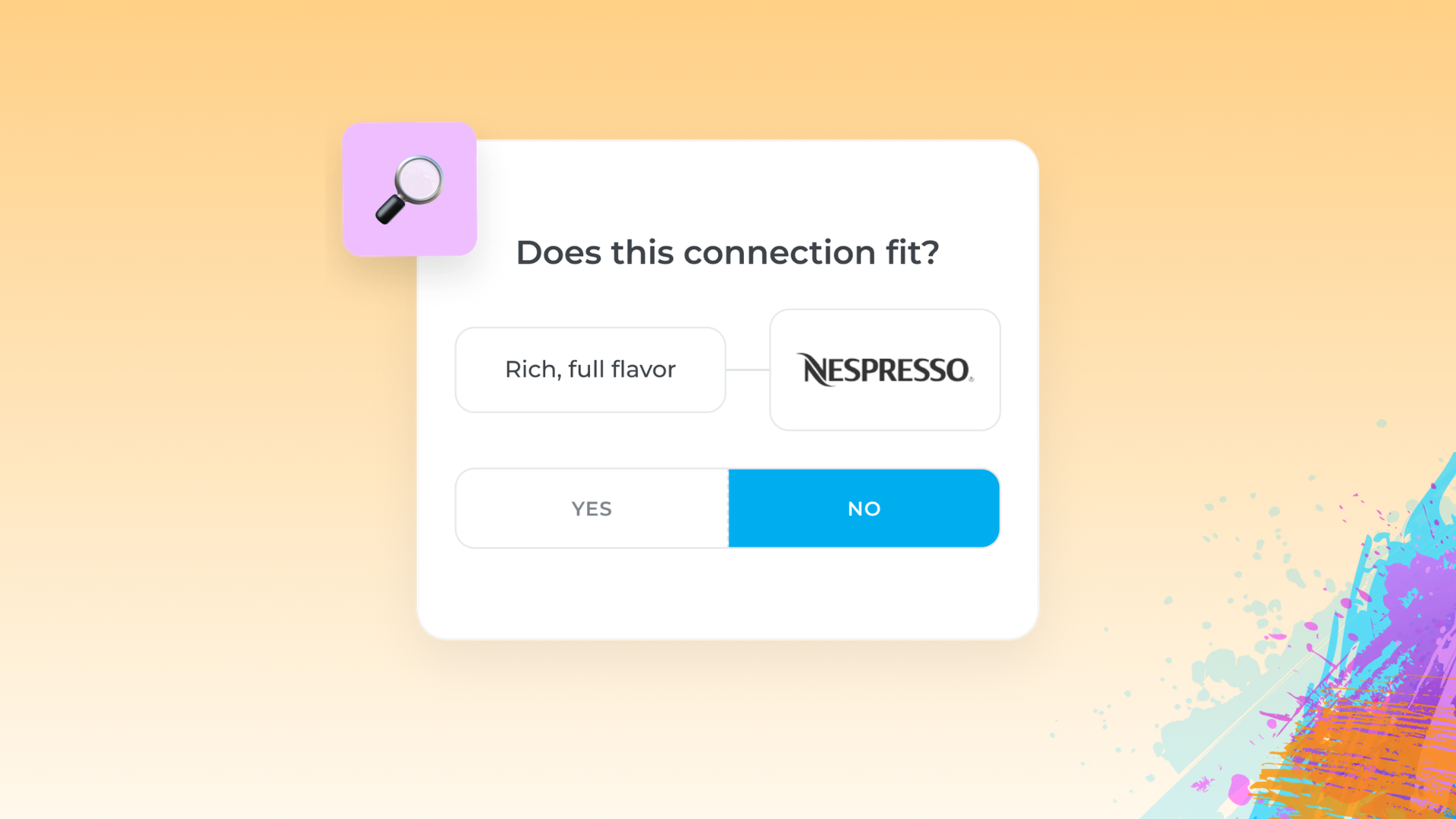
Behavio was founded later, after How Brands Grow reshaped the field and popularized ideas like branded attention, and takes a slightly different view. For an ad to make someone more likely to choose your brand, it has to build subconscious memory links between the brand and the moments people are in when they'd buy. So brand recall and need recall are the two things that matter most, with emotion as the amplifier that grabs attention and locks the memory in.
"Building mental availability requires distinctiveness and clear branding, while brands seldom compete on meaningful differentiation." — Byron Sharp, How Brands Grow
In short: System1 tells you whether your ad made people feel something. Behavio tells you that too, plus whether it made them remember the right brand, in the right moment, for the right reason.
System1 vs. Behavio: ease of use and turnaround
Both platforms are built for marketers, not researchers. Dashboards are clean, uploading a creative is simple, and both give you a summary of recommendations, written or in person. If you're comfortable in System1, you'll feel at home in Behavio.
On speed, System1 can return a result as fast as 24 hours but doesn't specify a turnaround for full analysis. Behavio gives you two speeds depending on where you are in the process.
For early screening, Behavio's AI Pre-Test returns predictive results in as little as 15 minutes, ideal for filtering rough concepts before you commit to a full test. Then the full human-panel test delivers complete results in 3–5 days, fast enough to fix an ad inside a normal production schedule.
The 15-minute read is AI prediction; the 3–5 day read is real people, so you get quick direction early and reliable validation before spend.
How much does Behavio cost compared to System1?
Behavio costs from around $2,500–$3,000 per test on an annual plan, a fraction of System1's enterprise pricing, which typically starts around $11,000 per test.
That gap is the whole idea: Behavio is built to widen access to behavioral pre-testing, so mid-market consumer brands can afford it and System1-loving enterprises can test far more creatives, at more stages, instead of saving testing for one "final" execution.
Who should choose which?
Stick with System1 if you're an enterprise that needs its extensive global benchmark database, or you specifically want its methodological nuances and are happy with enterprise pricing.
Bring in Behavio if you want the same behavioral rigor for a fraction of the cost, you want to test many creatives across different stages of production, or you want to know the reason behind every emotional and branding shift, not just the score. It's the natural next step for growing and mid-market brands, and for System1 enterprises that simply want to test more often.
Final thoughts
System1 and Behavio are both enterprise-ready behavioral ad testing platforms, and both leave the old declarative methods far behind.
If you love what System1 does, Behavio isn't a replacement to argue over. It's a way to do more of it: the same behavioral approach, plus brand recall and need recall, at a price that lets you test across every stage instead of saving it for the final cut. That's how you scale what you love about System1 into the way brands grow in 2026.
Want to see it on your own ad? Book a demo!
Frequently asked questions

Yes. Behavio is a behavioral ad pre-testing platform that uses the same subconscious-response approach as System1 but costs from around $2,500–$3,000 per test, versus System1's typical $11,000+ enterprise pricing. It tests each creative with 500+ representative respondents and returns results in 3–5 days. The same rigor, for less.
Behavio measures everything System1 does — second-by-second emotional response and brand recall — and adds need recall, message recall, and the reasons behind each emotional shift. System1 predicts brand-building potential from emotional response alone; Behavio uses brand recall and need recall as the primary drivers, with emotion as an amplifier.
Absolutely. Behavio works as a direct alternative to System1 or right alongside it. Many brands run Behavio for its lower cost and need-recall metrics while keeping System1 for its global benchmark database.