

If you follow marketing headlines, it’s easy to believe that AI campaigns are either the future of advertising or the reason it’s losing its soul.
Every few weeks, a new AI-generated campaign appears, and the same LinkedIn debate starts again. Some praise the efficiency and innovation. Others argue that AI ads feel generic, cold, or untrustworthy.
But when you look at AI ad effectiveness through the eyes of real audiences, a much simpler truth emerges:
AI doesn’t decide whether an ad works. Emotion does. And it always has.
Why AI marketing campaigns spark so much debate
AI entered advertising as a production tool, but it quickly became something else: a symbol.
Suddenly, ads weren’t just good or bad. They were human or AI-generated. And that framing changes how people talk about ad effectiveness.
When an AI marketing campaign feels exciting, AI is credited with innovation. When it feels flat or annoying, AI is blamed for the failure.
In reality, audiences are reacting to something much more fundamental than technology: how the ad makes them feel.
What AI ad effectiveness really depends on
When we looked at AI-generated advertising campaigns across different industries, one pattern appeared again and again.
Sometimes people recognized AI. Sometimes they didn’t. Sometimes AI was disclosed. Sometimes it wasn’t.
And none of that consistently predicted success.
What did predict effectiveness was emotional response:
- Did the campaign create interest?
- Did it feel distinctive?
- Did it trigger positive emotion rather than indifference or irritation?
When emotion worked, AI ad effectiveness was high, regardless of how AI was used.
When openly AI campaigns work
Some of the strongest AI campaigns were completely transparent about using AI. In fact, they made AI part of the idea itself.
These campaigns succeeded because, rather than relying on AI as a gimmick, they used it to support a clear emotional narrative.
A great example is Coca-Cola’s “Masterpiece” ad, which shows how AI can elevate craft when it serves a strong, human-led idea. Behavio’s ad testing revealed that the campaign generated exceptionally high positive emotion in captive viewing, proving that AI can enhance emotionally powerful storytelling.
Once people felt something, the technology stopped being controversial, and AI became part of the creative story.
This is a crucial lesson for anyone asking how to use AI in marketing campaigns effectively: AI must earn its place creatively, not just technically.
When AI becomes the problem
Other AI campaigns struggled, and AI took the blame.
But the deeper issue wasn’t the use of artificial intelligence. It was weak emotional impact. The ideas didn’t land. The ads felt empty or irritating.
When that happens, people look for explanations. AI becomes an easy target because it’s visible and new.
Heinz’s AI-generated campaign, for instance, leaned heavily on AI’s ability to produce striking, original imagery. While the campaign stood out artistically and showcased Heinz’s iconic status, the abstract execution created confusion and cognitive overload.
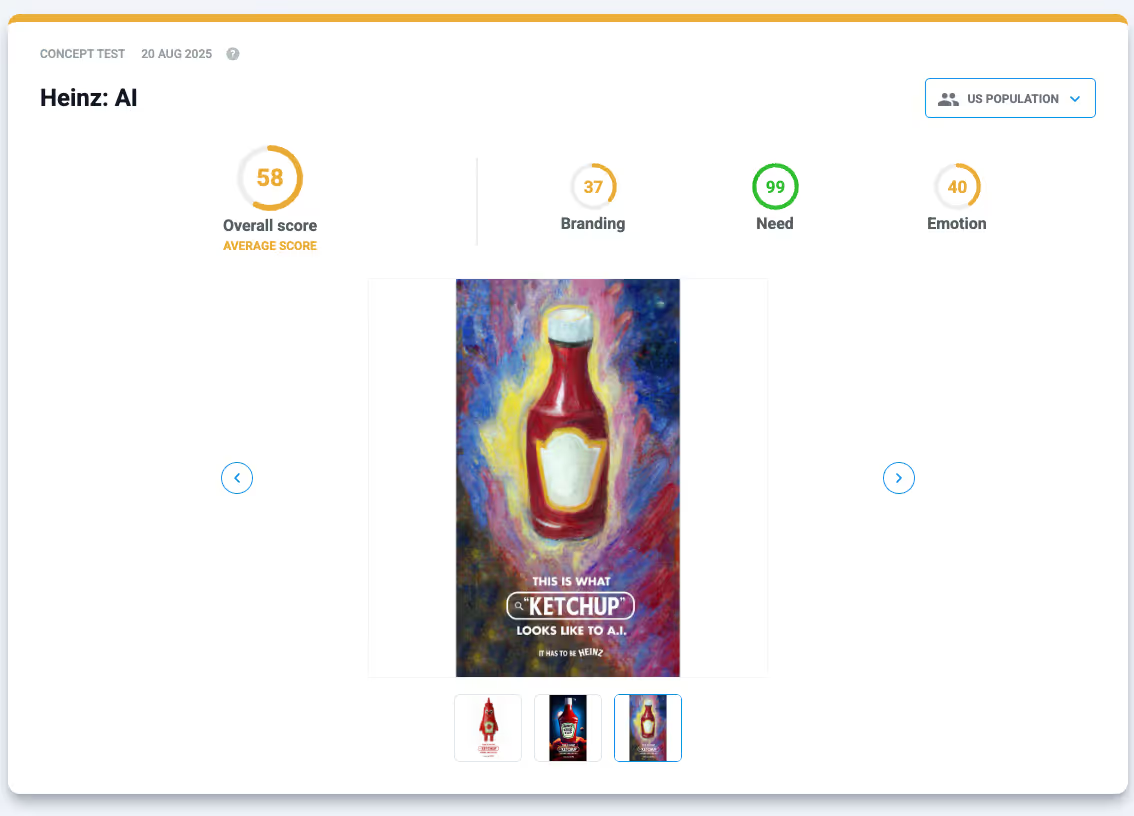
The issue wasn’t AI itself… it was that novelty wasn’t guided by a clear brand message, which turned AI’s biggest strength into a weakness.
Transparency alone doesn’t fix this. Saying “made with AI” doesn’t turn a weak idea into a strong one. In some cases, it actually amplifies disappointment.
The best AI campaigns often go unnoticed
Interestingly, some of the most effective AI marketing campaigns we measured shared one surprising trait: most of the audience didn’t realize AI was involved at all.
These ads felt human, clear, and emotionally grounded. They were easy to understand and easy to like. And because they worked, nobody cared how they were produced.
Take Amaysim’s AI campaign. The fast-paced, vibrant editing style was clearly enhanced with AI-powered video tools, which created a dynamic and engaging ad full of family fun. In turn, the ad generated exceptional positive emotion with audiences.
From an effectiveness standpoint, this might be the most important insight of all: When an ad connects emotionally, the production method becomes irrelevant.
How to use AI in marketing campaigns effectively
If you’re wondering how to use AI in marketing campaigns effectively, the answer isn’t about which tools, prompts, or workflows you use.
The key is to start with emotion, not technology. Decide what you want people to feel before deciding how the ad is made. Use AI as a multiplier of strong ideas, not a replacement for them.
When emotion is strong:
- AI doesn’t hurt effectiveness
- AI can even enhance creativity and distinctiveness
When emotion is weak:
- AI won’t save the campaign
- AI simply becomes the thing people blame
Final thoughts
The real question isn’t “Should we use AI?”
The real question is: “Does this campaign work emotionally?”
AI campaigns succeed or fail for the same reason advertising always has. Not because of technology, but because of how well they connect with people.
Read the full white paper for more insights from our research on AI ad effectiveness.
Frequently asked questions

AI enhances creativity and emotional impact, but its effectiveness depends on the emotional foundation of the campaign.
The key to effective AI use in marketing is to prioritize emotion first. Build campaigns around an emotional connection with your audience and then use AI to enhance the creativity and production process. Ensure the branding and message remains clear and impactful.