Tony's Chocolonely just stepped into the ring. Literally. The Dutch ethical chocolate brand launched its very first UK TV campaign, and it's not a gentle product showcase. It's a full-blown 90s wrestling smackdown between "Tony" and "X-ploitation" — played out in someone's living room.
Bold move for a brand most UK viewers are still getting to know. We tested the ad with 1,000 people from the UK general population to see if the punch lands on branding, need, and emotion.
Breaking down the "There's a Fight in Every Bite" ad

The overall score came in at 65 out of 100, meaning this ad performs better than 65% of ads in Behavio’s database. That's average territory. But averages can be deceiving.
Dig into the three pillars of ad effectiveness, and you'll find a much more interesting story: a massive emotional win, held back by branding that fades in the middle.
Emotion: The crowd goes wild
Let's start with the headline number. Tony's campaign scores 92 on emotion, better than 92% of ads. That's exceptional.
68% of the audience liked the ad, compared to a 53% average. Viewers called it fun, energetic, and original.
The ethical message about cocoa exploitation came through clearly, and people found the wrestling concept funny and memorable.
Here's where it really shines: 64% of viewers described the ad as original — well above the 42% average. That matters because distinctive ads stick in memory; they build mental availability faster.
The positive emotion chart shows peaks around the "fighting exploitation" message, the deforestation reference, and the final reveal with the chocolate. Viewers were engaged throughout.

One thing to watch: negative emotion spikes during the most intense wrestling scenes, as some viewers found them too dark and violent. Although it’s only a small group (only 5% reported anger), it's worth noting for future edits or shorter cuts.
Branding: Strong start, soft middle
Tony's scores 51 on branding, right around the average. But the detail tells a more nuanced story.
The good news first: 70% of viewers recognized the brand in the first 5 seconds. That's way above the 49% average. The voiceover mention and close-up on the Tony's packaging do the heavy lifting early on.
The problem comes when brand recall drops in the middle of the ad. The wrestling scenes get so hectic that the Tony's logo on the fighter's singlet gets lost in the action.
When the emotional peaks hit (the moments where memory formation is strongest) the brand isn't visible enough to ride the wave.
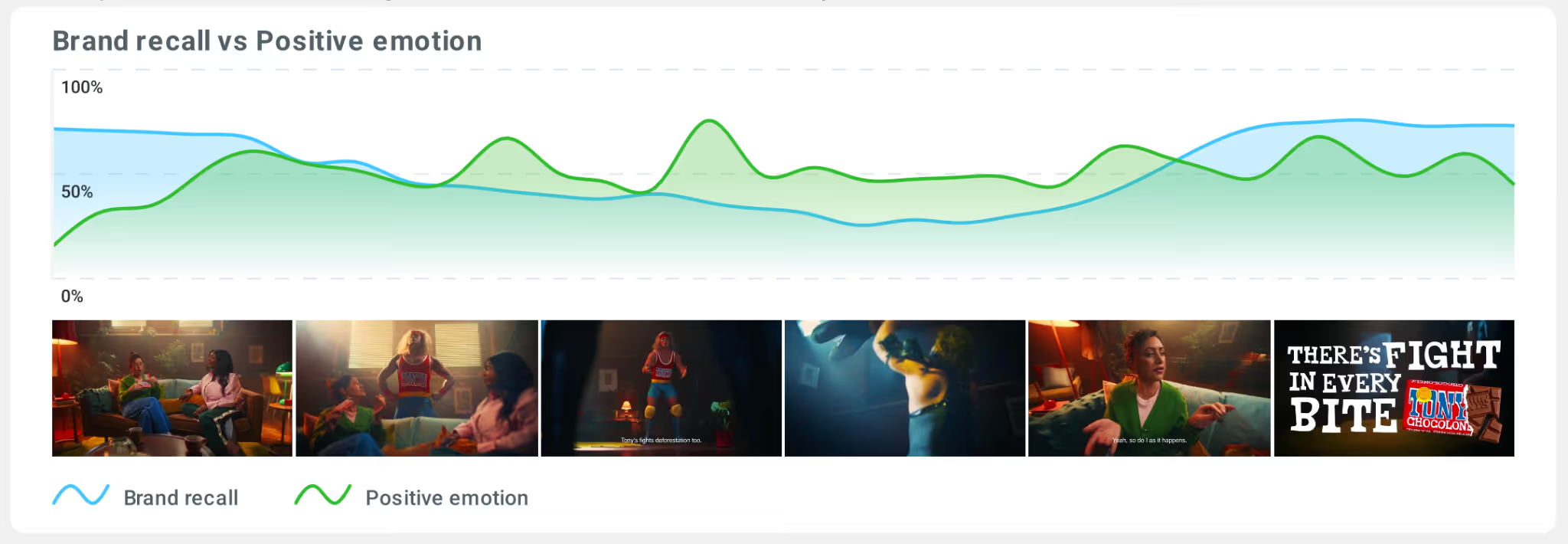
Overall brand recall landed at 54%, just above the 53% average. For a brand still building awareness in the UK, that's a missed opportunity. All that emotional energy needs a stronger brand anchor.
💡 Behavio’s Insight: Add a clearer brand cue in the middle section — a flash of the distinctive Tony's packaging, a colour palette moment, or a voiceover mention. The emotion is already there. The brand just needs to show up during those peaks.
Need: The message lands, but not all of them
Tony's scores 52 on need, with 56% of the audience recognizing the chocolate category — right on the 56% average.
The standout: 63% of viewers got the "fighting cocoa exploitation" message, above the benchmark. That's the ad's core message, and it lands. The voiceover and fighter scenes drive it home.
But the secondary messages struggle. "Ethical sourcing of beans" reached only 47%, and "great taste" just 40%, both below average. The ad is so focused on the fight metaphor that the product itself — chocolate you'd actually want to eat — gets pushed to the background.
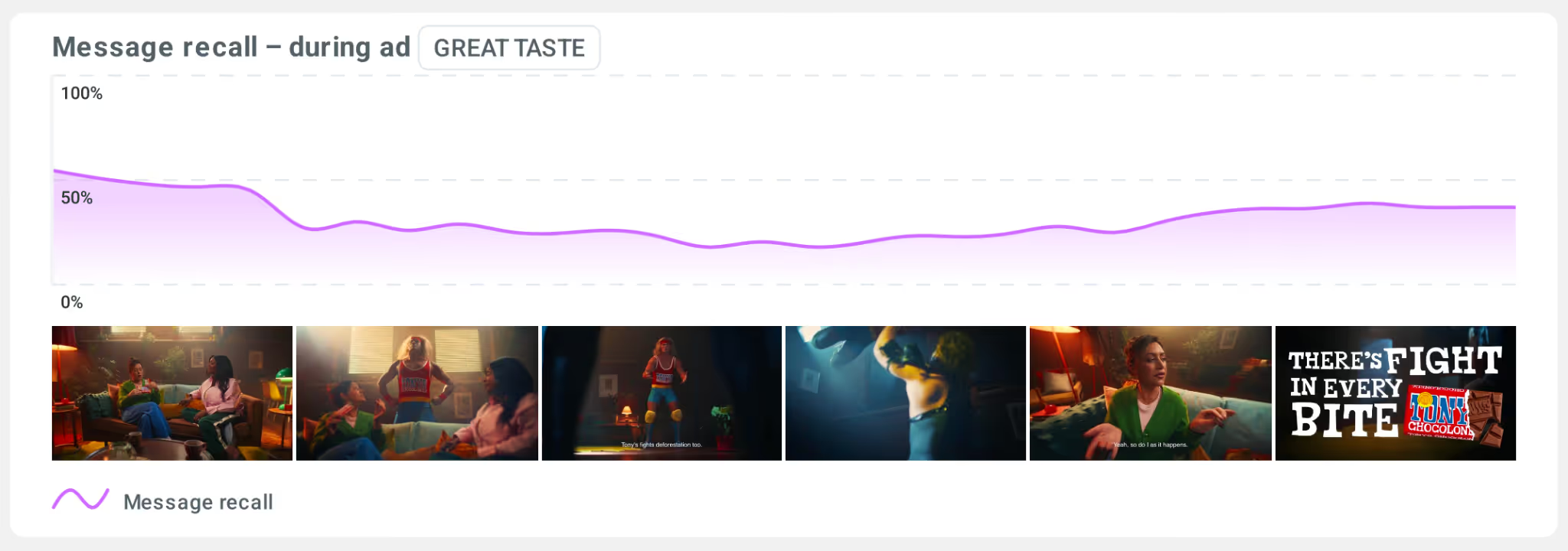
There's also a clarity issue. Only 87% found the ad easy to understand, compared to a 95% average. Some viewers couldn't connect the wrestling to chocolate. That confusion costs you viewers who might have otherwise remembered the brand.
💡 Behavio’s Insight: Simplify the connection between "fighting" and "chocolate" earlier in the ad. And if "great taste" is a priority message, it needs more screen time — a close-up bite, a moment of enjoyment, something visceral.
A bright spot: Category buyers love it
Among chocolate category buyers, the ad scores significantly higher across the board: 73 overall (rated High), with branding at 64, need at 61, and emotion at 93.

People already buying chocolate get it faster and like it more. That's a strong signal: the creative works best with the audience that matters most.
Final thoughts
Tony's Chocolonely's first UK TV ad is an emotional powerhouse with a branding gap.
The wrestling concept is distinctive, the ethical message is clear, and viewers love the energy. But the brand fades when it matters most: during the emotional peaks that build memory.
Key wins:
✅ Exceptional emotional response — better than 92% of ads
✅ Original concept that viewers remember and talk about
✅ Strong early branding — 70% brand recall in the first 5 seconds
Opportunities to improve:
⚡Strengthen brand visibility during the middle section's emotional peaks
⚡Simplify the creative link between wrestling and chocolate for confused viewers
⚡Give "great taste" more room — the product needs a moment to shine
The verdict: Tony's brought the fight. Now they need to make sure the brand is still standing when the crowd is cheering loudest.
Want to test your own ads before they hit the screen? Check out Behavio's ad testing platform and get results you can act on.
(Psst — testing before launch means you can fix the weak spots and double down on what works. That's what actionable research looks like.)
Frequently asked questions

Three dimensions: branding (do viewers know which brand it's for?), need (do they get the product category and message?), and emotion (does it make them feel something?). A strong ad scores well on all three; emotion amplifies memory, but only if it's linked to the right brand and need.
The creative is entertaining, but the brand isn't visible during emotional peaks. Since we form stronger memories in those moments, viewers remember the ad but not who made it. The fix: add brand cues during the scenes that generate the most positive emotion.
Distinctive ads stand out from everything else in the ad break. They break patterns in the brain, which makes them easier to remember. That builds mental availability, a key driver of long-term brand growth.