The Dutch online fashion market is busy, crowded, and full of surprises. From global giants to second-hand challengers, half a dozen brands are competing for the same wallets, the same attention, and the same moments of "I need something to wear."
But when you look past the marketing noise and into what consumers actually associate with each brand, a much more interesting picture emerges. Some brands own the fashion mind. Others own functional trust. A few are quietly carving out emotional territory most people haven't noticed.
Using Behavio's brand tracking and market mapping data from a nationally representative sample of 1,000 Dutch consumers, we mapped how the leading online fashion players stack up: Zalando, Wehkamp, Vinted, About You, ASOS, and the generalist that always shows up in any e-commerce comparison — bol.com.
Here's what's really going on inside Dutch shoppers' heads.
Zalando: the fashion mental leader
Zalando is the brand that comes to mind first when Dutch shoppers think about clothing online. Among category buyers, Zalando dominates Salience at 45% — more than double bol.com (20%) and triple Wehkamp (15%). Vinted, About You, and ASOS sit in single digits.
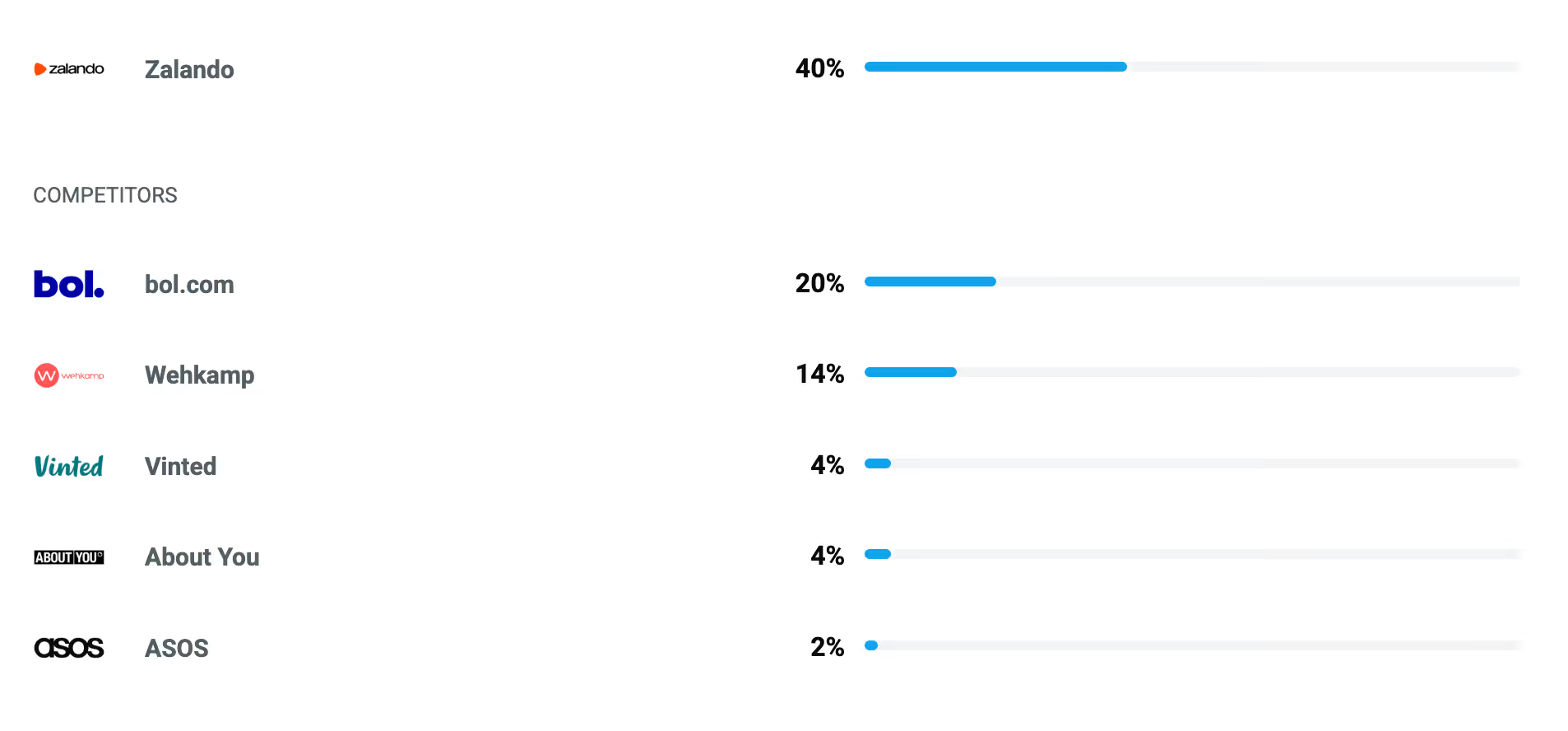
That's a category-defining advantage. In fashion, top-of-mind matters: when someone thinks "I need new sneakers," the brand they remember first is the brand they tend to open first.
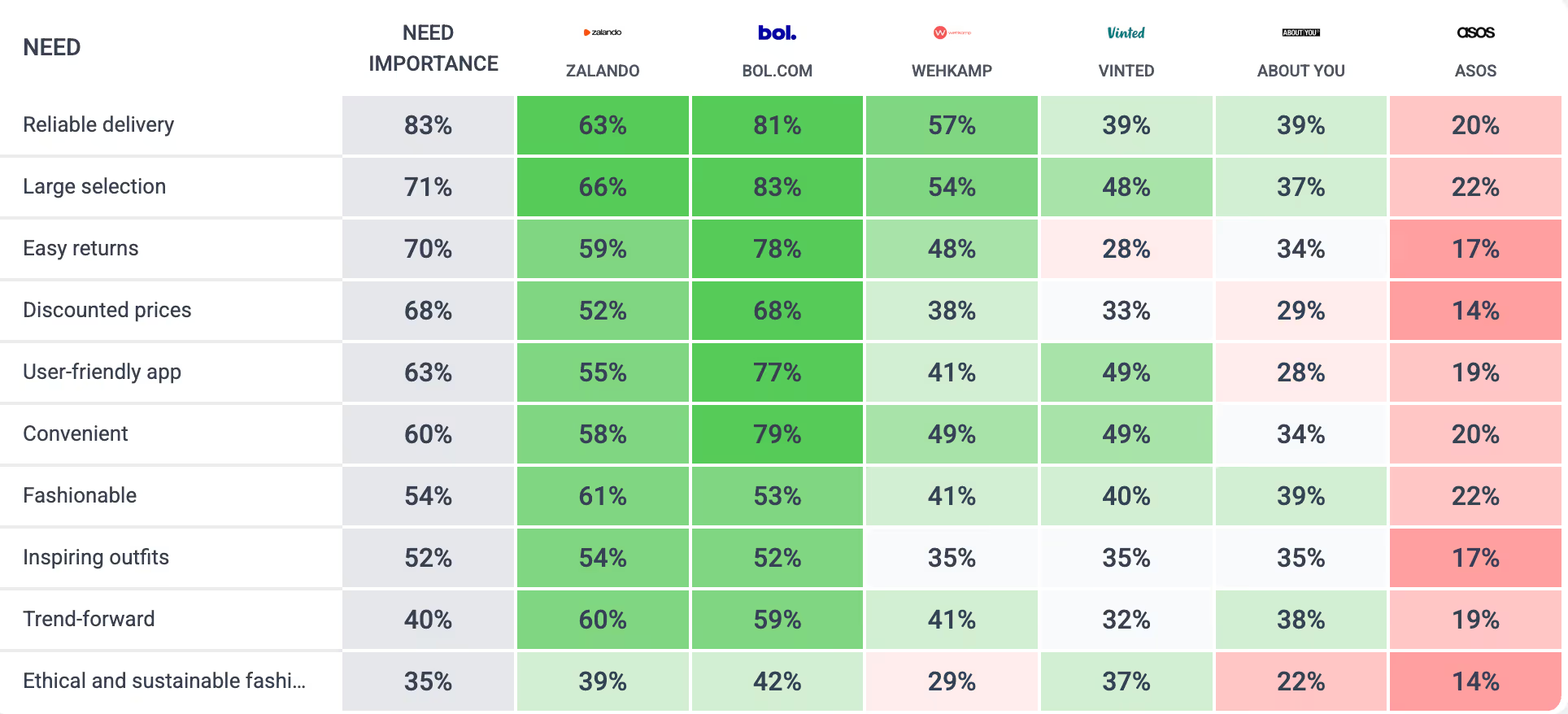
The associations back this up. Zalando leads or ties for the lead among fashion specialists on:
- Fashionable: 61%
- Trend-forward: 60%
- Inspiring outfits: 54%
- Large selection: 66%
Zalando's vulnerability is functional. Reliable delivery (63%), Easy returns (59%), and Convenient (58%) are its weakest scores. Closing that gap is the strategic priority — but the brand identity is solid.
Bol.com: the generalist that quietly competes everywhere
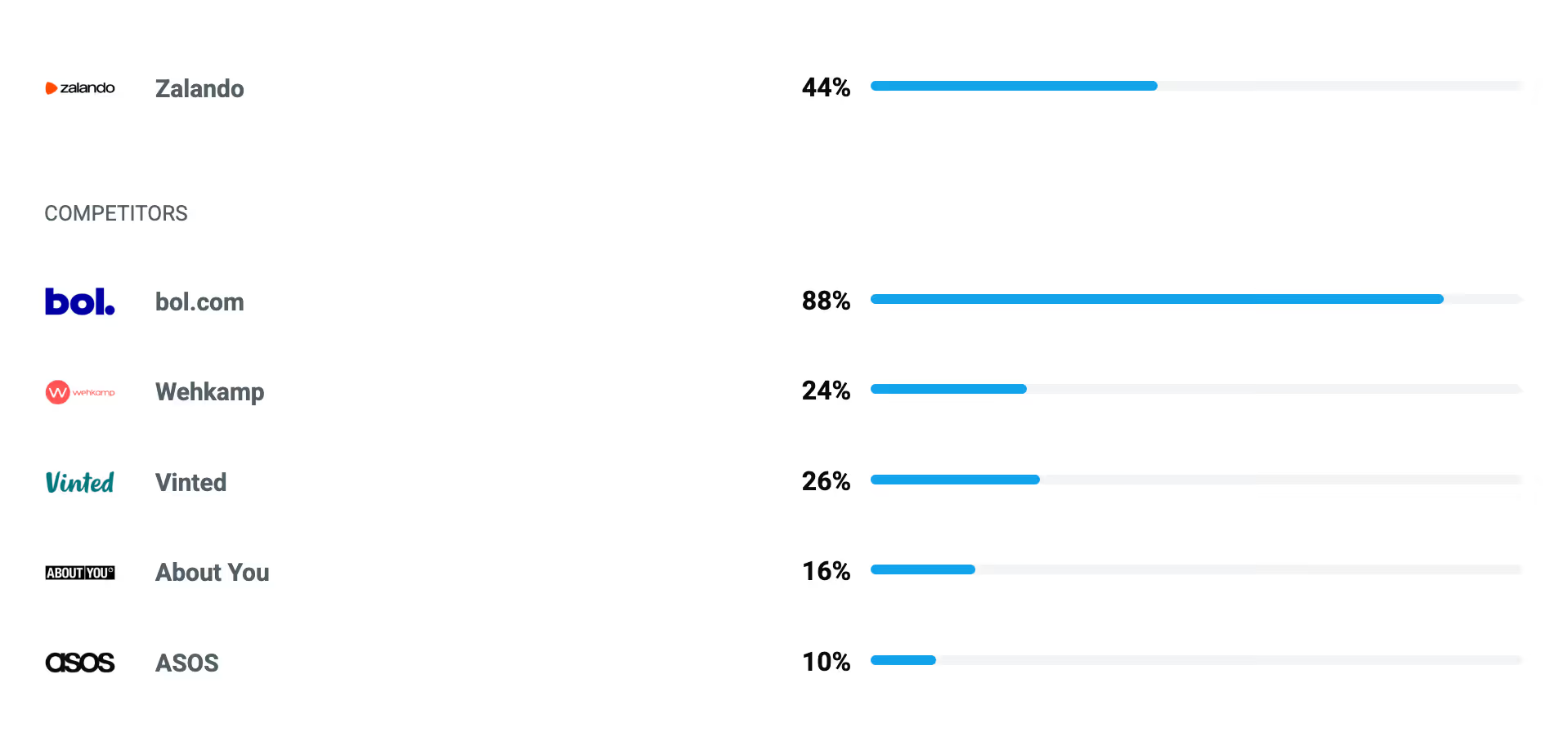
It's worth pausing on bol.com, because the brand shows up in almost every comparison in this report — and at first glance, it looks like the runaway leader. 92% Buyers, 81% Reliable delivery, 83% Large selection. On paper, that's overwhelming.
But bol.com isn't a fashion specialist. It's a generalist marketplace, and the bulk of its volume comes from electronics, books, household goods, and toys.
So those high-scoring functional metrics reflect bol.com's overall retail experience, not specifically how it performs as a place to buy clothes. Many people answering "yes, I shop at bol.com" aren't buying fashion there, they're buying USB cables.
That said, bol.com is genuinely in the fashion conversation. Its 20% Salience in the category is the second-highest in the dataset, and it scores 53% on Fashionable, meaning a real chunk of Dutch shoppers do think of bol.com when they think of clothes online.
The relative association data sharpens the picture. Bol.com sits at −14% on Fashionable and −8% on Inspiring outfits — meaning that even though the brand sells clothes and people know it, they don't link it to style. It's the place that delivers, not the place that inspires.
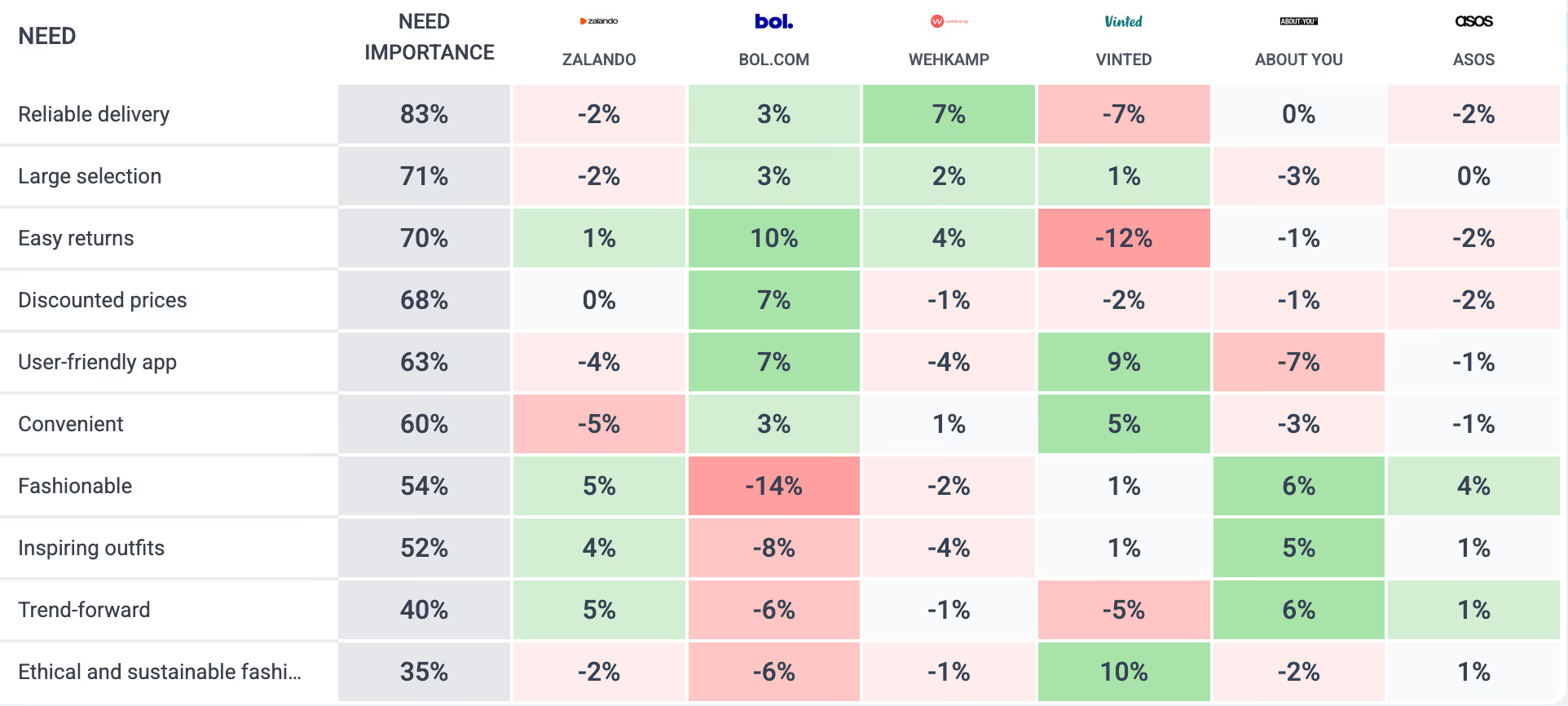
For Zalando and the other fashion specialists, that's both a threat and an opportunity. Bol.com's generalist trust spills into fashion at the moment of purchase ("I'll just grab it on bol"), but its inability to own the category entry points tied to style and inspiration leaves the aspirational ground wide open.
Wehkamp: the dependable mid-market all-rounder
Wehkamp has been part of Dutch online shopping for decades, and the data shows a brand that's still broadly known but increasingly defined by trust rather than excitement.
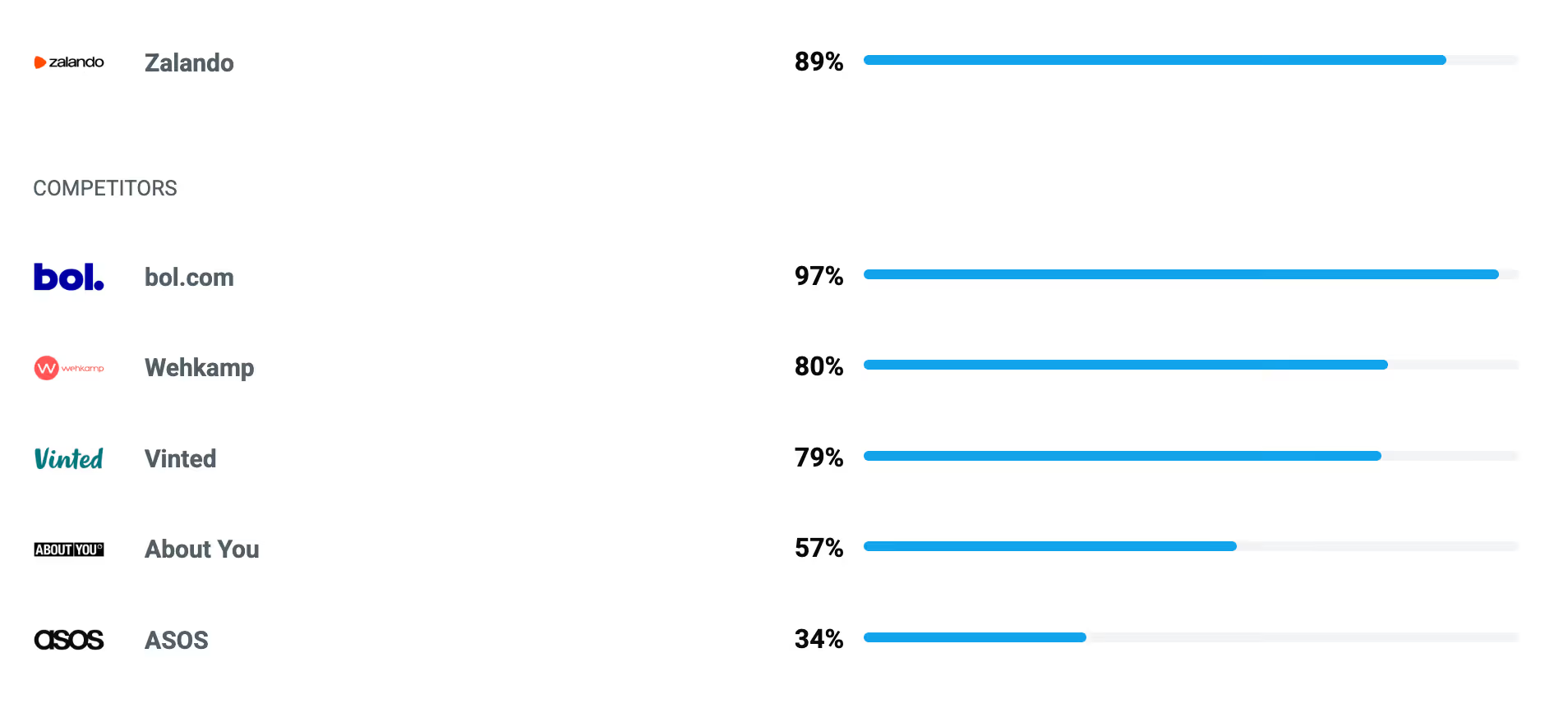
Brand awareness sits at 80% (third overall, after bol.com and Zalando).
It also performs solidly across nearly every need:
- Reliable delivery: 57%
- Convenient: 49%
Its standout in the relative data is Reliable delivery (+7%), suggesting Wehkamp is the place Dutch shoppers go when they want a brand they know will deliver as expected. That's a real asset.
But on the emotional and stylistic axis, Wehkamp lags. Fashionable (41%), Trend-forward (41%), and Inspiring outfits (35%) put it well below Zalando on every dimension that drives modern fashion brand love. The relative scores here are flat to slightly negative.
Wehkamp's challenge is the same as a lot of established mid-market retailers: it's broadly trusted but rarely chosen first.
To stay relevant, it needs a sharper emotional or stylistic edge — otherwise it risks becoming the brand people consider rather than the brand people choose.
Vinted: the second-hand challenger with a surprising profile
Vinted is the most interesting story in this dataset. It's a fundamentally different business — peer-to-peer second-hand fashion — and yet it punches well above its weight on several metrics that matter.
- Awareness: 79% (almost identical to Wehkamp)
- Buyers: 26% (higher than Wehkamp's 24%)
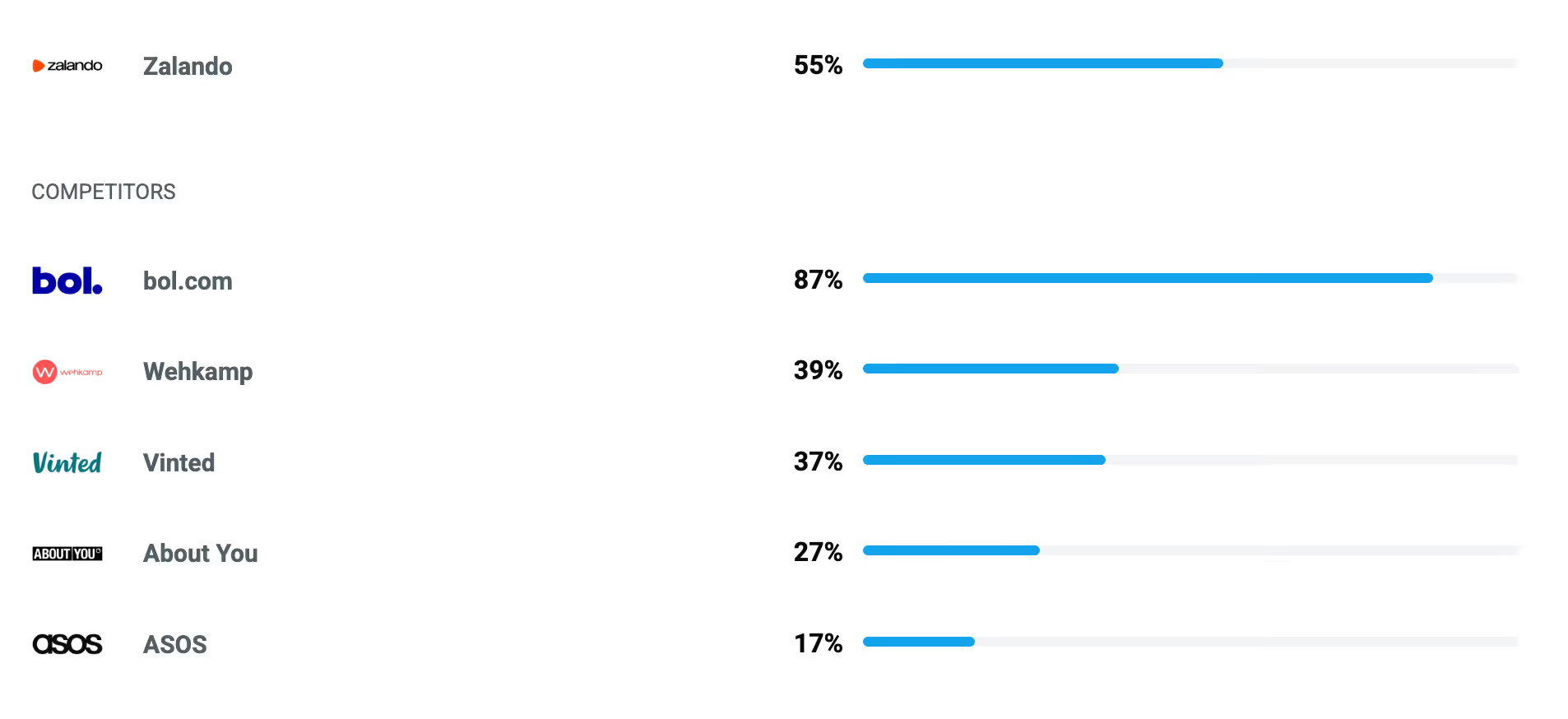
- Likeability: 37%
Vinted has built genuine reach in the Dutch market in a relatively short time. But the more telling story is in the relative associations. Vinted is the only brand in this dataset to lead on:
- Ethical and sustainable fashion: +10%
- User-friendly app: +9%
- Convenient: +5%
That's a powerful and coherent identity: an easy, sustainable, second-hand-first marketplace that feels modern and frictionless. It maps directly onto what younger Dutch shoppers say they care about.
It also sits inside a category that's already mainstream. We asked Dutch consumers whether they've ever shopped for second-hand items online, and the answers were striking:
- 45% of Dutch consumers have shopped second-hand online at least occasionally (14% regularly, 32% occasionally)
- 14% haven't yet but plan to try
Almost half the Dutch population is already buying second-hand online. That's a much more developed market than people often assume.
In other words, Vinted is no longer fighting for awareness or category acceptance. It's fighting for share of an established habit. That changes the playbook: it puts more weight on retention, frequency, and depth of engagement rather than evangelising the concept.
The trade-off is that Vinted scores poorly on Easy returns (28%, with −12% relative) and Reliable delivery (39%, −7% relative) — both natural consequences of the C2C model. And on style-driven needs (Fashionable 40%, Inspiring outfits 35%), it's middle-of-the-pack rather than a leader.
But that's fine. Vinted isn't trying to be Zalando. It's building a defensible position around values and experience, not aspiration.
About You: the trend-forward challenger most marketers underestimate
About You is the smallest of the established players in awareness terms (57%), and its salience is just 4%. On the surface, it looks like a brand fighting to stay visible.
But look at the relative association data and a different picture appears. About You leads the entire dataset on:
- Fashionable: +6% (higher than Zalando's +5%)
- Trend-forward: +6% (higher than Zalando's +5%)
- Inspiring outfits: +5%
In other words: among the people who do know About You, it's perceived as more on-trend than Zalando. That's a remarkable position for a brand of its size, and it suggests the brand has built a sharply differentiated identity even if it hasn't yet built broad reach.
About You's challenge is therefore not what it stands for — it's how many people know it stands for that. The brand identity is strong; the mental availability isn't. Building awareness is the bottleneck.
For a younger, fashion-forward audience, About You may already be a closer match than Zalando. The job now is making sure those people actually hear about it.
ASOS: the fading international player
ASOS is the cautionary tale in this dataset. Once a major force in European fashion e-commerce, the Dutch numbers now show a brand struggling on every front:
- Awareness: 34% (lowest of any major brand)
- Salience: 2% (essentially nonexistent in unprompted recall)
- Buyers: 10%
- Likeability: 17%
And this isn't just in absolute scores; the relative association data shows ASOS hovering around zero on almost every dimension.
There's no defensible territory it owns. No emotional moat. No functional advantage. Even on Fashionable, where you'd expect a fashion-only retailer to compete, it scores 22% — half of where Wehkamp sits.
ASOS isn't actively disliked. It's something arguably worse: it's forgettable. Without a clear repositioning, it's hard to see what role it plays in the Dutch market beyond being a fallback option.
What the Dutch fashion market actually looks like in 2026
When you step back from the individual brands, a clear pattern emerges:
- Fashion identity is owned by Zalando. It's the only brand that combines mass awareness with category-specific salience and a strong emotional link to style. That's a defensible position.
- Generalist trust spills into fashion via bol.com. Strong on functional needs across the board, but unable to claim style ownership. A real threat at the point of purchase, not at the point of inspiration.
- Trust is owned by Wehkamp. A reliable, familiar mid-market brand that delivers what it promises — but rarely surprises or excites.
- Sustainability and modern UX are owned by Vinted. A genuinely differentiated identity built around values and experience, not aspiration.
- Trend identity (per capita) is owned by About You. The most fashion-forward perception of any brand in the dataset, held back only by limited reach.
- ASOS owns nothing. A brand that needs to define what it stands for in this market, or risk continued irrelevance.
What's striking is how little overlap there is. Each brand has carved out a different territory: aspiration, daily-life trust, mid-market reliability, sustainability, trend, or invisibility.
The brands that grow from here will be the ones that defend their territory while quietly closing the functional gaps that let competitors encroach from the side.
Final thoughts
Every brand in this market talks about fashion, convenience, and quality. But Dutch consumers don't distribute those associations evenly. They assign ownership.
Zalando owns the fashion moment. Vinted owns the sustainable moment. About You owns the trend moment. Wehkamp owns the trust moment. Bol.com owns the daily-shopping moment.
The next chapter of this category will be written by whoever defends their territory while encroaching on someone else's — and who reads the data carefully enough to know which moments are actually theirs to win.
Behavio's brand tracking helps brands see exactly where these mental territories sit, how they shift, and what to do next, so the right moves happen before the data tells you it's already too late.
Frequently asked questions
- Dutch fashion e-commerce brand tracking study – Behavio, March 2026, n=1,000 Dutch consumers (nationally representative)