.avif)


Picture this: You're standing in the energy drink aisle at Target.
On one side, there's a wall of aggressive blacks and neon greens screaming "EXTREME POWER!" On the other side? Pastel pinks, soft blues, and a can that looks more like a craft cocktail than a caffeine bomb.
Which one catches your eye?
If you're part of the female demographic that energy drink brands spent decades ignoring, you're probably reaching for that second option. And you're not alone.
Alani Nu just sold for $1.8 billion to Celsius, proving that understanding your audience's subconscious preferences pays off (literally).
The billion-dollar blind spot
For years, energy drink brands spoke one language: hyper-masculine tonality, dark colors, and aggressive fonts. Marketing that basically screamed "crush your enemies" with every sip.
Meanwhile, women were buying these products anyway, holding cans that made them feel like they'd wandered into the wrong aisle.
Alani Nu founder Katy Hearn spotted this disconnect in 2018 when she identified a massive gap between what brands thought women wanted and what actually resonated at a subconscious level.
Alani Nu's team bypassed the "what people say" trap entirely. Instead, they focused on behavioral signals.
What makes women stop scrolling? What gets shared on Instagram? What feels like it belongs in their daily routine rather than hidden in a gym bag?
By tuning into these needs, Alani Nu saw how subtle packaging and branding changes could attract women who were already buying energy drinks but felt alienated by the packaging.
Packaging as silent persuasion
Alani Nu's packaging was a game-changer: bright, bold, and unapologetically feminine, with flavor names like "Cosmic Stardust" and "Breezeberry."
The cans are so visually appealing that people are even decorating their rooms with them (yes, really).
Behavioral science explains why: it’s based on the fluency heuristic, which suggests that our brains prefer things that are easy to process. Alani Nu’s clean, colorful aesthetic feels instantly familiar to women who already engage with beauty and wellness brands.
Compare that to traditional energy drinks, where the packaging signals aggression, intensity, and extreme sports. Even if a woman wants the functional benefit (energy), the visual identity creates friction. Her brain has to work harder to reconcile "this is for me" with packaging that screams "this is definitely not for you."
Alani Nu eliminated that friction entirely. Their cans feel like they belong next to your favorite skincare products.
The influencer effect
Alani Nu's influencer strategy focuses on building social proof at scale. By partnering with fitness personalities who already had strong female audiences, they created a network effect where the brand felt less like a product and more like a community membership.
When you see Kim Kardashian holding an Alani Nu can on Instagram, your brain starts making mental shortcuts: "People I admire drink this," "This fits my lifestyle," "This is aspirational yet achievable."
This approach taps into something deeper than traditional advertising: our natural tendency to mimic the behaviors of people we admire or identify with. When your favorite fitness influencer includes Alani Nu in their morning routine, you’re motivated to incorporate it into yours as well.
The numbers don't lie (but people do)
Here's a stat that should make every marketer pause: Alani Nu's sales rocketed 72.4% in one year, pushing them past the billion-dollar milestone. They now hold a significant chunk of the energy drink market, all while targeting a demographic that most brands in the sector treat as an afterthought.
.avif)
What's wild is that women were already buying energy drinks before Alani Nu existed. They just weren't being marketed to effectively.
Traditional purchase-intent surveys probably would have told you that women care about ingredients, health benefits, and energy levels. All true, but incomplete.
What those surveys miss is the emotional and subconscious layer: How does the product make you feel when you hold it? Does it fit your identity? Would you proudly display it at your desk or hide it in a fridge?
Alani Nu understood that real purchasing decisions happen fast, mostly in the subconscious parts of our brains that respond to color, shape, social signals, and emotional resonance.
How to apply these insights to your brand
If you're reading this and thinking "cool story, but my brand isn't an energy drink," you're missing the point. No matter your industry, the principles Alani Nu used can work for your brand.
The Alani Nu playbook works because it's rooted in how human brains actually make decisions. Design packaging that connects emotionally with your customers, not just functionally. Focus on reducing cognitive friction, making it easy for your audience to see themselves using your product in their everyday lives.
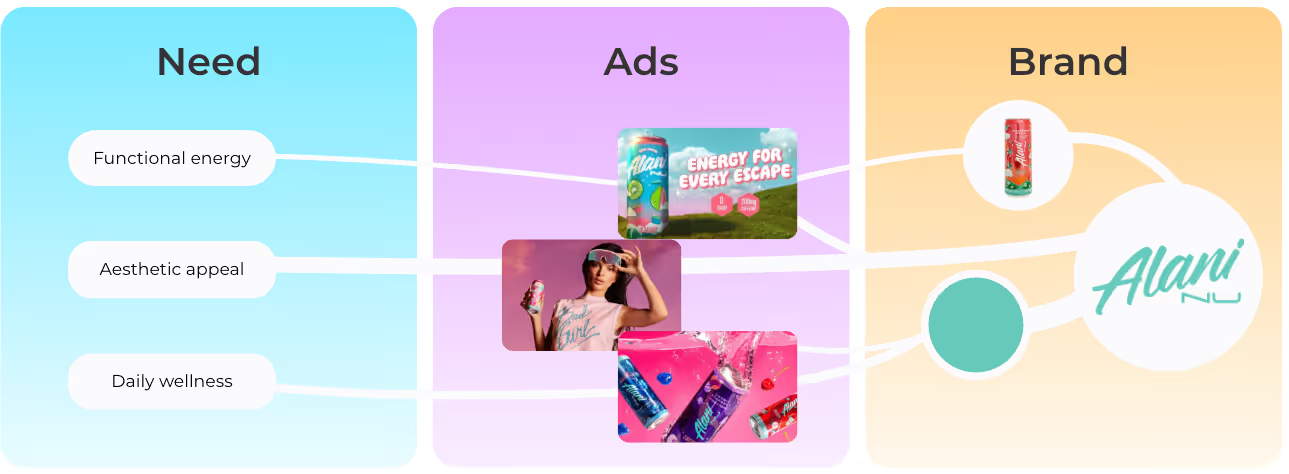
Most importantly: test your assumptions before you scale. Alani Nu validated it through real-world behavior, influencer partnerships that drove actual engagement, and retail expansion that followed demand rather than creating it.
Alani Nu didn’t guess what; they validated their approach with real consumer actions. Now, you can too.
Want more insights into your brand performance?
If you're looking to understand how your branding connects with your customers at a deeper level, brand tracking with Behavio can show you what truly drives their purchase decisions.
Start measuring emotional impact and uncover insights traditional research methods might miss.
Frequently asked questions

Alani Nu appealed to women by using feminine, relatable packaging and partnering with influencers to create a community-driven brand experience.
Influencer marketing helped build social proof, with figures like Kim Kardashian creating aspirational connections that resonated with their female audience.
Brands can focus on emotional connection, use packaging that aligns with their audience's identity, and validate assumptions through real-world behavior and influencer partnerships.
- Alani Nu's Rise in the Energy Drink Market – Capitalism.com, 1 Apr 2025
- Alani Nu's Sales Surge Amid Functional Beverage Boom – Fast Company, 28 Apr 2025
- Fluency Heuristic – Newristics