.avif)


Brand awareness is how many people recognize and recall your brand, and how easily it comes to mind when they're ready to buy. You can measure it five ways: Google Analytics, share of search, social media monitoring, market research, and brand tracking.
The first four give you signals. Brand tracking gives you the full picture — recognition, recall, associations, and emotion, measured over time so you can see what's actually moving.
If that sounds like a lot, here's the short version: pick the method that matches your budget and how much detail you need. Web and social tools are cheap but shallow. Surveys and brand tracking are deeper but need a bit more setup.
Below, we'll walk through all five, what each one is good for, and where it falls short, so you can choose without wasting time or money. Let's dive in, shall we?
What is brand awareness?
Brand awareness is the degree to which consumers recognize and recall a brand. It reflects how familiar people are with your brand and is one of the clearest indicators of brand health. When awareness is strong, your brand is more likely to come to mind first when consumers need a product or service in your category.
That familiarity also builds trust and credibility, making it easier to attract new customers, retain existing ones, and drive long-term growth. Put simply, if a large share of your target audience recognizes and remembers your brand, you have strong brand awareness.
Why should you track brand awareness?
You should track brand awareness because it tells you where to point your marketing. Awareness isn't the goal itself — it's the input that guides every other decision. It’s a key factor in staying competitive and strategically investing your resources where they’ll have the most impact.
If awareness is low, you know to focus on visibility and reach. If it's already high, the smarter move is usually differentiation, so people don't just know you but pick you over the alternatives. Track it over time and you can tell whether a campaign actually shifted perception or just felt good.
You can dive deeper into how to adjust your strategy based on your brand’s size with our free brand tracking cheatsheet.
How do you measure brand awareness? The 5 methods
Here are five common methods to measure and track brand awareness over time, from lightest to most complete.
1. Google Analytics
Google Analytics shows how recognizable your brand is in the digital space by revealing how much of your traffic comes from people searching for you by name. A rise in branded organic traffic is a decent proxy for growing awareness.
The catch: privacy rules now hide much of the specific search-query data, so you get a general sense rather than a precise read. Treat it as a directional signal, not a measurement.

2. Share of search
Share of search is how often your brand is searched for compared to competitors in your category. It's a cheap, fast benchmark, and it correlates closely with brand salience, or how top-of-mind you are.
Its weakness is context. Like web traffic, share of search tells you that interest moved, not why. You won't learn how people feel about you or what to fix, which makes it a starting point rather than an answer.

3. Social media monitoring
Social media monitoring gauges awareness through brand mentions, sentiment, and engagement across platforms. It's fast and gives you a live read on how people talk about you.
But your followers aren't your market. Social data skews toward people who already engage with you — the heavy-buyer fallacy — so it represents a small, self-selected slice rather than the average consumer. Relying on it alone to steer strategy can mislead you.

4. Market research
Market research measures awareness directly through surveys, focus groups, and interviews, giving you a nuanced view of how familiar consumers really are with your brand. Tools like Attest, SurveyMonkey, Suzy, and Pollfish make it easier to run and scale.
The trade-off is cost and speed. Traditional market research is often expensive and slow, and the findings tend to land as hundred-slide reports with no clear next step; a heavy lift, especially for a lean team. You get representative data, but acting on it is the hard part.

5. Brand tracking
Brand tracking is the ongoing measurement of how your brand is known, felt, and chosen over time. Think of it as a regular health checkup: it's the most practical yet complete way to measure brand awareness.
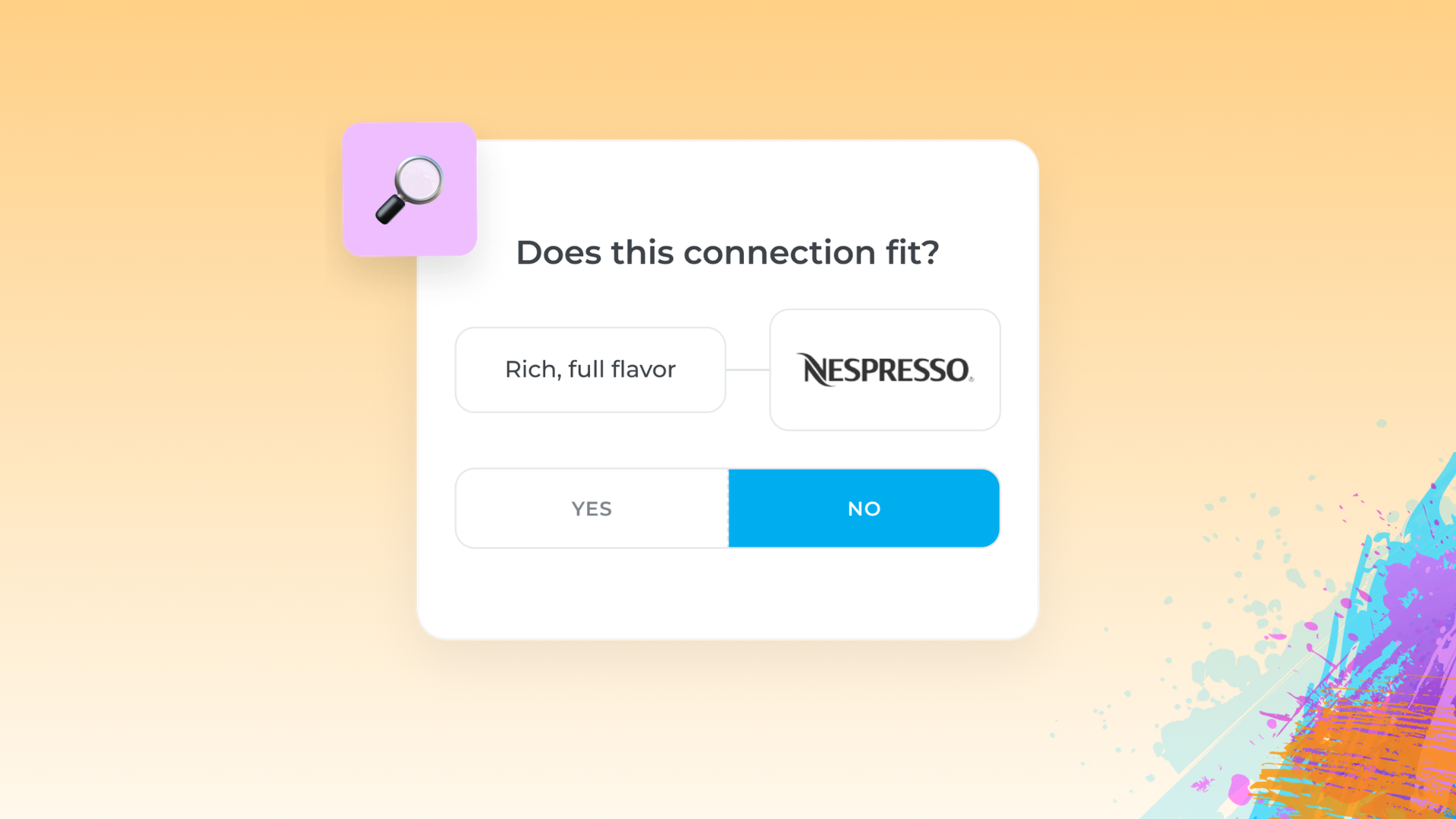
Unlike the other four methods, brand tracking captures more than recognition. It measures brand recall, brand associations, brand salience, and brand emotion, and it does so continuously — so you can see shifts in perception as they happen and tie them back to what you did.
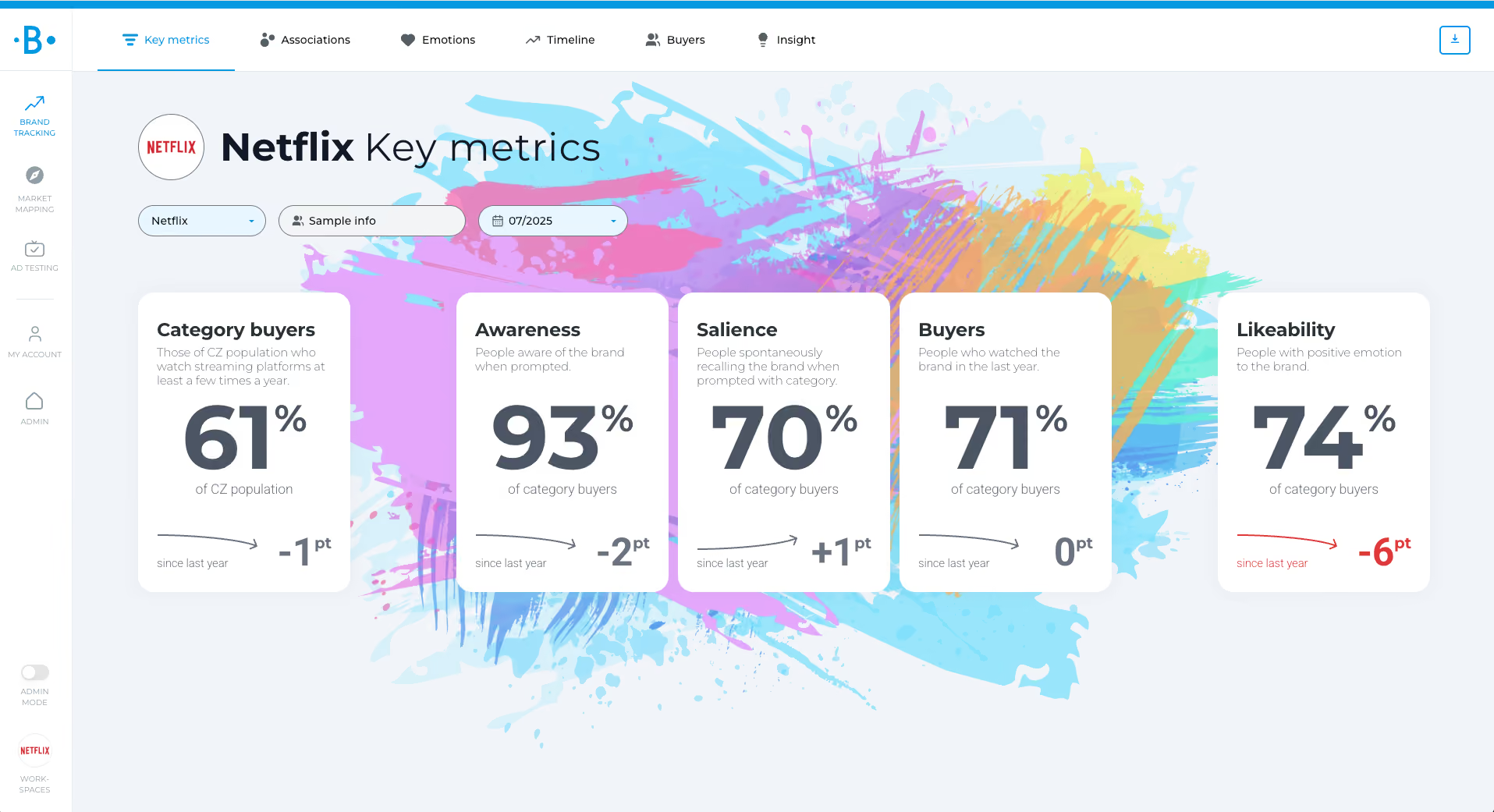
Moreover, brand tracking can uncover potential opportunities for growth and identify areas where the brand can differentiate itself from competitors. Companies can use this information to refine their marketing efforts, enhance customer experiences, and ultimately, build stronger brand loyalty.
With brand tracking, businesses can ensure that their brand remains relevant and resonates with both existing and potential customers.

What's the difference between measuring and tracking brand awareness?
Measuring brand awareness is a snapshot; tracking it is the film. A single survey tells you where you stand today. Tracking repeats that measurement on a regular cadence, so you can see direction, spot early decline, and prove whether a campaign worked.
Most brands need both, but tracking is what makes the number useful. A one-time score is hard to act on because you have nothing to compare it to. A trend line tells you whether you're winning on the market.
How do you set up brand awareness tracking?
Here's a simple framework to get started.
- Define your key metrics. Decide which awareness KPIs matter most — unaided recall, brand salience, brand emotion, or share of search.
- Choose your tools. Combine analytics (Google Analytics, social monitoring) with dedicated brand tracking software like Behavio for a complete view.
- Establish a baseline. Run an initial survey or analysis to benchmark where your awareness sits now.
- Track regularly. Measure monthly or quarterly to catch shifts as they happen, not months later.
- Compare and act. Benchmark against competitors and adjust campaigns to strengthen the weak spots.
The step people skip is the baseline. Without it, every later number floats free with nothing to measure against.
Brand tracking with Behavio
Behavio is a behavioral brand tracking platform that measures awareness, salience, associations, and emotion — and tells you what to do next to grow. It's built for marketers who need answers, not another report to decode.
Three things make it different:
- Clear next steps, not data overload. Instead of a hundred-slide deck, you get streamlined insights and a plain recommendation you can act on the same day.
- Effortless set-up. Onboarding takes half an hour, so you're tracking this week, not next quarter.
- Affordable for lean teams. You track the metrics that matter without the enterprise price tag that usually comes with continuous tracking.
.avif)
The point of measuring awareness was never the score. It's the decision the score unlocks: where to invest, what to fix, whether the last campaign earned its budget. Get that right and awareness stops being a soft metric and starts driving growth.
👉 For next steps, check out our article on how to grow fast with brand tracking.
Frequently asked questions

Brand awareness is the degree to which consumers can recognize or recall your brand. It influences purchasing decisions by making your brand the first choice when people consider a product category.
If you’re just getting started, begin with simple analytics tools like Google Analytics or share of search data to get a rough sense of how often people look for your brand. Then, move toward more structured methods like brand tracking to gain deeper insights into recognition, perception, and brand sentiment over time.
For most businesses, checking in monthly or quarterly is enough to spot trends and shifts. Consistency matters more than frequency: regular tracking helps you understand whether campaigns are working, how consumer perception evolves, and where you need to adjust your marketing strategy.