Top of mind awareness (TOMA) is the first brand a person names, unprompted, when they think of a category. Ask someone to name a soda and most will say Coca-Cola before they've finished the sentence.
That instant, no-effort recall is top of mind awareness: the brand that surfaces first, without a list to choose from or a logo to jog the memory. It's long been treated as the headline measure of brand strength, and as a quick read on which brand leads a category, it tells you something real. But what it actually predicts about growth, and where it quietly misleads, is more complicated than the metric's popularity suggests.
Here's what's worth knowing before we go deeper:
- It's first-named, unaided recall. No logo, no list, no help. Just "what comes to mind?"
- It predicts buying behavior better than general awareness. Brands that come to mind first get bought first.
- It's measurable in days, not months. A short survey on a representative panel is all it takes.
- It's not just for big brands. Smaller brands can absolutely win it, usually one category at a time.
- It's not the same as brand awareness, brand recall, or brand salience. They're related, but each measures something different.
This article walks through what top of mind really is, why it matters, how to measure it properly, and what to do when your brand isn't first in your customers' heads.
What is top of mind awareness?
Top of mind awareness is the strongest form of unaided brand recall. In a survey, you ask people to name brands in a category without showing them a list. The first brand they say is "top of mind." Every brand they mention after that still counts as unaided awareness. Just not the top spot.
The classic example: ask people to name a soft drink. Most will say "Coca-Cola." Coca-Cola has high top of mind awareness in that category. Ask the same people to name a fast food chain and most will say "McDonald's." Different category, different winner.
Top of mind is binary in a useful way: either your brand was the first one someone said, or it wasn't. There's no fuzzy middle. That makes it easy to track over time and easy to compare across markets.
How is top of mind different from brand awareness, brand recall, and brand salience?
These four terms get used interchangeably. They shouldn't be. Each measures something different, and confusing brand awareness with top of mind can lead to bad marketing decisions.
Think of it as four layers of brand memory:
- Brand recognition is the weakest. You show someone your logo or name and ask "have you heard of this?" They say yes or no. Passive.
- Brand recall (unaided awareness) is stronger. You ask "what brands make running shoes?" and they pull names from memory without help. Every brand they mention counts.
- Top of mind awareness is the sharpest form of recall. It's just the first brand they name.
- Brand salience is recall in context. Not "what brands make soft drinks?" but "what would you drink with lunch?" The brands that come to mind in specific buying moments.
The cleanest way to remember the difference between the last two:
Top of mind = first brand recalled, in general. Salience = any brand recalled, in context.
Top of mind tells you who's first in someone's head when asked abstractly. Salience tells you who's there at the moment they're actually about to buy. The second one is closer to what's driving sales, and we'll come back to it.
Why does top of mind awareness predict brand growth?
Most people don't compare ten options when they buy. They pick from a mental shortlist of two or three brands they already know. The brand that comes to mind first usually makes that shortlist, and often wins it outright. That's the core reason marketers have chased top of mind for decades: being named first tends to mean being bought first.
The knock-on effects compound. A brand that's first in mind gets shortlisted more often, which drives sales, which reinforces the recall that put it first. It tracks with market share, it lowers the cost of every future campaign, and it gives a brand a head start on every purchase decision in its category. As a quick read on who leads a category, top of mind does tell you something.
So it's worth measuring. The question is whether you're measuring it properly, and whether the number you get is the one actually driving your business.
How do you measure top of mind awareness?
This is where most articles wave their hands. So let's be specific.
The standard question wording is: "When you think of [category], which brand comes to mind first?"
Sometimes followed by: "And which other brands?" to capture the rest of unaided awareness in the same survey.
A few rules to get clean results:
- Use a representative panel of your category audience. Not your customers. Not your social followers. The full market. If you only ask people who already buy you, you'll measure loyalty, not top of mind.
- Use a large enough sample to detect real movement. Most consumer categories need north of 1,000 respondents per wave to spot meaningful shifts. Smaller samples introduce so much noise that you can't tell whether your number moved because of your campaign or because the survey caught a slightly different group of people that week.
- Ask the question first. Before any other brand questions. Once respondents see your logo or your competitors' logos, you've contaminated the unaided recall measurement.
- Run it monthly or quarterly, not once. Top of mind shifts slowly. One reading tells you very little. Six readings tell you a story.
Scores vary wildly by category. In FMCG, the top brand might own 40% top of mind awareness. In financial services, 15% can make you the category leader. The score itself matters less than the trend and your position relative to competitors.
How long does it take to build top of mind awareness?
The honest answer: months for established categories, and a year or more for newer ones.
Brand memory builds slowly because it depends on repeated exposure tied to relevant moments. A single big campaign rarely shifts top of mind scores in a measurable way. What works is consistent presence over time – same brand, same assets, same connection to a real consumer need.
This is the part most marketers underestimate. Top of mind isn't built by clever creative or a single hero campaign. It's built by showing up, again and again, in ways that link your brand to a clear job your category does.
The brands that win this play don't have flashier ads. They have more disciplined ones.
Why top of mind is a proxy, not the goal
Here's the part most articles skip. Top of mind awareness doesn't drive growth, exactly. Mental availability does. Top of mind is a rough proxy for it.
The underlying driver isn't being named first. It's being mentally available, easy to retrieve in lots of different buying situations. This is the core argument from Byron Sharp's How Brands Grow: brands grow by being thought of in more moments, by more people, more often. Not by being thought of first.
Top of mind only captures part of that. It tells you who wins one mental contest ("first brand named") in one generic context. But your customers don't buy in a generic context. They buy at lunch, on the way home, after the gym, when a friend asks for a recommendation. A brand that's first in someone's head when prompted abstractly might be invisible at the moments that actually matter.
Which is why TOMA scores can stay flat for years while sales grow, or drop while sales hold. The metric is doing its job. It just isn't measuring what's driving the business. Sharp's own framing is blunt: top of mind is a flawed proxy for mental availability, not a measure of it.
So the practical takeaway isn't "ignore top of mind." It's "understand the broader concept underneath it," and measure that instead.
How do you grow top of mind awareness?
By not chasing it directly.
Top of mind is downstream of salience. The brands that grow their TOMA score do it by building strong links to specific buying moments, and then watch the TOMA number rise as a side effect.
Four levers move that underlying salience. None of them are revolutionary. All of them require commitment:
- Reach over targeting. Salience is built across the whole category, not just current customers. Narrow targeting saves money short-term and limits memory growth long-term. Brands that grow tend to over-invest in reach.
- Distinctive brand assets. Colors, sounds, characters, logos. Anything that makes your brand instantly recognizable – and ownable – in a crowded category. Coca-Cola's red. McDonald's golden arches. These aren't decorations. They're memory triggers.
- Category entry points. What moments make people think of your category? Lunch, gym, gift, hangover, party? Each is a category entry point. The more entry points your brand owns, the more often it comes to mind. This is mental availability in practice.
- Playful consistency. Same brand, same world, over years. Marketers get bored of their own creative long before customers do. The brands that win top of mind tend to look annoyingly similar from one year to the next.

These four levers all point toward the same underlying goal: not winning the abstract first-named contest, but becoming the brand that buyers think of in the moments that actually matter. Which is exactly what Behavio's brand tracking is built to measure.
How Behavio measures mental availability
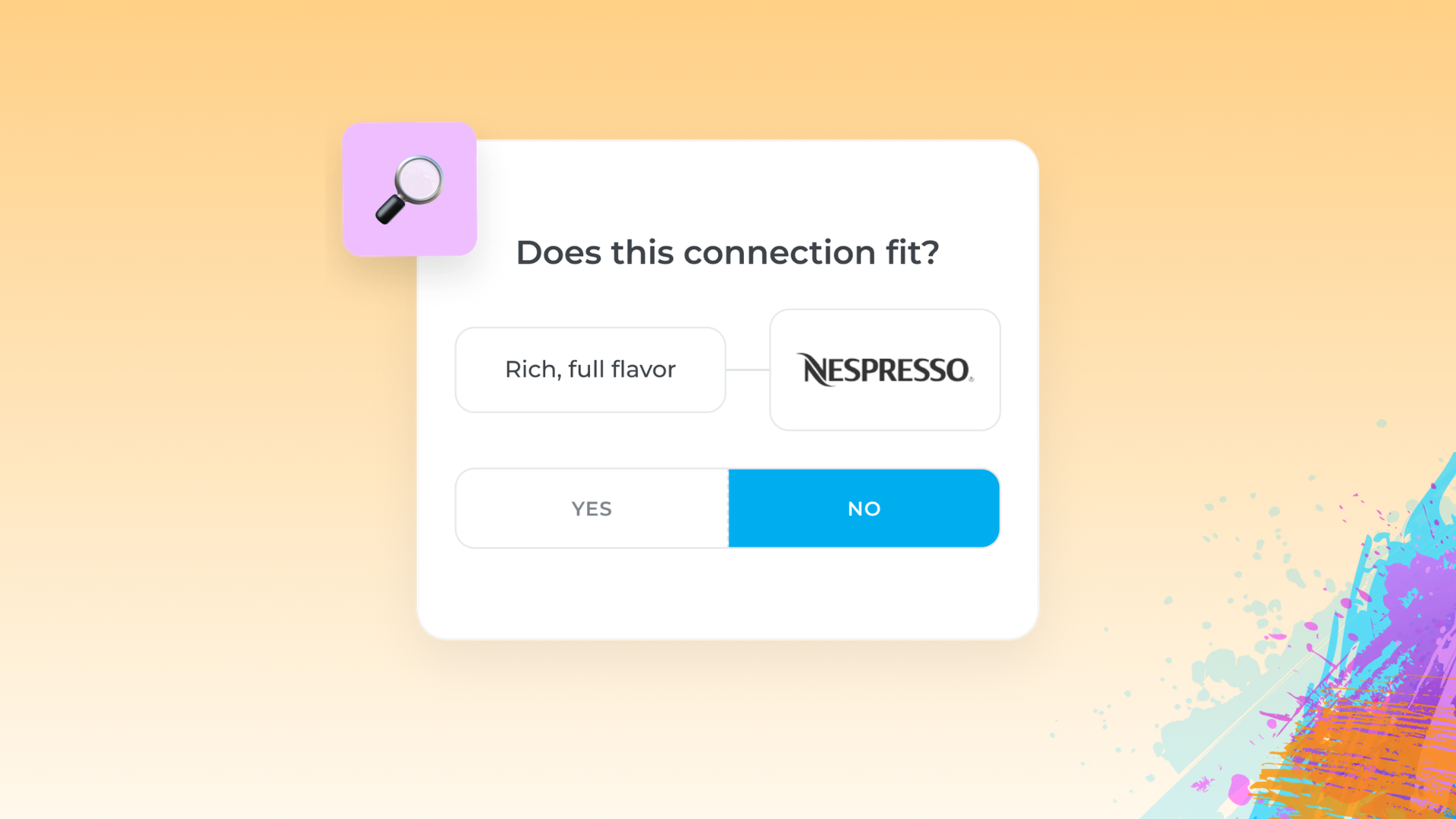
Behavio's brand tracking doesn't lead with a TOMA score. It measures something more useful: how strongly your brand is linked to the specific needs and moments that drive buying in your category.
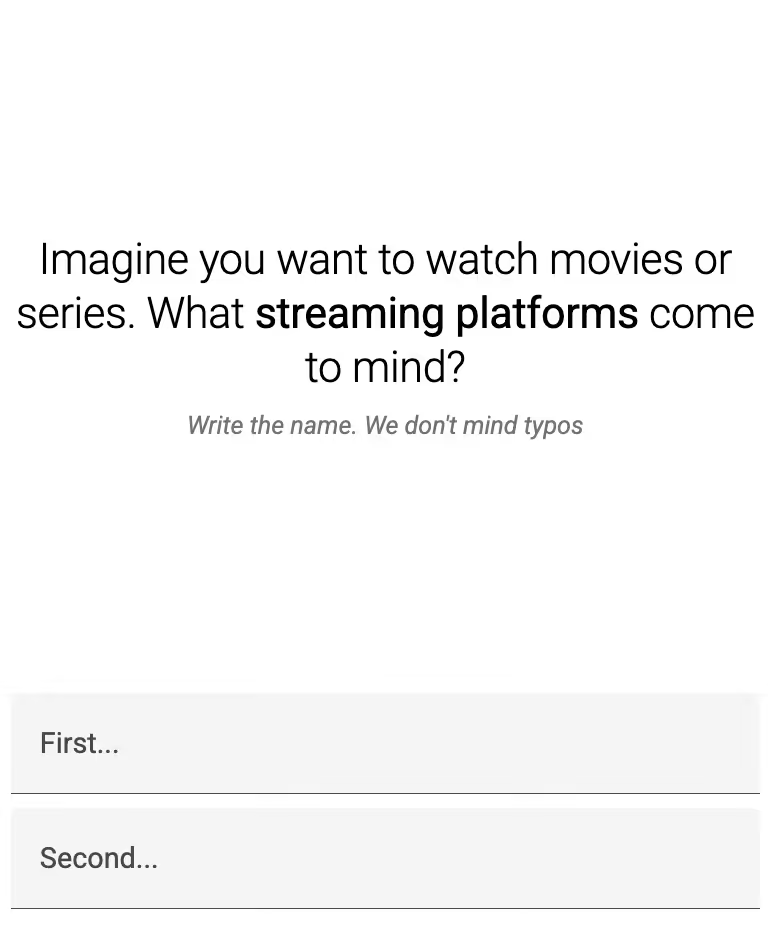
Those moments are what Byron Sharp and Jenni Romaniuk call Category Entry Points, and owning more of them is what actually drives growth.
The methodology is what makes it work. Most brand tracking asks people to rate brands directly, which is the kind of thing humans are bad at. We tend to overthink, edit our answers, or default to whatever brand we just saw advertised.
Behavio uses implicit testing, measuring how quickly you respond to a brand-need pairing rather than asking you to rate it. The thinking goes: what people actually associate is what they answer fastest. "Task, don't ask."
What you get back isn't a single "top of mind" number. It's a breakdown of each of the moments and needs that drive purchase in your category, showing how strongly your brand is associated, how strongly each competitor is associated, and which gaps are open for you to grow into. That's a brief you can take into a creative meeting and act on.
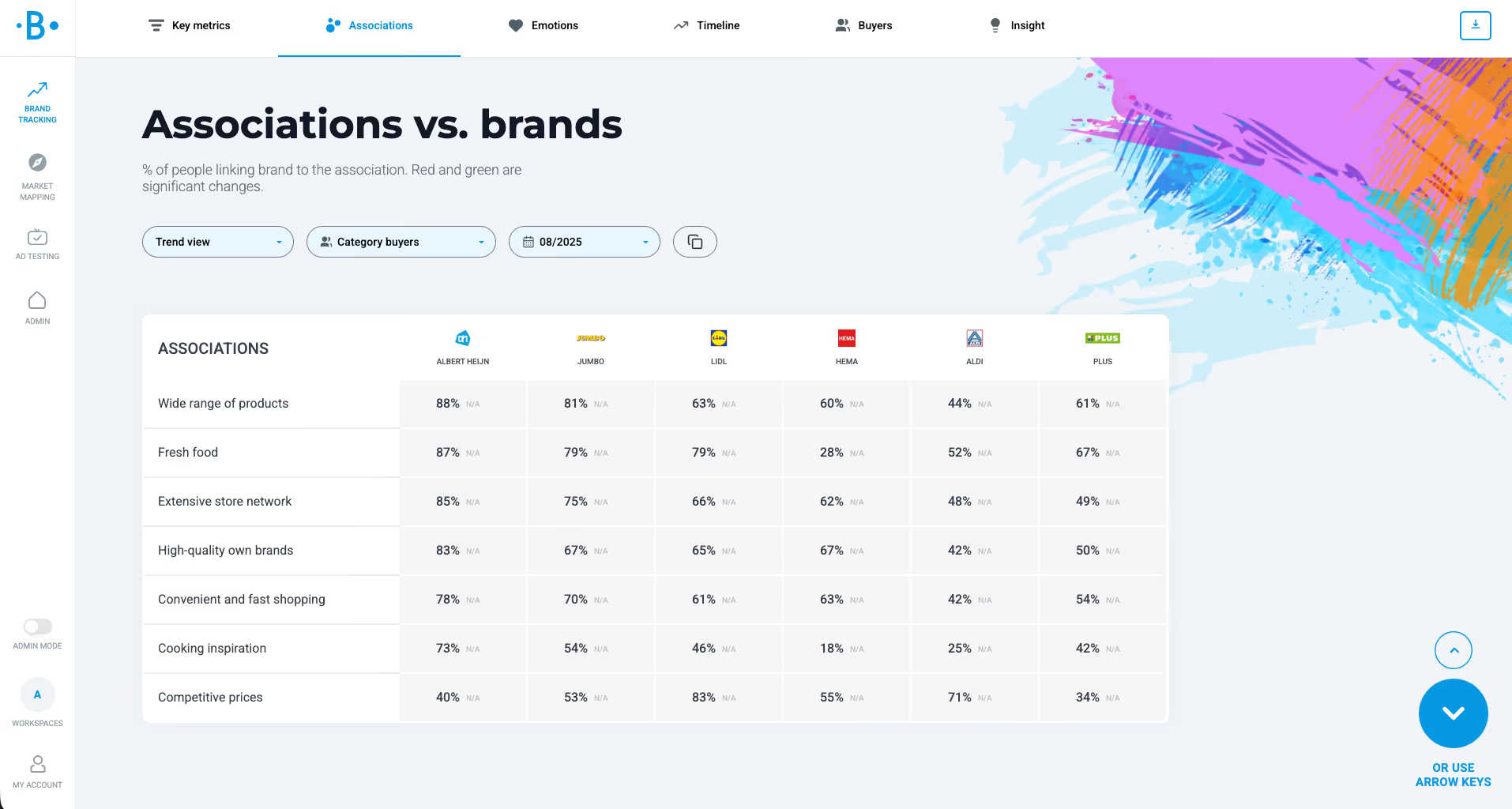
It works because it's continuous, the panel is the full consumer market (not your customer list), the sample is large enough to detect real movement, and the methodology is rooted in behavioral science.
We can measure your brand this way in any of 40+ markets, with reports back in just 2 weeks.
The mistakes most brands make come from treating top of mind as the goal rather than the signal. Five of them come up repeatedly.
What do brands get wrong about top of mind?
- Measuring it once and treating it as a number. TOMA is only useful as a trend. A single reading tells you almost nothing.
- Confusing it with general brand awareness. "We've got 70% awareness!" is meaningless if your top-of-mind score is 3%. Awareness means people know you exist. Top of mind means you matter when it's time to buy. (If you want a deeper dive on awareness specifically, here's our guide to how to measure brand awareness.)
- Asking the wrong people. Surveying current customers gives you a flattering, useless number. You need the whole category audience – including people who buy your competitors.
- Treating TOMA as the goal, not the proxy. The brands that obsess over their TOMA score tend to plateau. The brands that grow focus on building strong links to specific buying moments — and watch their TOMA rise as a side effect. Mental availability across more category entry points is what's actually moving sales. TOMA is the trailing indicator.
- Giving up too early. Top of mind moves on a timescale of months. If you launch a campaign and check the score four weeks later, you'll see nothing. Plan for at least two quarters of consistent activity before judging.

Ready to measure what's actually driving your brand?
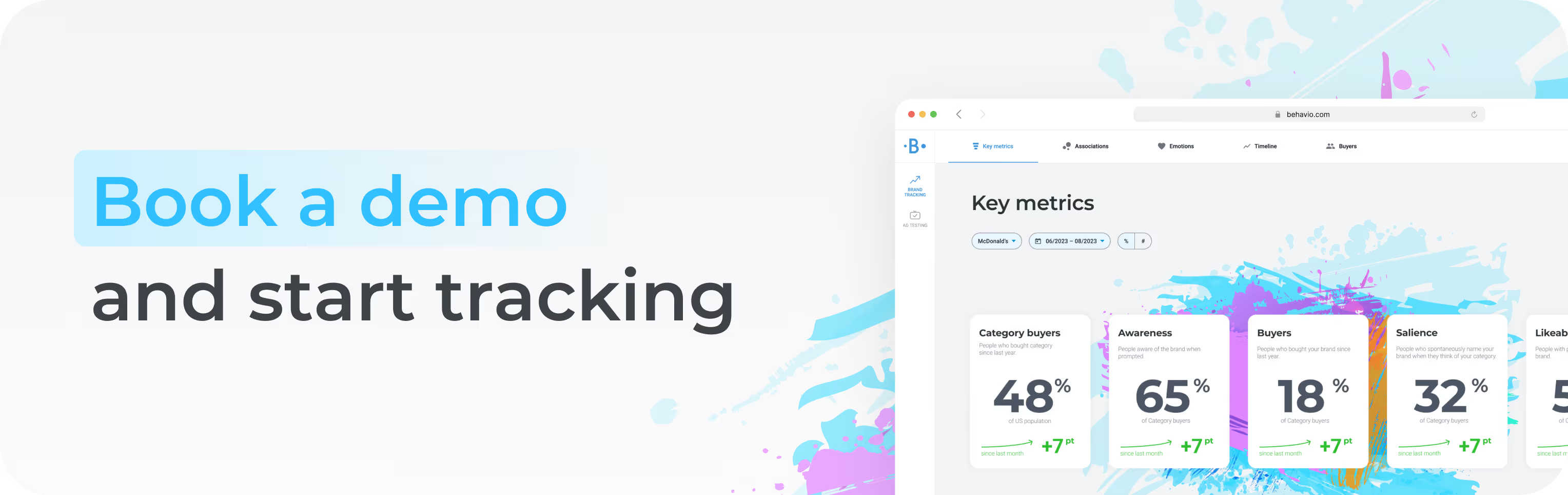
Behavio's brand tracking shows you which buying moments your brand owns, which ones competitors own, and which ones are still up for grabs.
It's a continuous read on what's mentally available about your brand, not just who's named first, but what people associate you with, in the moments that actually drive sales. Your first report lands inside 2 weeks.
Frequently asked questions

It depends entirely on category competition. In low-competition categories, top-of-mind leaders can hit 40–60%. In crowded categories like fast food, telco, or retail banking, 15–25% is strong. The absolute number matters less than two things: your position relative to direct competitors, and the trend over time. A brand at 12% climbing two points a quarter is in better shape than one at 25% slipping.
Top-of-mind awareness is a subset of unaided awareness. Both ask people to name brands in a category without prompts or lists. Unaided awareness counts every brand the respondent names. Top-of-mind only counts the first one. So a brand can have strong unaided awareness (mentioned third or fourth on most lists) and still have weak top-of-mind. The two metrics tell you different things: unaided awareness tells you whether you're in the consideration set; top-of-mind tells you whether you lead it.
Yes, but rarely against the category leader head-on. Smaller brands win top of mind by narrowing the contest: dominating a specific buying moment, a specific audience segment, or a specific category sub-niche rather than competing for the abstract "what's the first brand you think of" prize. Liquid Death didn't become top-of-mind for beverages overall. It became top-of-mind for the irreverent-energy-drink-without-the-energy-drink occasion. That's a winnable contest. The general one isn't.
- How Brands Grow: What Marketers Don't Know – Byron Sharp, Oxford University Press, 2010
- Better Brand Health: Measures and Metrics for a How Brands Grow World – Jenni Romaniuk, Oxford University Press, 2023
- Building Distinctive Brand Assets – Jenni Romaniuk & Byron Sharp, Oxford University Press, 2016
- Ehrenberg-Bass Institute for Marketing Science – University of South Australia
- The Long and the Short of It: Balancing Short and Long-Term Marketing Strategies – Les Binet & Peter Field, IPA, 2013
- Category Entry Points – Ehrenberg-Bass Institute methodology
- Implicit testing methodology – Behavio
- How to measure brand awareness: 5 practical methods – Behavio