Brand salience is the quality of being easily noticed and brought to mind. In branding, salience refers to how quickly and naturally your brand comes to mind in a certain buying situation, not just whether people recognize it, but whether they think of it when they’re ready to buy.
That distinction sounds subtle, but it isn't. It's actually the difference between a brand that gets considered and one that gets skipped, even when the skipped brand has higher prompted awareness, a better product, or a lower price.
Understanding the definition of salience and what drives it, is one of the most commercially important things a marketer can do.
What does salience mean?
The word “salience” comes from the Latin salire which means "to leap". It’s a fitting description for something that unexpectedly sticks in our memory.
One disambiguation before we go further: salience also has specific meanings in neuroscience (the salience network), psychology (salience bias), and project management (the stakeholder salience model). This article focuses on salience in the context of marketing and branding.
In cognitive psychology, memory works as a network of nodes (objects, attributes, emotions) connected by associative links. A brand occupies one of those nodes. The more links it has, and the stronger those links are, the more easily the brand gets retrieved when a relevant situation arises.
Salience, in this sense, is a measure of the richness and accessibility of that memory network.
Salience in marketing: why it's the foundation of brand growth
Byron Sharp and the Ehrenberg-Bass Institute built much of their theory of brand growth on a single principle: brands grow by being mentally available.
Mental availability is another way of describing salience — the probability that a buyer will think of your brand in a relevant buying situation.
What makes this hard to act on is the timing problem. As the 95/5 rule makes clear, at any given moment roughly 95% of potential buyers are not in the market. They're not searching for you, not comparing products, not ready to be persuaded. But eventually they will be. And when they are, salience determines whether your brand makes the shortlist or doesn't cross their mind at all.
This is why brand salience in advertising matters so much. Ads seen by out-of-market buyers don't drive immediate conversions, but they build and refresh memory structures that determine which brands come to mind months later, when those buyers finally do need what you sell.
Brand salience vs. brand awareness: what's the difference?
Brand awareness asks: do you know us? Brand salience asks: do you think of us when it's time to buy?
Most brand awareness surveys measure prompted recognition. This means that respondents are presented with a list of brand names and asked which ones they have heard of.
This often produces inflated numbers; a buyer might recognize your brand from a list without ever spontaneously retrieving it during an actual purchase decision. Recognition is not retrieval.
Salience is harder to earn. It requires not just familiarity, but the right kinds of associations between the brand and the specific situations, needs, and emotions that trigger category purchases.
Behavio measures salience implicitly, without leading questions, by simulating real buying situations rather than asking people to evaluate brands from a prompted list. The result is a more accurate picture of how a brand actually performs in the moments that matter.
Brand salience vs. top-of-mind awareness: why salience matters more
Brand salience is how easily and often your brand comes to mind in actual buying situations. Not a generic survey question, but the real moments where someone is deciding what to grab, drink, book, or order.
Take Coca-Cola. In a general survey, plenty of people might name another soft drink first. But ask "what would you drink with lunch?" or "what would you bring to a barbecue?" and Coca-Cola comes up over and over.
That's salience in action. The brand is mentally available across a wide range of buying moments. And those moments are what add up to sales.
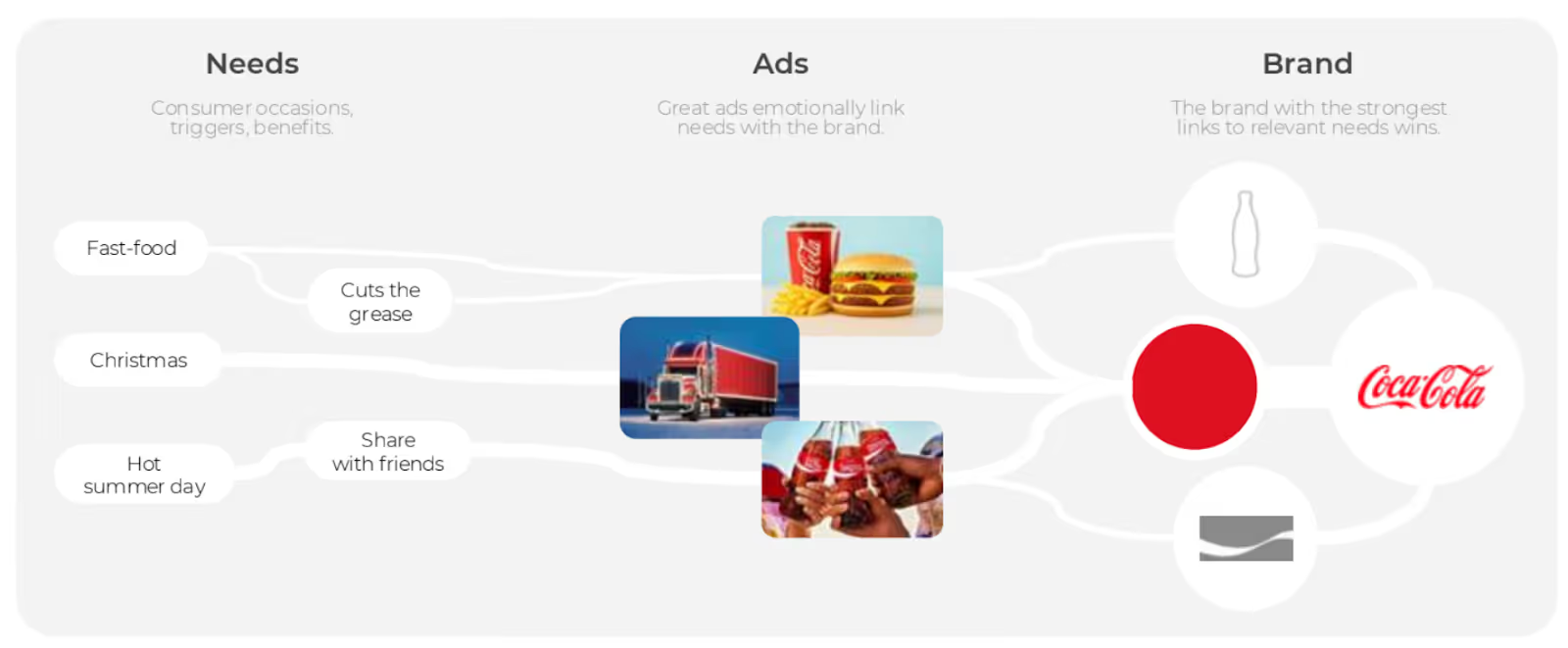
Most consumers, faced with a buying decision, don't weigh dozens of options. They pick from a mental shortlist of two or three brands they already know. Being on that shortlist, in the right moments, is what drives growth. Being named first in a survey is downstream of that.
Salient brands tend to be recalled in relevant contexts ("what do I grab with a burger?"), build mental availability with less ad spend by reinforcing the same associations consistently, and build emotional and habitual loyalty through repeated exposure to the same needs and occasions.
This is why the smartest marketers, especially at smaller brands, are shifting focus away from chasing top-of-mind status and toward building occasion-based salience.
Top-of-mind awareness is a single, generic mental contest. Salience is a portfolio of buying moments you can grow into one at a time.
For a newer or smaller brand, owning three buying moments beats finishing second in the abstract popularity contest, every time. The strategic question shifts. Instead of "what makes us different?" it becomes: "when should people think of us?"
Examples of salience in advertising
Let’s take a look at some examples of brands to see what high salience looks like in practice and the various ways it can be built.
Liquid Death
Canned water has no inherent reason to be memorable, but Liquid Death become one of the most mentally available beverage brands among its target audience by committing fully to a rebellious brand personality.
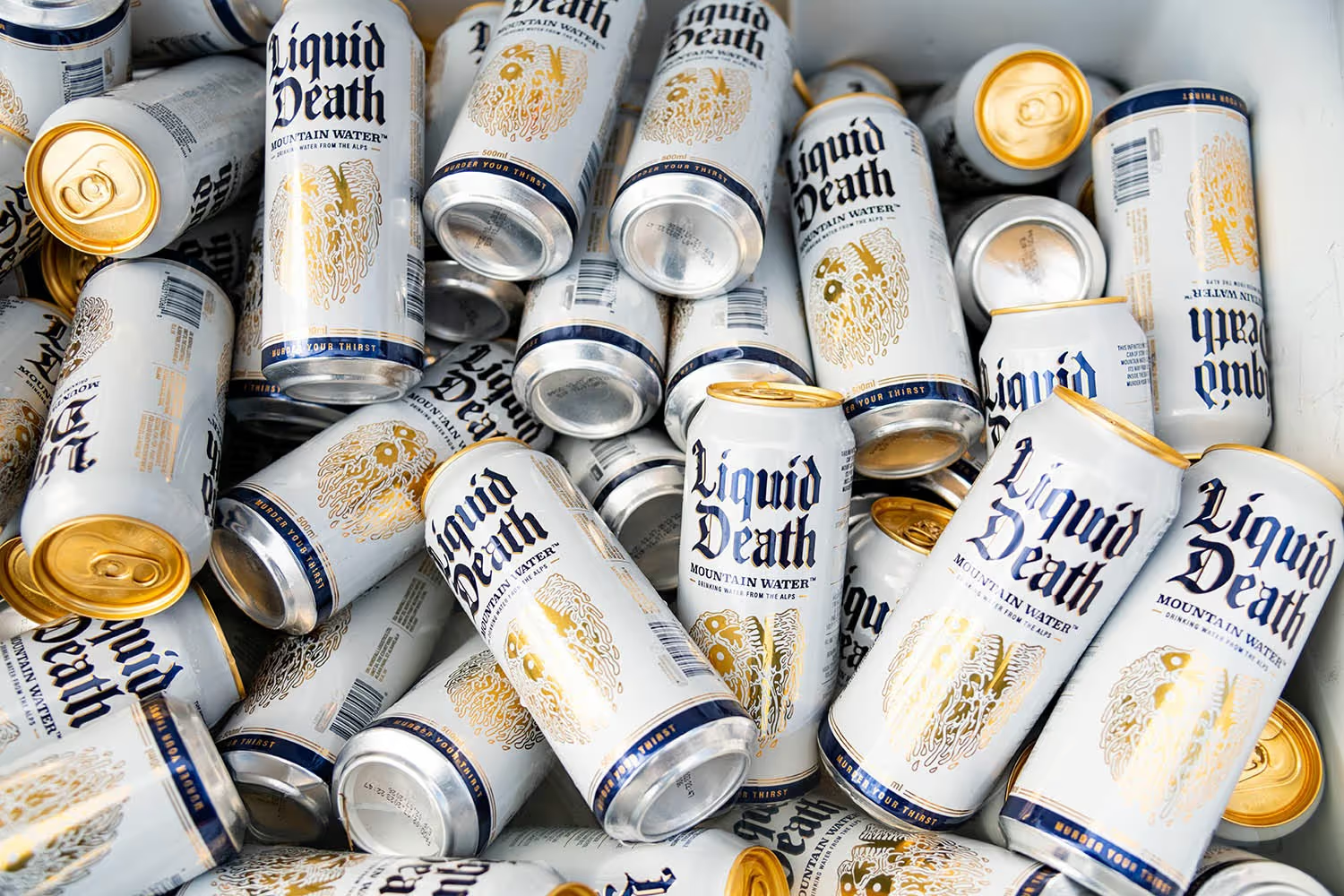
Every touchpoint built the same associative network: irreverence, authenticity, edge. The result is a brand that grew from startup to unicorn in six years by engineering emotional salience rather than rational product preference.
Tony’s Chocolonely
Tony's Chocolonely takes a different route: packaging as a salience asset. The unmissable color-block wrappers and uneven chocolate segments do the work before any consumer reads a word of copy.
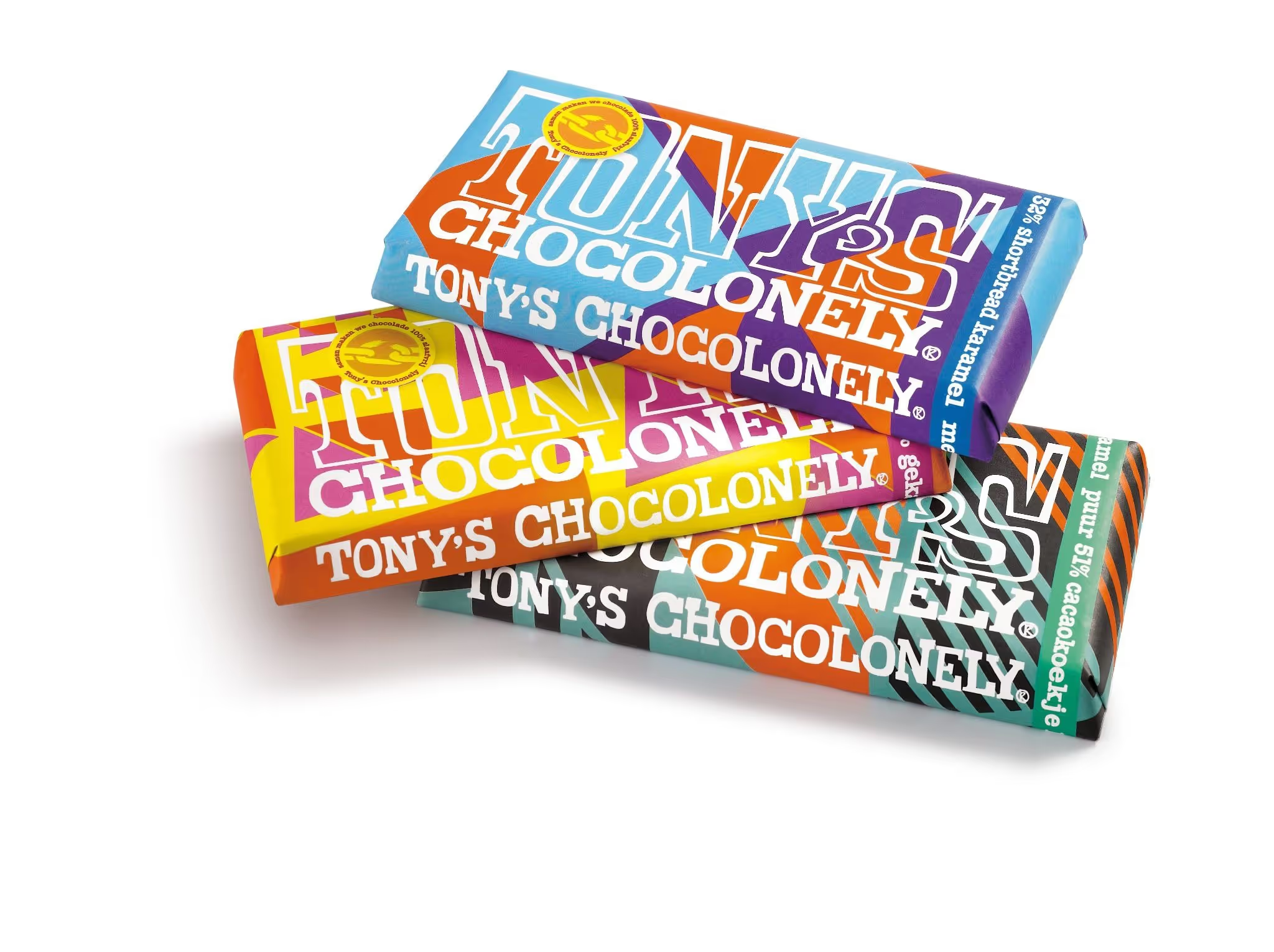
Those distinctive visual cues are deeply embedded in memory, which is exactly the kind of asset that builds salience without the brand having to spend on persuasion every time.
McDonald’s
McDonald's golden arches are the canonical example. The arches can appear without the brand name, without any product shown, and still trigger the full chain: brand recognition, category association, even specific appetite cues. That's the compounding value of a distinctive asset maintained consistently across decades.

The arches don't remind you McDonald's exists. They make McDonald's the answer to a question you didn't know you were asking.
How to build brand salience
1. Shifting to occasion-based thinking
Traditional brand positioning often focuses on defining what makes a brand different, usually by highlighting unique selling propositions (USPs) or benefits. But a USP only matters if it fits the actual occasion the consumer is thinking about. If your “unique” promise doesn’t align with a real, felt need in a specific moment, it becomes irrelevant noise.
Brand salience doesn’t rely on novelty; it grows from consistent, meaningful presence at the right moment.
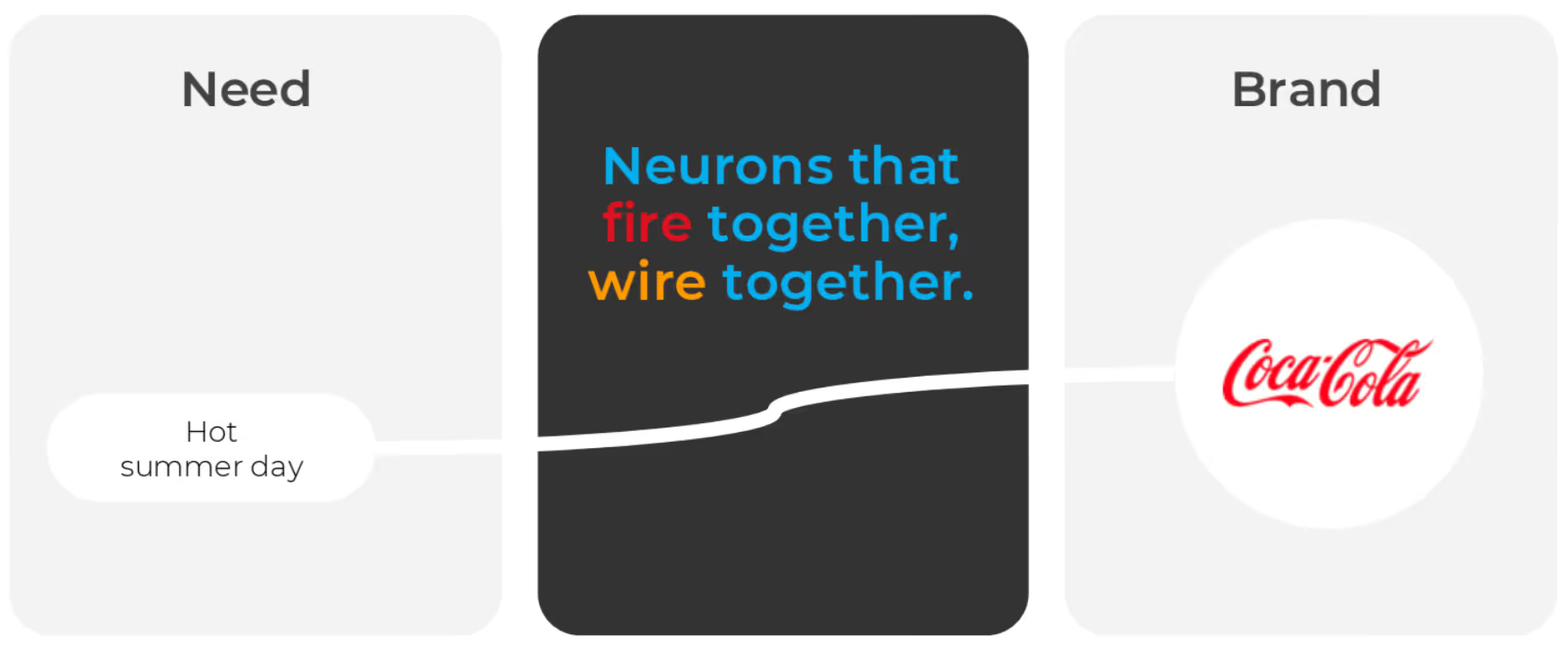
For small brands, this means committing to one need and one occasion per campaign and maintaining that focus over multiple campaigns. This targeted approach enables them to compete effectively against larger brands that can afford to cover multiple occasions.
Even bigger brands benefit from narrowing their focus per campaign, as it sharpens messaging and strengthens brand salience over time.
2. Consistency across platforms
Consistency is fundamental for staying salient in one’s mind. Every time customers encounter your brand, the experience should reinforce the same core message and visual identity.
This repetition across platforms (from traditional ads to digital channels) prevents confusion and cements your brand's key ideas in memory.
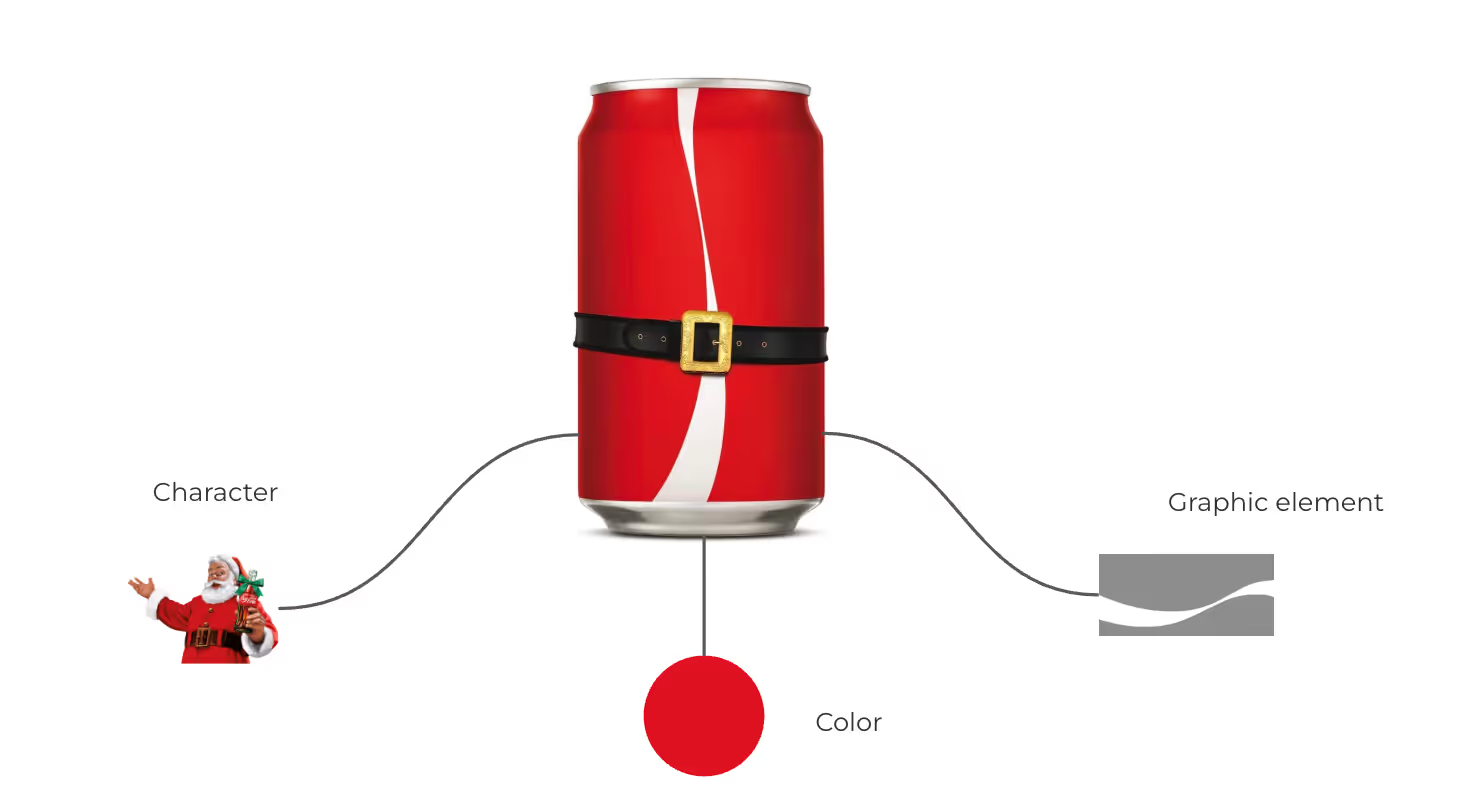
Use the same logos, colors, and tone of voice everywhere. If your social media posts, emails, and website all echo the same brand personality and values, customers get repeated exposure to a coherent image that builds familiarity over time.
The most effective brands practice playful consistency: repeating familiar elements in fresh, creative ways. This approach keeps your brand instantly recognizable while staying engaging and relevant across contexts.
Consistency also applies to timing and frequency. Regular exposure — especially tied to specific needs or customer entry points (CEPs) — keeps your brand top of mind when it matters.
3. Using storytelling to engage customers
Storytelling creates memorable brand encounters that stick in consumers' minds. Rather than broadcasting features or promotions, weaving narratives around your brand captivates attention and evokes emotion. Our brains are wired to remember stories more than isolated facts.
Brands use storytelling in content marketing, advertising, and social media to humanize themselves and forge deeper connections. Airbnb built its brand on storytelling with its "Belong Anywhere" campaign, sharing tales of hosts and guests to illustrate a sense of community and belonging.
You can find stories in any industry: an apparel company might share athlete testimonials of triumph, while a B2B software firm could publish case studies of client success. The key is putting the customer or a larger mission at the center, not just the product.
When customers emotionally invest in your story, they naturally recall your brand (the "storyteller") later on. Incorporating authentic, occasion-relevant stories into your marketing mix significantly boosts brand salience by giving people something meaningful to remember you by.
4. Utilizing retargeting campaigns
Even interested prospects can quickly forget about a brand. Retargeting campaigns prevent that by keeping your brand in front of people who have already shown interest.
Retargeting involves serving ads to users who have visited your website, used your app, or engaged with your content but haven't yet converted.
The power of retargeting lies in repetition to a hooked audience: by seeing your brand multiple times across the web, a potential customer is less likely to overlook you when deciding on a purchase.
Studies indicate that retargeting can boost brand recall by 45% in the awareness stage and make consumers 70% more likely to take action in the consideration stage.
Essentially, retargeting ensures your brand stays top of mind for those who already know you to some degree, nudging them steadily toward a decision. The ads can be tailored to remind users of items they viewed or simply to reinforce brand messaging.
How do you measure brand salience?
Key performance indicators to track
Measuring salience properly means moving past prompted awareness. If salience is what's actually driving sales, you want a portfolio of indicators, not a single number.
Five KPIs are worth tracking:
- Unaided brand recall. A core salience metric. Ask people to name brands they associate with a category, without any prompts. Unlike top-of-mind awareness (which only counts the first brand named), salience is better captured by total unaided mentions, which measures whether you come to mind at all.
- Occasion-based brand recall (category entry points). The most powerful indicator of salience. Instead of generic recall, ask about specific situations or needs ("which brands come to mind for quick lunches?" or "when buying a gift for a friend?"). The breadth and frequency of these links determine how mentally available your brand is across different buying contexts.
- Aided brand recognition. Not a direct measure of salience, but it complements unaided recall by showing whether people recognize your brand when prompted. Useful for understanding baseline familiarity.
- Share of Search. A proxy for mental availability, showing how often people search for your brand relative to the category. Unlike social metrics, it reflects active interest and intent.
- Behavioral indicators (with caution). Direct traffic, repeat purchases, or branded search can hint at strong brand memory, but they may reflect current buyers more than potential ones. Use them as supporting data, not primary metrics.
Of these, occasion-based recall is the one most marketers under-invest in. It's also the one that most directly maps to growth, because it tells you which specific buying moments your brand owns, and which ones you don't.
For a wider perspective on what to track, see our brand metrics guide.
Tools for measuring brand salience
- Representative panel surveys: Recall surveys on a representative sample of your category audience, not just existing customers or fans. This ensures insights reflect the full spectrum of light and heavy buyers.
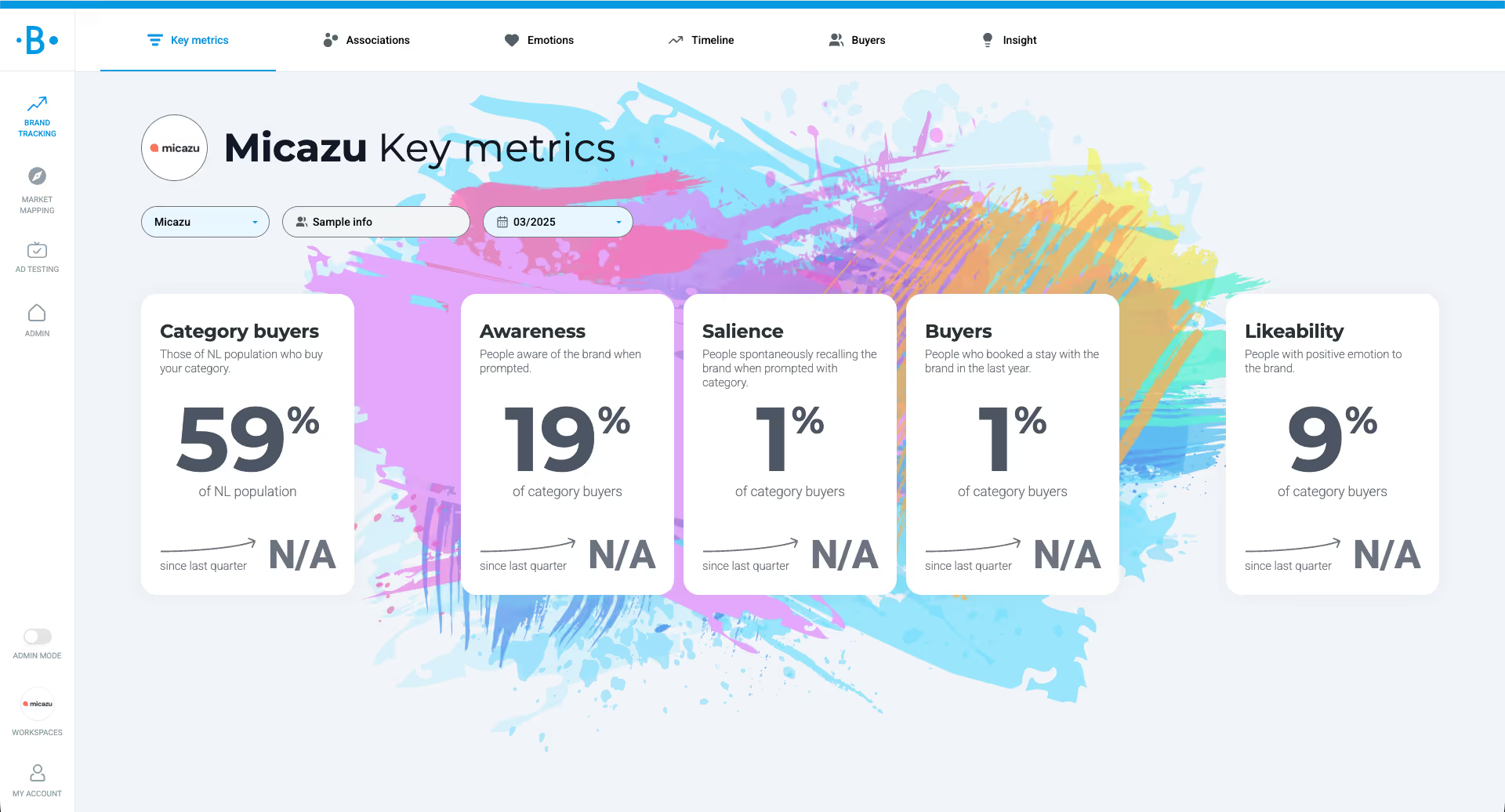
- Specialized brand tracking platforms: Tools like Behavio can be tailored to capture occasion-based brand recall and other salience-related metrics, including emotional response and implicit associations.
- Platforms like Google Trends or SEMrush help monitor branded search interest over time and can act as a proxy for real-world relevance.
Final thoughts
In essence, staying salient is an ongoing commitment. Markets evolve and consumer attention is uncertain, so even leading brands must continue to nurture their presence.
The most successful brands concentrate on being remembered in the right context, at the right moment.
By identifying the specific customer entry points you want to own and consistently reinforcing your brand's association with them, you can ensure your marketing efforts translate into positive business impact.
See where your brand stands in your customers' minds
Behavio's Brand Tracking measures salience the way it actually matters: across the specific buying moments that drive purchase in your category. Not prompted awareness. Not a single top-of-mind score. A map of which moments your brand owns, which ones competitors own, and which ones are open.
Want to try it out for yourself? Book a demo!
Frequently asked questions

When you think of soda and Coca-Cola pops into your head, that's salience. The golden arches triggering "I'm hungry, McDonald's" is salience working through a distinctive asset.
Through unprompted recall in realistic buying scenarios — asking people what comes to mind for a specific situation, rather than asking them to rate brands from a list. Implicit measurement methods like those used at Behavio capture this more accurately than traditional surveys.
Awareness measures whether consumers recognize a brand when prompted. Salience measures whether they spontaneously think of it in a category. Salience is the stronger predictor of purchase — the brand that comes to mind first is usually the brand that gets opened first.
- How Brands Grow: What Marketers Don't Know – Byron Sharp, Oxford University Press, 2010
- Building Distinctive Brand Assets – Jenni Romaniuk & Byron Sharp, Oxford University Press, 2016
- Better Brand Health: Measures and Metrics for a How Brands Grow World – Jenni Romaniuk, Oxford University Press, 2023
- Ehrenberg-Bass Institute for Marketing Science – University of South Australia
- The 95/5 rule in marketing – Behavio
- Top of mind: what it is, why it matters, and how to measure it – Behavio
- How to measure brand awareness: 5 practical methods – Behavio
- Brand metrics: a comprehensive guide – Behavio
- Owning the moment: why CMOs should care about need codes – Behavio