


Behavioral science turns marketing analytics from a record of what happened into an explanation of why it happened. Standard analytics measure actions and answers: impressions, clicks, awareness scores, stated purchase intent. Behavioral analytics goes deeper, measuring the subconscious drivers behind those actions, from memory and emotion to brand associations and the needs that trigger a shopping decision.
That gap matters because buying is mostly automatic. Around 95% of decisions run on the fast, intuitive thinking Daniel Kahneman labeled System 1. Ask people to explain those decisions, and they give you a tidy story invented after the fact, which is why stated intent predicts sales so poorly.
The mechanics are covered in How AI-driven behavioral research shows what truly works in marketing.
Behavio applies the same method across all three products: Market Mapping, Brand Tracking, and Ad Testing.
A five-person marketing team gets the kind of implicit measurement that once required an enterprise research department, across three critical decisions: which needs to compete on, how the brand is performing, and whether the next ad will work.
How do you map consumer behavior for strategic research?
Mapping consumer behavior means finding out which needs drive purchase in your category and which brands people mentally connect to each one. The useful unit of analysis is the buying situation, not the buyer profile.
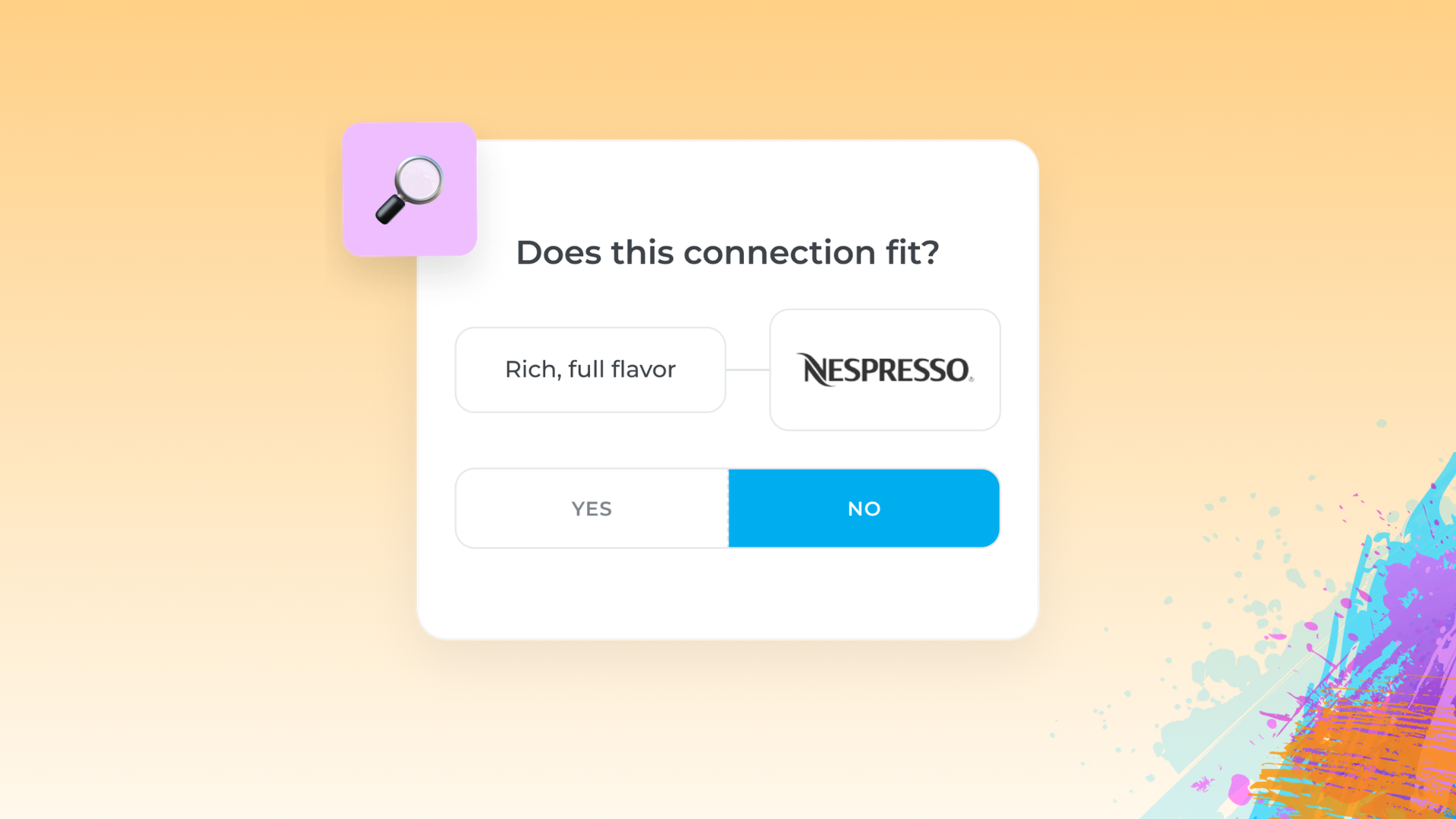
Traditional market mapping sorts people into demographic boxes. Behavioral market mapping sorts the market by need codes: the occasions, triggers, and benefits that put someone in the market (“hot summer day”, “quick weekday dinner”, “gift under $50”).
Byron Sharp and Jenni Romaniuk at the Ehrenberg-Bass Institute call these Category Entry Points, and they explain far more about choice than age or income do.
Behavio measures how important each need is and how strongly each brand links to it, on nationally representative samples. You can see which needs are large and growing, which rivals own them, and which sit unclaimed. Unclaimed needs are your positioning white space.
The map answers three strategic questions directly:
- Positioning: which need can you realistically own?
- Innovation: which needs are important but badly served?
- Messaging: which association does your advertising have to build?
Repeat the study, and you also watch needs move over time, which is where most challenger growth starts. Market Mapping has the full metric set.
How do you integrate behavioral science into brand tracking?
Behavioral brand tracking measures how easily your brand comes to mind in real buying situations, alongside the classic survey metrics you already report to the board. You keep awareness, consideration, and attribute ratings, and add the measures that predict choice.
Three behavioral measures do that work. Spontaneous recall comes first, so respondents retrieve brands from memory instead of ticking a prompted list. Implicit association testing follows: a timed reaction task based on the method Anthony Greenwald and colleagues published in 1998, where faster answers reveal stronger links.
Emotion is the third, measured against concrete occasions, since how people feel about a brand in the abstract has little to do with how they feel at the shelf.
A brand can score well on awareness and still lose at the store if it fails to come to mind when the need arises. Mental availability is the metric that converts, and it moves independently of awareness.
A behavioral tracker reads like a brief, not a data dump. A typical finding might be: strong associations with value-for-money, no association with speed or convenience, and ground lost to a named rival on the category’s fastest-growing need. Initial results arrive in about two weeks, then refresh quarterly, benchmarked against the competitors you choose.
The method is set out in How Behavio tracks brand performance using behavioral science.
How does behavioral analytics optimize ad performance?
Behavioral ad testing predicts how a creative will perform before you commit media money, by measuring psychological response instead of metrics like click-through rate. It scores the three ingredients of an effective ad: the need being triggered, the emotion generated, and how firmly both attach to the brand.
Asking people whether they would buy is a weak guide. Peter Field's analysis of ad effectiveness found brands grew more often with no pre-testing at all (34%) than with purchase-intent pre-tests (30%).
At Behavio, every creative is tested with 500 or more respondents in a randomized controlled trial, in any format: video, static, concept, script, or storyboard. The report covers:
- Emotional response, overall and second by second
- Second-by-second brand recall, showing where the branding lands or gets lost
- AI attention heatmaps built on the UNISAL model from Oxford researchers
- Spontaneous associations and word clouds
- Need-brand linkage, so you know which message attached
- A written summary of the fixes by an ad effectiveness expert
The do-this-next recommendations are what make a test worth running. Clients cut slow openings, move logos into attention hotspots, and shorten ads to save media spend, then see ad impact rise by up to 11x. Results come back within three to seven business days.
Further reading: How Behavio predicts ad effectiveness using behavioral science and Ad testing software: what it is, how it works & the best platforms in 2026.
See your category mapped, your brand tracked, and your next ad tested on one behavioral engine. Book a demo.
Frequently asked questions

Yes. Behavio publishes its prices: ad pre-tests run from $3,000, falling to $2,500 and $2,000 per test on larger plans, with annual plans from $3,000 to $12,500. Smaller teams get the full implicit methodology at a fraction of legacy research cost, with no features held back for enterprise buyers.
- Thinking, Fast and Slow Kahneman, D., Farrar, Straus and Giroux, 2011.
- Measuring Individual Differences in Implicit Cognition: The Implicit Association Test Greenwald, A. G., McGhee, D. E., & Schwartz, J. L. K., Journal of Personality and Social Psychology, 1998.
- Pre-testing has transformed marketing effectiveness Field, P., Marketing Week, 2024.



.avif)