RESEARCH STUDY
A study on which memories, across product, price, place and promotion, put a brand on a path to growth.
Vojtech Prokes & Jiri Boudal

The marketing debate of 2026: Sharp vs Ritson, put to the test
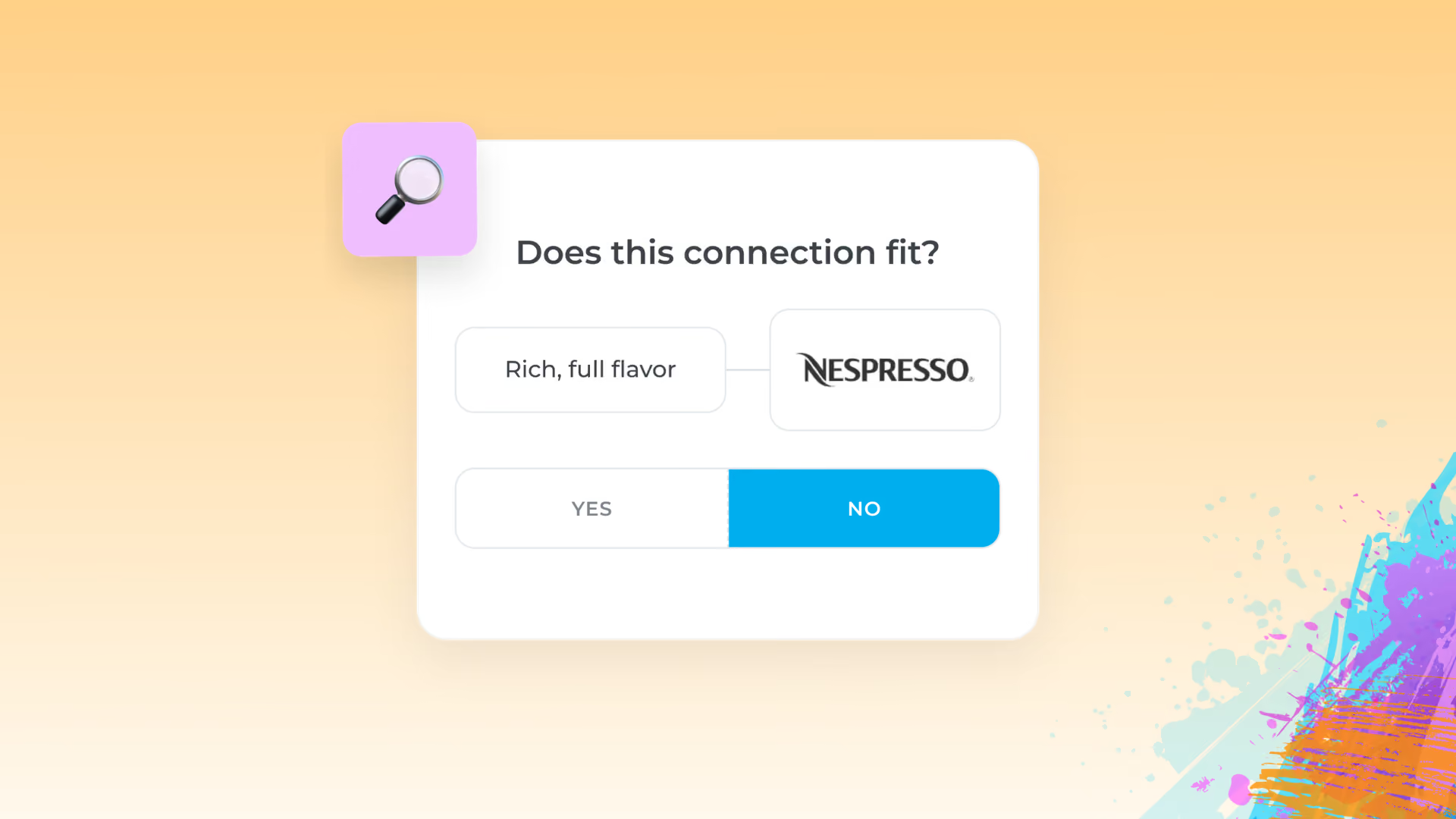
This study asks whether being different from your rivals helps a brand grow, and which needs a brand should be linked to: a buying occasion, a product function, an emotional benefit, or a price, place or promotion cue.

Ritson was right. Differentiation matters.
Big brands get linked to almost everything, simply because more people buy them. Take that out, across 246 brands in five markets, and most brands still stand for something their rivals don’t, and what a brand is known for, not just how well it is known, goes with how many people buy it.
Brands have clear strengths and clear weaknesses
Once you take size out, differentiation is everywhere. For 70% of brands, no rival shares their strongest link.
Differentiated brands are better known
Small and mid-sized brands that stand out on a product need are known by 4 more in every 100 buyers than brands their size that stand out on none.
Brands stood out on fame and distinctiveness alone
Far better known than their size predicts, and far above their size on distinctive brand assets and standout advertising, but no clear strength in product or the other Ps. Both were small, and neither was growing.
New small brands broke through where every brand looks the same
On 235 needs where brands barely differ, no small brand founded in the last 30 years built a strong position. Where rivals already differ, mid-sized brands broke through 2.7× as often.
Three questions that predict which needs drive growth for a brand your size
Every need has all three characteristics, and their importance depends on a brand's size. What helps a small brand grow into a mid-sized player may be the wrong choice for a market leader.
Movability
Can a brand stand out beyond its size?
Occupancy
Is there room in people’s minds?
Prevalence
Is the need big enough?
How broad a need is, from niche to mainstream. Small brands can grow by serving niche needs, but for mid-sized and large brands some opportunities are simply too small.
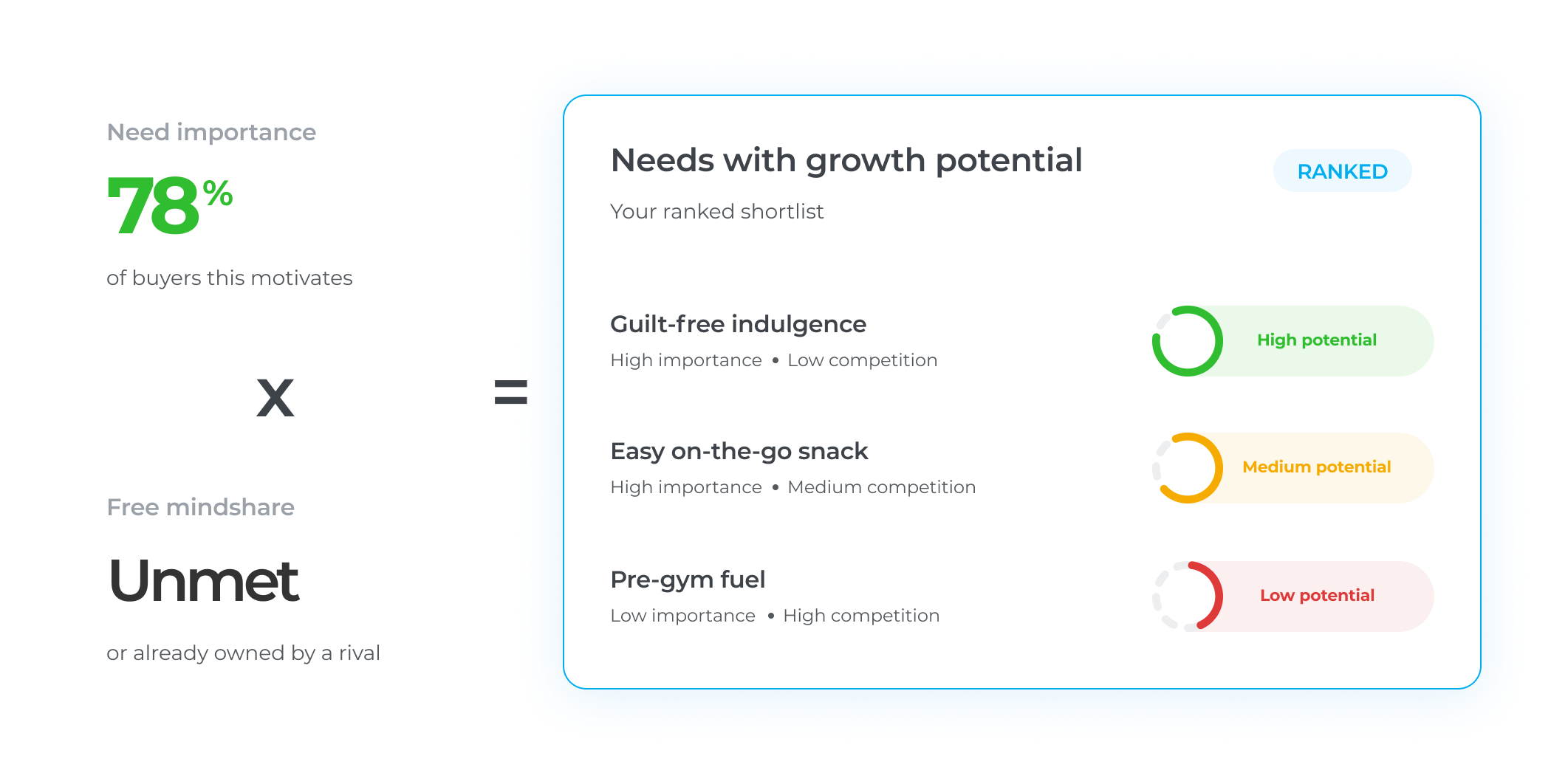
Every customer need, ranked by growth opportunity.
We score each need on how many buyers it drives and whether it's still up for grabs. The result is a ranked shortlist of your category’s needs, so you know exactly where to grow with the least resistance.

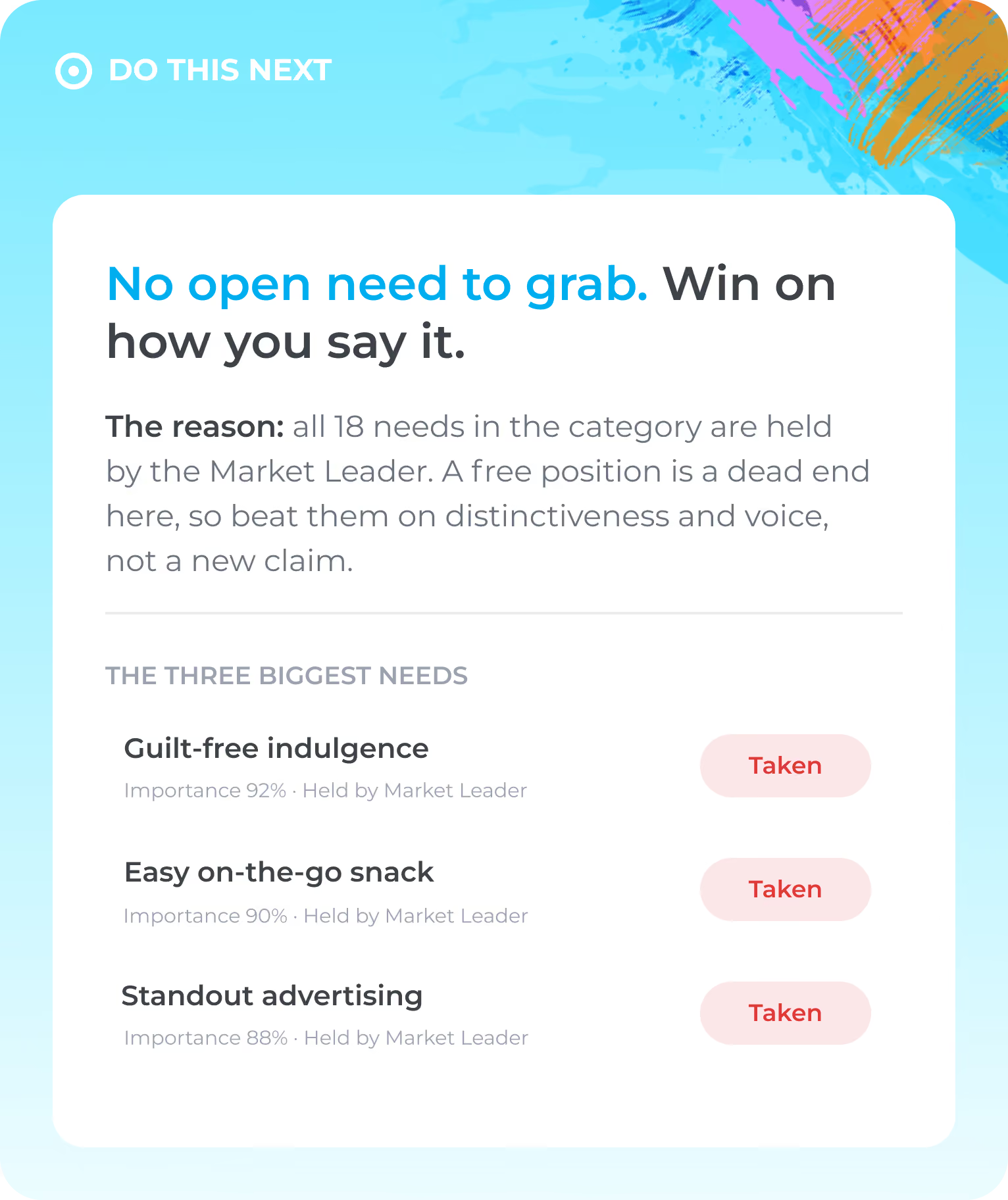
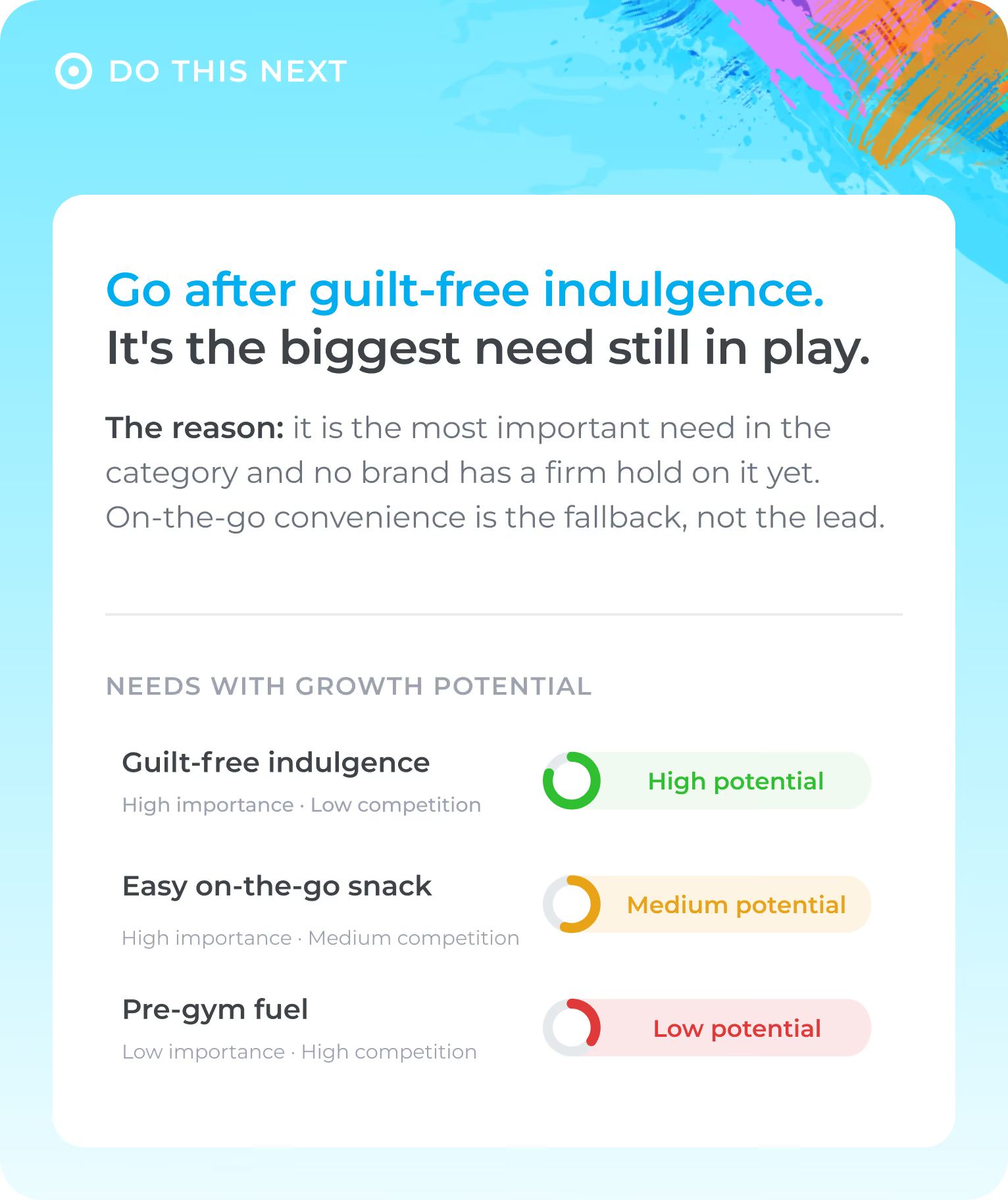
Every Behavio result ends with clear next steps
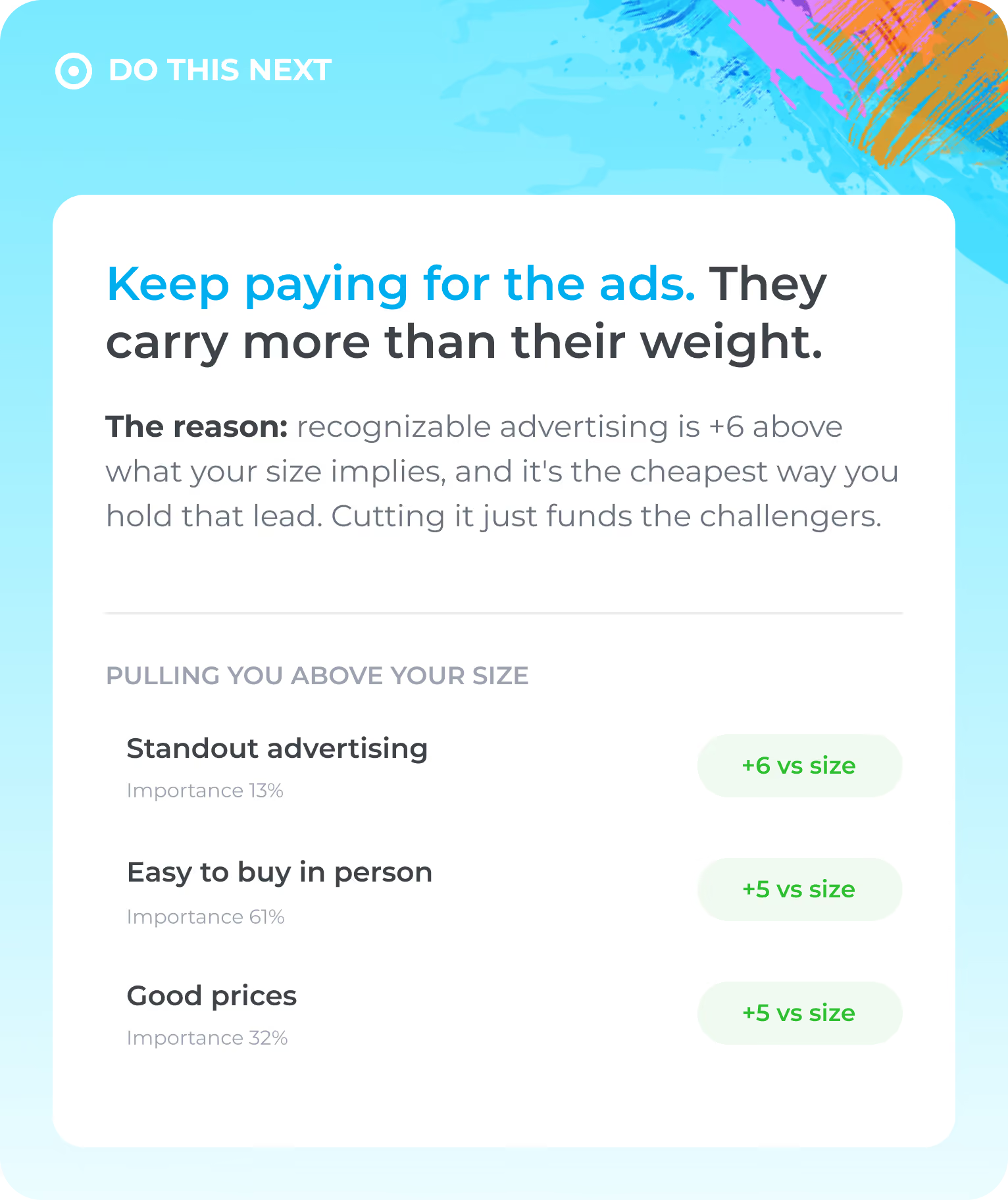
The output isn't a positioning chart to interpret. It's a prioritized shortlist with the reasoning attached, validated by a brand growth expert.
Find your brand's clearest path to growth
Get the consumer needs worth owning, ranked. A brand growth expert walks you through them.
Most research maps the category. We tell you what to own.


Clear guidance in an overcrowded online market

Growing in a crowded online market meant knowing what to say. Market Mapping showed shoppers care most about comfort, price, design, quality and durability, giving Meatfly and Digivice a clear campaign focus.

Proof the strategy stands on solid foundations

Dermacol wanted to confirm its tradition-and-family strategy still resonates. Market Mapping showed it leads on price-quality, longevity and reliability, while brand heritage matters far less.
Choose your Market Mapping plan
Heavy automation keeps premium market research budget-friendly. Expert support is included in every plan.

Starter
- €9,700 / per market with the option of one-time or half-yearly billing.
- Representative sample (1 x 1000)

- Importance of consumer needs (10 needs)
- Brand links
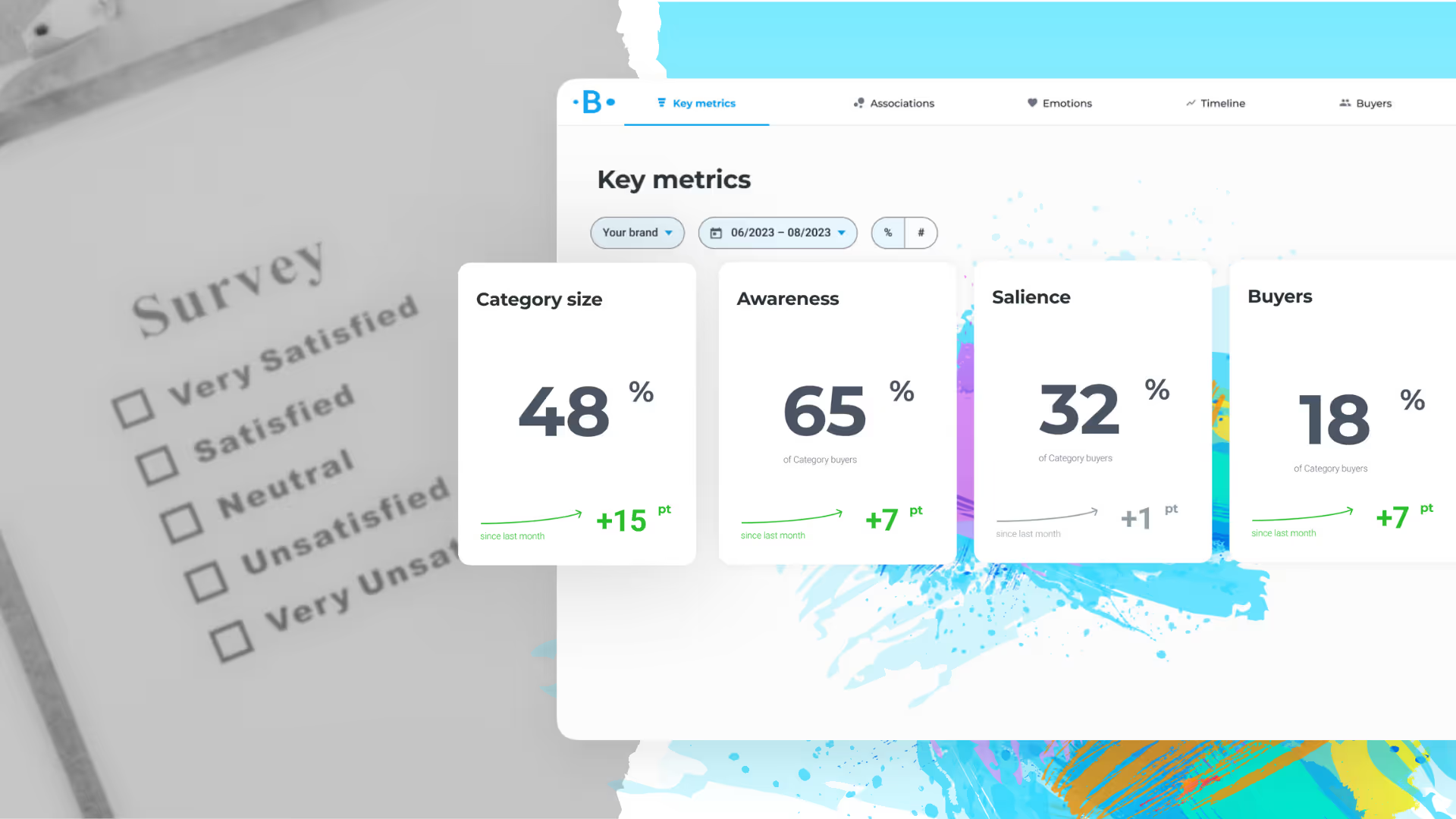
- Brand metricsBrand awarenessBrand emotionsBrand buyersBrand likeability
- Category metrics
- All metrics for your brand and 5 competitors
- Easy-to-read dashboards
- Lucid insights with clear brand summary
- Expert consultation with a research specialist
- Verbatims of the respondents (quotes & spontaneous reactions)
Customized?
Starter
- $9,700 / per market with the option of one-time or half-yearly billing.
- Representative sample (1 x 1000)
- Importance of consumer needs (10 needs)
- Brand links
- Brand metricsBrand awarenessBrand emotionsBrand buyersBrand likeability
- Category metrics
- All metrics for your brand and 5 competitors
- Easy-to-read dashboards
- Lucid insights with clear brand summary
- Expert consultation with a research specialist
- Verbatims of the respondents (quotes & spontaneous reactions)
4P Market Mapping
- $12,500 / per market with the option of one-time or half-yearly billing.
- Representative sample (1 x 1500)
- Everything included in Starter plus Extra:
- Importance of consumer needs (20 needs)
- Needs mapped across all 4Ps, benchmarked to your brand size
- Brand associations (20 attributes)
- Brand salience
- Target group profiles
- Export to slides
Customized?
Got questions? We have answers!
Explore frequently asked questions about market mapping to get a better sense of how Behavio uncovers consumer needs and category dynamics.
What is market mapping?

It's a behavioral map of your category: every need that drives choice, sized by how much it matters, with your brand and competitors plotted against those needs — so you can see exactly where the unmet demand and white space are.
How is this different from segmentation?
Traditional segmentation groups people into personas you can't act on. Market mapping maps needs: the specific demand spaces in your category, which ones are underserved, and the one your brand is best placed to own.
How fast do I get results?
A full category map comes back in 2 weeks, not the months legacy segmentation studies take — fast enough to feed your next planning cycle.
What do I get at the end?
The full needs landscape ranked by importance, the gaps where demand outstrips what brands deliver, every brand's fit against each need, and a recommended positioning territory your brand can credibly win.
Which markets and categories can you map?
We cover most categories and markets, from a single-country study to global comparisons across multiple regions. Every market is measured using the same framework, making results directly comparable across countries. Coverage depends on your category and target audience, so get in touch and we'll confirm what's possible for your specific market.
How does your sampling approach work?
Each map runs on a representative sample of around 1,000 people per market, balanced to your category's buyers, so the needs and gaps reflect real demand — not a self-selected panel.